Germany: an experimental cannabis store near Düsseldorf?

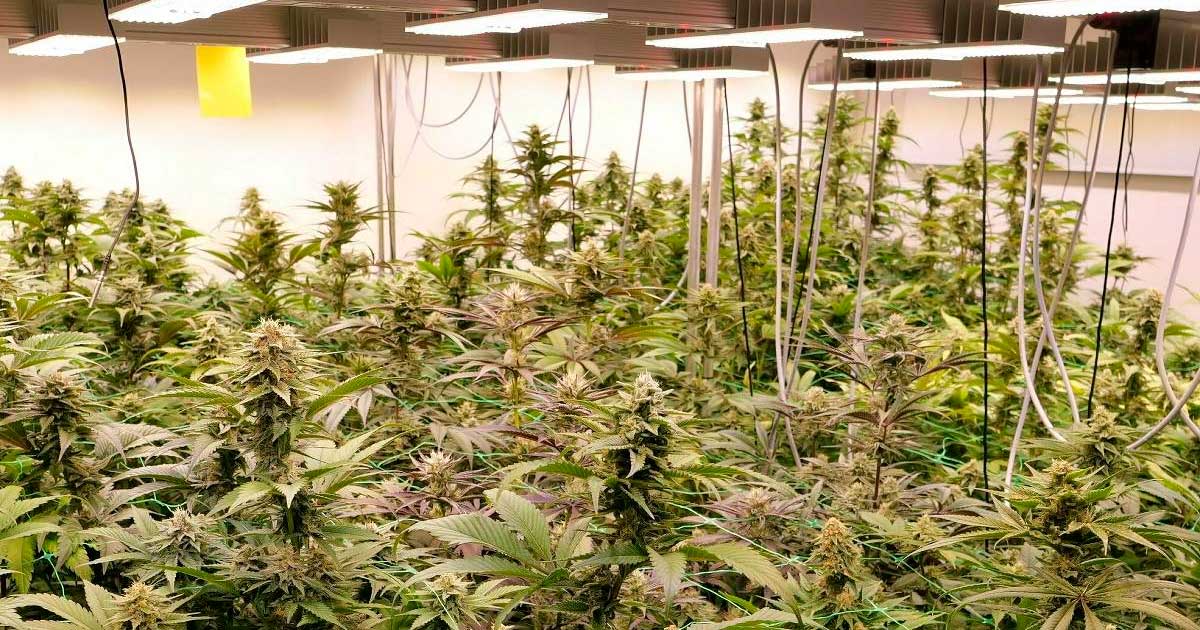
A new research project at Neuss, near Düsseldorf, Germany, could soon be testing the retail sale of cannabis regulated within the framework established by the partial legalization in Germany.
A group of professionals is currently preparing an application to open a cannabis specialty store in the city center, designed above all as a scientific observation tool in the same way as most of Switzerland's current pilot tests.
The initiative is supervised by Andreas Alberts, a narcotics expert acting as Scientific Director. The project also involves Alexander Lajios, prevention specialist at Caritas, and the’Heinrich Heine University Düsseldorf, which would be responsible for data collection and evaluation.
According to Alberts, participation would require registration and ongoing monitoring. «They have to register in advance and fill out questionnaires regularly,» he told the Rheinische Post, by setting out the conditions for consumers wishing to access the store.
The organizers indicate that the product range would be similar to that available in Dutch coffee shops, reflecting the aim of offering realistic legal access in a controlled environment.
A licensing system for recreational cannabis research
The german cannabis law, in effect since April 2024, has introduced limited legal access to cannabis through home cultivation and cannabis social clubs. At the same time, the law also authorizes pilot projects and research initiatives focused on regulated distribution, provided they receive official authorization.
The Neuss team plans to submit its application to the’Federal Office for Agriculture and Food (BLE), which is now the competent authority for the review and supervision of research authorizations related to recreational cannabis and industrial hemp.
Under these rules, applicants must demonstrate their expertise, comply with the requirements of recreational cannabis legislation and justify their scientific interest. Both universities and private entities are eligible to apply.
Research objectives: consumption trends, prevention and substitution effects
The research concept was developed at the Heinrich Heine University under the direction of economist Justus Haucap, Head of the Faculty of Economics. The aim of the project is to document the effects of legal access on consumer behavior over a period of time. five-year period.
Researchers wish to examine whether regulated availability influences overall levels of cannabis use, and whether patterns of use differ according to age, gender or level of education. Another line of research focuses on the possible evolution of consumption of other substances, notably alcohol and painkillers, in a context where cannabis is legally accessible.
The project also aims to evaluate prevention strategies. Researchers want to determine which educational and harm reduction approaches are effective when cannabis use is part of a legal framework.
The university notes that much of the existing data comes from countries such as the USA and Canada, where legal markets have been established for several years. It argues, however, that these results may not be directly transposable to Germany due to different historical patterns of cannabis consumption.
Local policy discussions and implementation considerations
Before submitting the application, the organizers began to inform local political players. Preliminary discussions have already taken place with the SPD in Neuss.
SPD leader Sascha Karbowiak confirmed that the project could probably be implemented without the formal involvement of municipal authorities. He also advised the organizers to avoid setting up the experiment in locations close to schools, and to keep other political parties informed from the start of the process.
Neuss already has an active Cannabis Social Club
Neuss is already involved in the new German legal system cannabis through the CSC Neuss, which received its approval at the end of 2024. Based in the city's industrial zone, the club began cultivation shortly after approval and has already distributed its first harvest.
«We currently have 230 members,» said president Vu Nguyen, adding that members usually come every one to two weeks to collect their cannabis.
If approved, the Neuss retail study would be another part of Germany's evolutionary approach: regulated access combined with structured data collection, to inform future public health and regulatory decisions.
























Aurora Cannabis Doubles Its Production Capacity in Germany

Tilray is accelerating its operations in Europe thanks to a license in Portugal

Boston will host the 10th annual State of the Cannabis Industry Conference on October 26

A DEA report confirms that there are no fatal cannabis overdoses

A British patient is challenging the NHS's refusal to reimburse medical cannabis

October 2026 CBD Highlights: 10 Strains and Hash to Discover from 5 French Producers

CBD in France: Traceability, Retail Stores, THC and Driving… What the New Bill Proposes

Organigram Enters the Race for Aurora Cannabis

Medical Cannabis: Augur Associates’ latest report provides an update ahead of the publication of the decrees

Golden Buds is relaunching its Nova High vape pens with a cannabinoid formula that’s out of the ordinary
-
 Business2 weeks ago
The legal cannabis market in New York exceeds 4 billion $ in revenue
-

 Cannabis in France3 weeks ago
Which countries legalized medical cannabis before France?
-
Business3 weeks ago
South Korea is preparing to begin local production of medical cannabis to meet rising demand
-
Cannabis in Thailand3 weeks ago
From the boom in dispensaries to a purely medical approach: Thailand is revising its cannabis policy
-
Cannabis and driving3 weeks ago
Medical Cannabis and Driving: New South Wales Ends Automatic Penalties for THC
-
Cannabis in Argentina4 weeks ago
Argentina Opens Its Market to Hemp Flowers Containing 1% of THC
-
Autism3 weeks ago
Autism and Cannabis: Results from the First Placebo-Controlled Trial of NTI164
-
Cannabis in France2 weeks ago
France’s Drug Policy Chief Defends Cannabis Prohibition... and Runs Into the Facts

















You must be logged in to post a comment Login