EKOCAN report: legalizing cannabis in Germany works... but not the way legislators intended

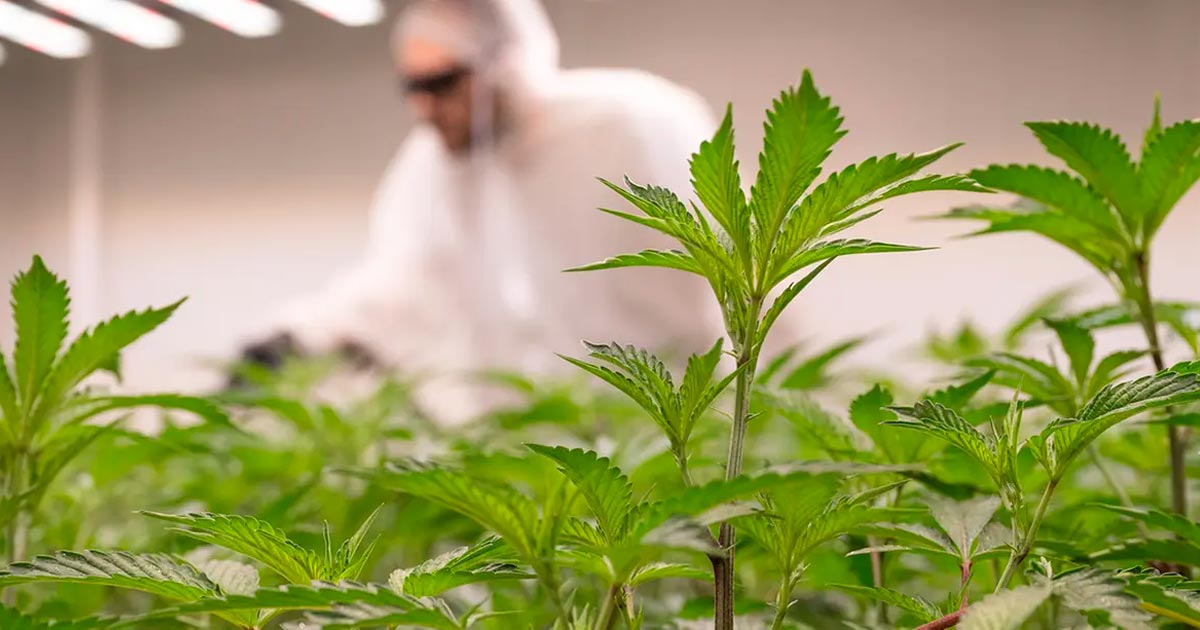
On April 1, 2024, the Cannabis Consumption Act (KCanG) came into force in Germany. It legalized the possession and cultivation of cannabis for adults within clearly defined limits, and at the same time aimed to curb the black market, reinforce the protecting children and young people and reduce risks to the environment public health.
Two years later, the EKOCAN («Evaluation of the law on recreational cannabis») publishes its second interim report (see our article on the first here), a document which for the first time highlights concrete trends, even if many results are still provisional.
Published in April 2026, this report is based on data collected up to March 2026, and is part of a long-term scientific evaluation that will continue until 2028. To this end, EKOCAN is analyzing a wide range of primary and secondary data: surveys, routine data from the healthcare system, police and justice statistics, as well as qualitative interviews with consumers, prevention professionals and law enforcement authorities. The authors point out, however, that most of the analyses are at present only descriptive ; reliable statistical conclusions on causality are not expected until later.
Despite these limitations, one thing is already clear: «partial legalization» in Germany has had a far greater impact on the market than on consumer behavior.
A growing legal market, but not as expected
One of the report's main conclusions concerns the evolution of the cannabis market. Legalization has created new supply channels, in principle legal, but not necessarily via the main pillar envisaged by policy-makers: the Cannabis Social Clubs (cultural associations).
Private culture for personal consumption is certainly on the rise. Whereas in the first half of 2024, only 5,4 % of consumers claimed to grow most of their own cannabis, this proportion had already reached 21,4 % in the second half of 2025.
But another mode of access continues to dominate: the so-called «social supply», In other words, sourcing through friends and social contacts - an area that often remains in a legal gray area, if not clearly illegal. In the second half of 2025, this type of supply represented 35,2 % of the main sources of supply.
On the other hand, cultural associations themselves remain marginal. As of October 31, 2025, only 366 clubs had been approved throughout Germany. Even on extremely optimistic assumptions, this would only supply a maximum of 183,000 members. EKOCAN therefore estimates that at most 3,5 % of consumers were able to obtain cannabis via clubs in 2025 - in reality, probably far fewer.
The political idea of a regulated associative model to supplant the black market has so far borne little fruit.
The real winner: medical cannabis
The big surprise, and probably the biggest problem, lies elsewhere. Alongside KCanG, the medical cannabis law (MedCanG) was reformed. Since then, it has become much easier to prescribe cannabis by private prescription.
The result: in a very short space of time, Germany has become the world's largest sales market. legal cannabis in Europe. According to EKOCAN, by 2025, including imports and domestic production (2.6 tonnes), up to 200 tonnes of medical cannabis were available.
In interviews, many young adults report that they now obtain cannabis mainly via «online pharmacies». EKOCAN sees this as a structural problem: many online platforms apparently market medical cannabis specifically to recreational consumers, encouraged by lower prices and the availability of high-potency strains.
The report even cites concrete examples where communication on social networks clearly plays in favor of recreational consumption, including discount codes and memes.
Particularly critical: the authors conclude that many of these platforms are likely to systematically violate the German law on drug advertising, which prohibits the promotion of prescription drugs.
Protection of miners: no explosion, but a dangerous supply shortage
One of the main political conflicts surrounding the reform concerned the following question: is consumption increasing among young people?
The EKOCAN report provides a clear intermediate conclusion: the prevalence of consumption among young people appears to be on the rise. stable or slightly down. Nor has the perception of risk diminished to date. Nor has there been any sudden increase in cannabis-related problems.
But the evaluation also highlights another risk: the weakening of early intervention systems.
Programs such as FreD («Early Intervention with Primary Drug Users») were formerly often set up by the police or the justice system on the following principle: young people are noticed, given a measure rather than a sentence, and put into an educational program.
Since decriminalization, this mechanism has tended to disappear. In Bavaria, for example, the number of active FreD sites has fallen drastically: out of 38 sites, only 13 were still actively offering the program in April 2025, i.e. only around a third.
Professionals report a lack of clarity in the division of responsibilities between the police, youth protection services and counseling centers. And they warn that voluntary participation hardly ever works, with many young people now only presenting themselves to addiction services when dependency or serious problems have already set in.
The result is a paradoxical situation: the protection of minors seems stable in terms of statistical consumption behavior, but the prevention structure is weakening.
Health protection: trends continue, but with no clear effect from KCanG
When it comes to health protection, the picture is more nuanced. First of all, EKOCAN confirms a trend observed over the last 15 years or so: cannabis use is on the increase, as are related health problems.
However, no clear short-term effects of KCanG have yet been demonstrated. The assessment is based on surveys, wastewater monitoring in 15 cities, health insurance fund data, hospital statistics, poison control centers and road accident data.
Another worrying finding, however, is that while young adults are consuming more frequently and presenting more often to the healthcare system with cannabis-related diagnoses, the use of outpatient addiction services has been declining for years, even after the reform.
EKOCAN sees this as a structural weakness in the German care system, which may not be sufficiently financed or attractive enough to the target group.
Crime: historic decline, but organized networks remain active
In criminological terms, the report confirms what had already been described as historic in the first interim report: partial legalization has led to the greatest decriminalization in the history of the Federal Republic. The number of people facing trial for drug-related offences has fallen sharply.
However, the hoped-for reduction in the workload of the police and judiciary has not yet materialized, not least because of the complex amnesty procedure provided for in the Cannabis Act (art. 13).
One of the main focuses of the second report is the cannabis-related organized crime (canOK). EKOCAN defines canOK as the set of professional players who profit from the profit-driven black market.
The report notes that there are signs of a partial decline in the black market, as more consumers turn to legal or quasi-legal channels. But whether this weakens organized crime financially remains an open question, especially as there are early indications that criminal networks may be trying to infiltrate the legal market.
Added to this is the fact that investigators report that possession offences were once often used as a «gateway» to further investigation. This possibility is disappearing. Some prosecutors also criticize the restrictions imposed on undercover investigative measures, and note an overall drop in repressive pressure.
Recommendations: facilitate clubs, save prevention, regulate the medical market
The EKOCAN report does not end with a simple «success» or «failure», but with concrete policy recommendations.
Focal points :
- The rules and authorization procedures for cultural associations should be re-examined, as they have so far had little effect.
- Article 7 of the KCanG on early intervention should be reformed, as it does not compensate for the abolition of the judicial referral.
- Outpatient help for addicts should be financially reinforced and better adapted to target groups.
- Law enforcement authorities should be strengthened institutionally if undercover investigations have indeed been made more difficult.
- A particularly radical measure: EKOCAN proposes to limit the THC content of prescription flowers to curb the abuse and risks associated with high-powered products.
An interim report reassesses the German reform
Two years after partial legalization, it appears that Germany has not so much created a legal recreational market as a huge parallel medical market, which increasingly serves recreational consumption.
Young people are not suddenly using more, but prevention tools are crumbling. The justice system is relieved, but organized structures remain active, while the investigating authorities feel partly weakened.
EKOCAN does not therefore draw up a definitive balance sheet: it concludes that the KCanG law is transforming Germany, but not exactly as the legislator had intended. The German Association of Cannabis Professionals (BvCW) is taking advantage of this opportunity.
«The German Association of Cannabis Professionals sees these successes as a solid foundation on which to embark on the next phase of modernization. From the cannabis industry's point of view, a more effective fight against illegal activities requires legal access to cannabis. To this end, the legislator had provided for a second pillar of the law, consisting of scientific pilot projects for regulated distribution, which has not yet been implemented. The BvCW therefore calls on the federal government to work with relevant stakeholders from addiction prevention, law enforcement, industry, growers» associations, doctors and patients to develop a common position on how the law can be improved to broaden legal access to controlled products and make a clear distinction between medicinal and recreational cannabis," it writes.























Medical Cannabis in Germany: THC Prices Vary by a Factor of 12

France already has 3,000 cannabis retail outlets. None of them are legal.

Morocco's exports of legal cannabis have expanded to 15 countries

Aurora Cannabis Doubles Its Production Capacity in Germany

Tilray is accelerating its operations in Europe thanks to a license in Portugal

Boston will host the 10th annual State of the Cannabis Industry Conference on October 26

A DEA report confirms that there are no fatal cannabis overdoses

A British patient is challenging the NHS's refusal to reimburse medical cannabis

October 2026 CBD Highlights: 10 Strains and Hash to Discover from 5 French Producers

CBD in France: Traceability, Retail Stores, THC and Driving… What the New Bill Proposes
-
 Business2 weeks ago
The legal cannabis market in New York exceeds 4 billion $ in revenue
-

 Cannabis in France3 weeks ago
Which countries legalized medical cannabis before France?
-
Business3 weeks ago
South Korea is preparing to begin local production of medical cannabis to meet rising demand
-
Cannabis in Thailand3 weeks ago
From the boom in dispensaries to a purely medical approach: Thailand is revising its cannabis policy
-
Cannabis and driving3 weeks ago
Medical Cannabis and Driving: New South Wales Ends Automatic Penalties for THC
-
Cannabis in Argentina4 weeks ago
Argentina Opens Its Market to Hemp Flowers Containing 1% of THC
-
Autism3 weeks ago
Autism and Cannabis: Results from the First Placebo-Controlled Trial of NTI164
-
Cannabis in France2 weeks ago
France’s Drug Policy Chief Defends Cannabis Prohibition... and Runs Into the Facts

















You must be logged in to post a comment Login