
Is this the end of Germany’s «intoxication clause» regarding hemp?

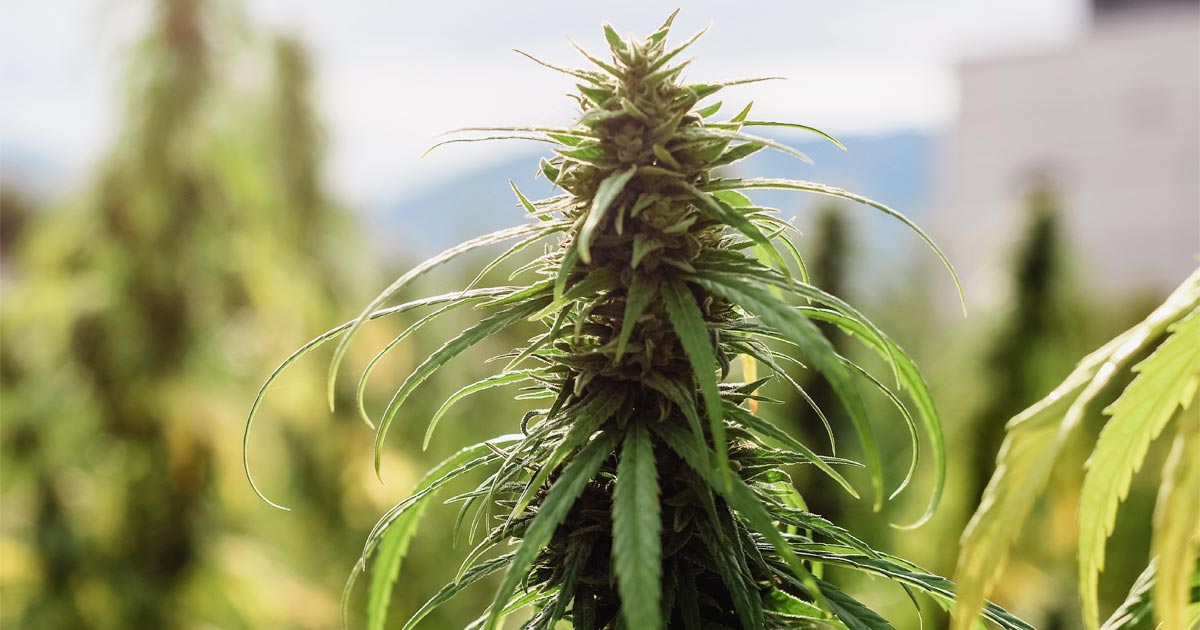
In late April, the Amberg District Court in Germany acquitted a shopkeeper accused of illegally selling hemp flowers containing less than 0.3% of THC. Since the prosecutor's office subsequently withdrew its appeal, the judgment is final.
This decision directly calls into question the « poisoning clause » A legal provision that had long been in effect in Germany, allowing authorities to prosecute sellers of hemp-based products that complied with regulations, on the grounds that they could theoretically be processed to produce an intoxicating effect.
For years, this clause had been one of the main legal obstacles facing the German CBD and hemp industries, even though the products complied with European THC limits.
The End of a Legal Obstacle Unique to Germany?
Unlike other European countries, Germany has maintained a legal interpretation that allows prosecutors to target companies in the hemp industry even when their products comply with the legal THC threshold.
This approach relied largely on a a ruling issued in 2021 by the Federal Court of Justice, which held that sufficiently large quantities of hemp flowers containing more than 0.1% of THC could theoretically be processed to produce a psychotropic effect. This reasoning led to investigations, product seizures, and criminal prosecutions against retailers and producers of legally grown hemp.
The Amberg District Court has now adopted a different perspective.
His reasoning is closely linked to the partial legalization of cannabis in Germany through the Cannabis Consumption Act (KCanG). Given that adults can now legally purchase cannabis containing THC, the court concluded that the theoretical risk of someone attempting to get high using industrial hemp with a low THC content was no longer realistic.
Although this ruling does not automatically invalidate the intoxication clause nationwide, it significantly weakens the legal argument that has underpinned these prosecutions for years.
Years of Uncertainty for Companies in the Hemp Industry
The consequences of the “intoxication” clause have extended far beyond the courtrooms.
According to figures cited by industry representatives, Germany has lost 1,842 hectares of industrial hemp crops in 2025, while 127 farmers have completely stopped producing hemp. Legal uncertainty is also said to have affected research institutes and museums, some of which have lost their cultivation permits.
For many companies, the risk of criminal prosecution has discouraged investment in a rapidly expanding market across Europe. Producers and retailers have often faced seizures and lengthy legal proceedings, even though they were selling hemp varieties authorized under European regulations.
This decision is therefore being hailed as an important step toward restoring confidence in the sector.
Parliament could carry out the reform
This legal development comes as lawmakers are already considering broader reforms.
A bill currently under consideration by the Bundestag proposes to simply eliminate the clause regarding psychoactive effects. This bill also calls for raising the permitted THC threshold for industrial hemp to 1% and to authorize indoor hemp cultivation, two long-standing demands of the industry.
Although the proposal has not yet been adopted, the ruling handed down in Bavaria has given new momentum to calls for legislative change.
In the meantime, the Amberg ruling provides hemp producers and dealers with a stronger legal basis in ongoing cases. Other courts may now follow the same line of reasoning, although each case will continue to be evaluated on a case-by-case basis until Parliament or higher courts provide clarification at the national level.
















CBD is said to promote athletic recovery, without improving performance

294 cannabis clubs in Chile: a booming movement with uneven distribution

Chronic Sciatica: New York Approves First Clinical Trial of a THC-Based Medication

United States: The DEA is accelerating the integration of medical cannabis at the federal level

Florida is nearing one million patients using medical cannabis

Uruguay Revives Its Plan to Allow Tourists to Legally Access Cannabis

In Brazil, researchers are developing an innovative CBD eye drop

Autism: Medical Cannabis Is Linked to Reduced Anxiety

The $28 billion U.S. hemp market remains under threat

Jamaica Eases Small Farmers' Access to the Cannabis Market
-
 Business5 days ago
The legal cannabis market in New York exceeds 4 billion $ in revenue
-
Cannabis and driving4 weeks ago
Cannabis and CBD: French Drivers Can Now Lose Their License Even Without a Positive Test Result
-

 Cannabis in France2 weeks ago
Which countries legalized medical cannabis before France?
-
Business2 weeks ago
South Korea is preparing to begin local production of medical cannabis to meet rising demand
-
Cannabis in the Netherlands4 weeks ago
One year after the launch of the Dutch cannabis experiment, the first trends are emerging
-
Cannabis in Thailand2 weeks ago
From the boom in dispensaries to a purely medical approach: Thailand is revising its cannabis policy
-
Cannabis in France4 weeks ago
French medical cannabis remains stalled at the Ministry of Health
-
Cannabis in Argentina3 weeks ago
Argentina Opens Its Market to Hemp Flowers Containing 1% of THC

















You must be logged in to post a comment Login