Budget 2027: Trump changes his tune and wants to protect medical cannabis in the states

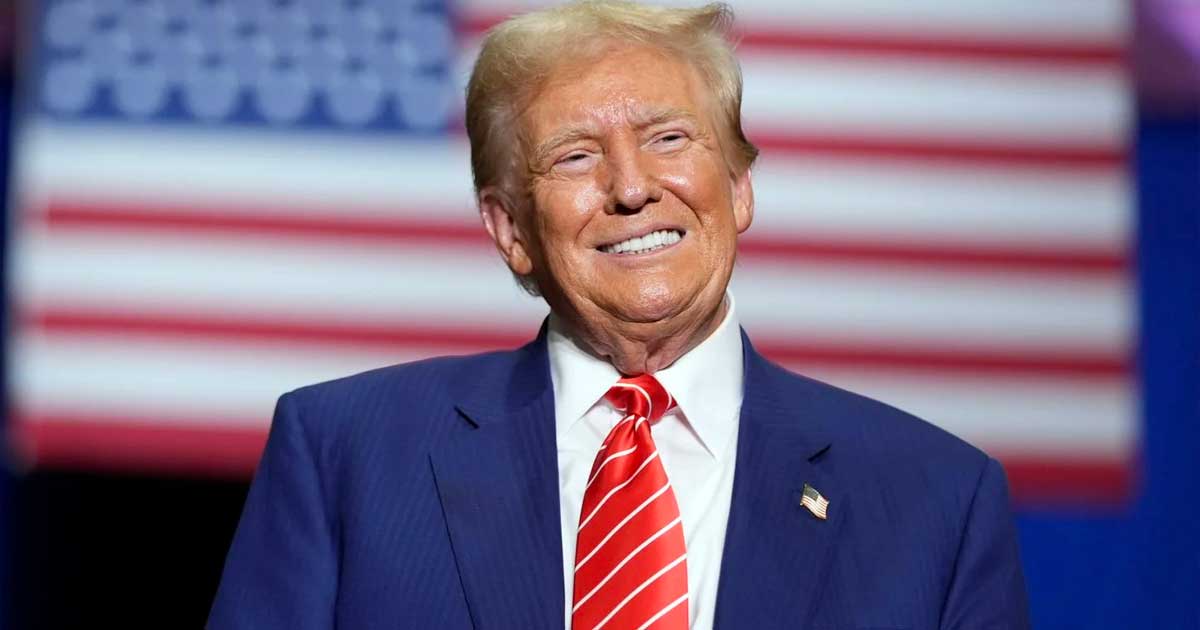
The Chairman Donald Trump is now proposing to maintain federal protections against interference with medical marijuana set up by governments.
These guidelines are set out in the budget request for the year. 2027, transmitted to Congress on Friday. While this document does not constitute legislation per se, it does reflect the administration's priorities at a time when parliamentarians are beginning to draft the annual budget texts designed to finance the federal government.
This announcement marks a turnaround from the stance taken by Trump in his first term. Back then, he had repeatedly asked Congress to remove the budget provision prohibiting the Ministry of Justice to use its funds to hinder the application of state laws authorizing medical cannabis.
Federal rider protects medical cannabis programs
At the heart of the proposal is a budgetary rider that prevents the Ministry of Justice to spend funds to circumvent state medical cannabis laws. The provision, renewed every year since 2014, states:
«None of the funds made available to the Department of Justice under this Act may be used...to prevent any of them from implementing their own laws authorizing the use, distribution, possession, or cultivation of marijuana for medical purposes.»
In Trump's new budget request, the rider includes dozens of states as well as U.S. territories, and also explicitly covers the District of Columbia. It also omits again the Nebraska, although this state does have a medical cannabis law, for reasons that remain unclear.
Congress has always kept this protection in force, regardless of presidential requests. Under Obama, the White House also sought to remove the clause, but lawmakers upheld it.
Under President Joe Biden, budget proposals have systematically supported the retention of this provision.
A turnaround from Trump's first term
The inclusion of the medical cannabis clause in the 2027 budget represents a significant shift from his previous approach. During his first term, Trump regularly asked lawmakers to remove medical cannabis protections, while saying the opposite.
Even after signing budget bills containing the rider, he issued several statements suggesting that his administration might interpret the text flexibly. These statements indicated that his administration would treat the rider in accordance with the President's constitutional responsibility, a formulation that some interpreted as leaving the door open to federal enforcement action despite the fiscal restraint.
This time, Trump is explicitly asking Congress to preserve this protection.
This proposal comes several months after Trump signed an executive order directing the attorney general to complete the process of transfer of cannabis from list I to list III under the Controlled Substances Act, A change that could reshape federal law enforcement and cannabis taxation rules.
Washington D.C. remains blocked from legalizing the sale of recreational cannabis for adults
While Trump's budget maintains protections for medical programs nationwide, it also retains another rider that prevents Washington D.C. from legalizing and regulating the sale of recreational cannabis. This provision has long been championed by Republican Rep. Andy Harris, and the text of Trump's proposal states:
«None of the federal funds provided by this Act may be used to enact or enforce any law, rule or regulation to legalize or otherwise reduce penalties for the possession, use or distribution of any Schedule I substance...»
It also prohibits the Washington D.C. government from using its own funds to create a legal recreational cannabis system. This policy has effectively kept Washington D.C. in a state of uncertainty for years: residents can legally possess and cultivate cannabis, but legislators can't establish a licensed adult-use retail market.
Local officials have tried to widen access through the medical marijuana, to enable residents and tourists alike to self-certify without the need for a medical recommendation.
Protections for hemp are maintained, while restrictions on THC disappear from the budget text.
Trump's fiscal 2027 budget also maintains a clause protecting state hemp programs against federal interference. This provision is intended to ensure that the federal government cannot block the transportation, processing or sale of hemp grown in accordance with the rules of the 2014 farm bill and 2018 farm bill.
The proposal also deletes references to restrictions on THC derived from hemp adopted last year, but this appears to be a procedural matter. Since these provisions have permanently amended federal law, they do not need to be reintroduced in the text of the annual appropriations.
The budget request now goes to Congress, where lawmakers will determine whether Trump's cannabis policy priorities will survive the legislative process.





















JIHE 2026: Japan’s Largest Trade Show Dedicated to Hemp and CBD Returns to Tokyo with More Than 100 Industry Players
New Caledonia: The Courts Clear the Way for the Return of CBD

The Brazilian medical cannabis market continues to grow

Morocco: Three Cannabis-Based Medications Approved for the Treatment of Epilepsy

Canopy Growth Receives New EU-GMP Certification to Strengthen Its Presence in Europe

Three years after legalizing medical cannabis, Albania continues to establish regulations for it

The first plant-based medical THC spray arrives in the United Kingdom

Medical Cannabis in Germany: THC Prices Vary by a Factor of 12

France already has 3,000 cannabis retail outlets. None of them are legal.

Morocco's exports of legal cannabis have expanded to 15 countries
-
 Business2 weeks ago
The legal cannabis market in New York exceeds 4 billion $ in revenue
-

 Cannabis in France4 weeks ago
Which countries legalized medical cannabis before France?
-
Business4 weeks ago
South Korea is preparing to begin local production of medical cannabis to meet rising demand
-
Cannabis in France4 days ago
France already has 3,000 cannabis retail outlets. None of them are legal.
-
Cannabis in Thailand4 weeks ago
From the boom in dispensaries to a purely medical approach: Thailand is revising its cannabis policy
-
Cannabis in the U.S.5 days ago
A DEA report confirms that there are no fatal cannabis overdoses
-
Cannabis and driving3 weeks ago
Medical Cannabis and Driving: New South Wales Ends Automatic Penalties for THC
-
Cannabis in France3 weeks ago
France’s Drug Policy Chief Defends Cannabis Prohibition... and Runs Into the Facts
















You must be logged in to post a comment Login