
DEA confirms that HHC is federally banned

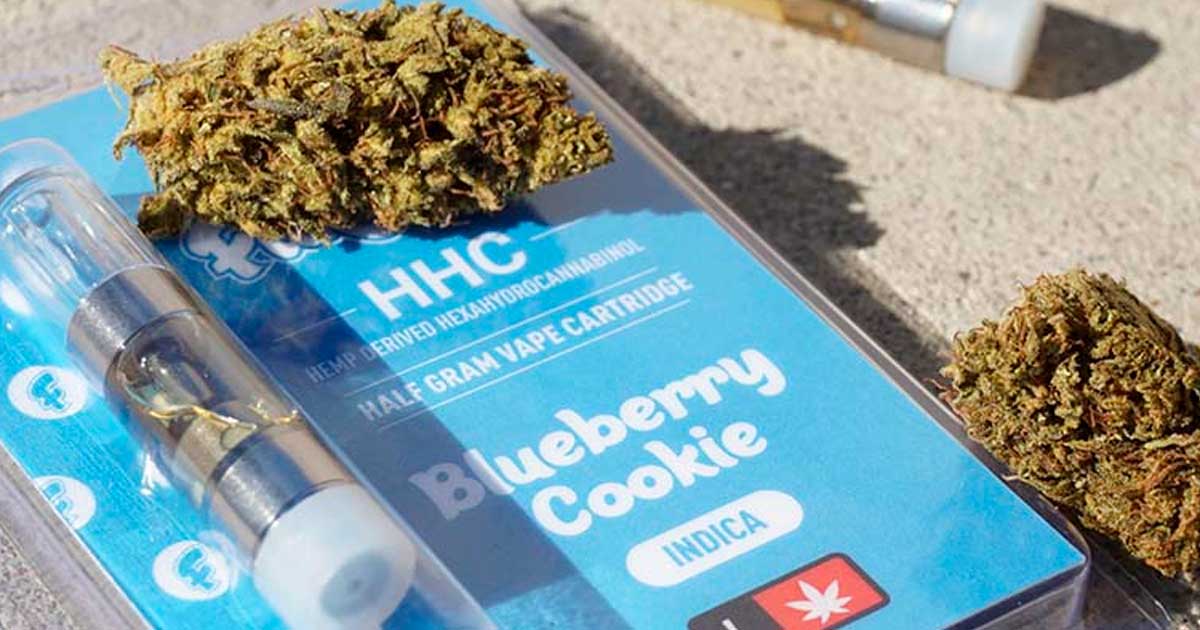
The U.S. Drug Enforcement Administration (DEA) has officially reaffirmed its position regarding the’hexahydrocannabinol (HHC) : This cannabinoid is considered to be illegal under federal law and cannot be described as hemp legal within the meaning of the 2018 farm bill.
In a final rule published in the Federal Register, the agency confirmed that the HHC remains classified as Schedule I controlled substance under the Controlled Substances Act (CSA), and that it has now been assigned its own dedicated drug code, the 7220, with immediate effect.
Until now, this compound was classified under the broader category of tetrahydrocannabinols, but the DEA states that this new classification is intended to improve clarity in law enforcement and administrative oversight.
A cannabinoid found in trace amounts, but primarily produced in the laboratory
HHC occurs naturally in cannabis only in very small amounts. Most of the HHC-based products sold in the United States are synthetically produced, often by hydrogenating CBD extracted from hemp.
In recent years, HHC has become widespread, appearing in vapes, gummies, pre-rolled joints, and vaporized hemp flowers, marketed as a legal alternative to delta-9 THC. But the DEA has repeatedly rejected the idea that these products fall under the federal definition of hemp.
«Only tetrahydrocannabinols found in the cannabis plant or derived from it—and not synthetic tetrahydrocannabinols—are exempt from regulation as «tetrahydrocannabinols found in hemp,» the agency wrote in its opinion.
The DEA added that: «Tetrahydrocannabinols produced by chemical conversion, even when derived from hemp, are considered synthetic for purposes of the CSA and therefore cannot be classified as «tetrahydrocannabinols present in hemp » within the meaning of the 2018 Agriculture Act.».
A rule presented as «technical,» but one that has a real impact on the market
According to the DEA, the new classification code does not change the legal status of HHC, since the agency believes that it has always been illegal. Instead, the administration presents this measure as an administrative adjustment that will allow it to set production quotas and issue manufacturing permits more precisely.
«This rule does not in any way affect the current status of hexahydrocannabinol as a Schedule I controlled substance,» the agency said.
The notice was signed by the DEA administrator, Terrance Cole, and the agency also noted that the U.S. Department of Health and Human Services (HHS) supports this classification decision.
While some states may continue to authorize HHC-based products at the local level, the federal rule increases the risks for businesses involved in interstate transportation, manufacturing, or distribution.
Legal uncertainty persists as courts challenge the DEA's interpretation
Despite the DEA’s clear position, several federal courts have already challenged the agency’s interpretation of the Farm Bill. Recent appellate court rulings have concluded that cannabinoids derived from hemp may remain legal under the strict letter of the law, even if they are produced through chemical conversion.
The lawyer specializing in cannabis Paula Savchenko warned that the DEA's new approach might not hold up if it were challenged in court.
«The rule is likely to be challenged because it contradicts recent appellate decisions such as AK Futures and Anderson v. Diamondback, which interpret the Farm Bill as including hemp-derived cannabinoids even if they have been converted,» she told High Times.
Ms. Savchenko also expressed concerns about the procedure itself, noting that the DEA had implemented this rule without the usual public comment period, describing it as a ’technical amendment.«.
A more significant change is planned for November 2026
The DEA's announcement comes as the United States prepares for a major regulatory change that could redefine the entire hemp cannabinoid market.
Pursuant to the provisions contained in a federal bill signed by President Donald Trump, the definition of legal hemp is expected to be tightened on November 12, 2026. If this measure is implemented as planned, hemp-based products will remain legal at the federal level only if they contain no more than 0.4 milligrams of total THC per container.
This limit could eliminate most of the current cannabinoid market, including products made from delta-8 THC, of THC-O and now HHC, regardless of how the courts interpret the agricultural law.





















CBD is said to promote athletic recovery, without improving performance

294 cannabis clubs in Chile: a booming movement with uneven distribution

Chronic Sciatica: New York Approves First Clinical Trial of a THC-Based Medication

United States: The DEA is accelerating the integration of medical cannabis at the federal level

Florida is nearing one million patients using medical cannabis

Uruguay Revives Its Plan to Allow Tourists to Legally Access Cannabis

In Brazil, researchers are developing an innovative CBD eye drop

Autism: Medical Cannabis Is Linked to Reduced Anxiety

The $28 billion U.S. hemp market remains under threat

Jamaica Eases Small Farmers' Access to the Cannabis Market
-
 Business5 days ago
The legal cannabis market in New York exceeds 4 billion $ in revenue
-
Cannabis and driving4 weeks ago
Cannabis and CBD: French Drivers Can Now Lose Their License Even Without a Positive Test Result
-

 Cannabis in France2 weeks ago
Which countries legalized medical cannabis before France?
-
Business2 weeks ago
South Korea is preparing to begin local production of medical cannabis to meet rising demand
-
Cannabis in the Netherlands4 weeks ago
One year after the launch of the Dutch cannabis experiment, the first trends are emerging
-
Cannabis in Thailand2 weeks ago
From the boom in dispensaries to a purely medical approach: Thailand is revising its cannabis policy
-
Cannabis in France4 weeks ago
French medical cannabis remains stalled at the Ministry of Health
-
Cannabis in Argentina3 weeks ago
Argentina Opens Its Market to Hemp Flowers Containing 1% of THC

















You must be logged in to post a comment Login