
After 14 years of cannabis legalization, Washington State may finally allow home cultivation


Lawmakers in the’Washington State are once again examining one of the last unresolved issues surrounding the legalization of cannabis in the state: personal cultivation. More than a decade after voters approved legalization, a Senate committee has introduced a bill that would allow adults to grow their own plants at home.
The proposal, SB 6204, was approved this week by the Senate Committee on Labor and Commerce and has now been referred to the Senate Rules Committee, a necessary step before a possible vote on the floor. If passed, this bill would bring Washington in line with the majority of U.S. states that already permit personal cannabis cultivation.
What SB 6204 Would Allow
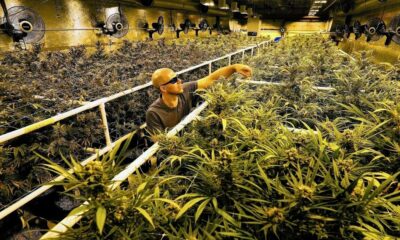
Under the bill SB 6204, adults aged 21 and older would be allowed to grow up to six cannabis plants per person, with a cap of 15 plants per unit, regardless of the number of adults living there. The legislation would also allow individuals to possess the harvest from these plants without being subject to the one-ounce (28-gram) possession limit currently in effect in Washington State.
This represents a significant change for a state where growing cannabis without a medical license remains a Class C misdemeanor, punishable by imprisonment and substantial fines. Despite the early adoption of the legalization by the State of Washington in 2012, personal cultivation has long been prohibited for recreational users.
The bill sets clear limits. Plants must be hidden from public view and grown in such a way as to prevent any odor from being detected beyond the grower's residence. Violations of these requirements would be treated as civil offenses rather than criminal offenses.
Penalties, Restrictions, and Local Oversight
While the proposed text permits home cultivation, it nevertheless maintains a system of progressive sanctions. Growing more than 6 but fewer than 16 plants would constitute a civil offense, while growing more than 16 plants would still be considered a criminal offense.
Certain locations would remain completely off-limits. Home cultivation would be prohibited in dwellings used for early childhood education or child care services.
An amendment adopted during the committee vote also authorizes cities and counties to temporarily restrict or ban home cultivation in residential areas. This provision could lead to a patchwork of local rules, even if the bill is passed at the state level.
Landlords would also retain control over rental properties, as they would be allowed to prohibit cultivation in rented units. In addition, individuals on probation or parole could be prohibited from plant cultivation as a condition of their probation.
Debate and Political Context
The committee's vote followed testimony from both opponents and supporters. Law enforcement representatives expressed concerns about the difficulties in enforcing the law and the risks of abuse, while the veterans and civil liberties advocates have argued that personal use is a logical extension of the legalization approved by voters.
Efforts to legalize home cultivation in the’Washington State are not new. Similar proposals have been put forward on several occasions since 2015, but each one has been blocked before reaching its goal. As recently as last year, a similar bill was introduced by a House committee before being rejected during the appropriations process.
A similar bill has now been introduced in the state House of Representatives, but it has not yet been heard.
A Test for Washington's Legal Framework
As one of the first U.S. states to legalize recreational cannabis for adults, Washington has often been criticized for maintaining one of the most restrictive consumption models in the country. Allowing limited home cultivation would bring the state in line with standards in other states, while maintaining strict regulatory oversight.
It is not certain that the bill SB 6204 succeed where previous attempts have failed. But its progress reflects a renewed willingness on the part of lawmakers to address long-standing gaps in Washington’s legal framework for legalization and to test the extent to which the voters’ original mandate can be expanded more than a decade later.













Medical Cannabis and Driving: New South Wales Ends Automatic Penalties for THC

China's Yongji Health Takes Control of Tasmanian Botanics

Autism and Cannabis: Results from the First Placebo-Controlled Trial of NTI164

Which countries legalized medical cannabis before France?

From the boom in dispensaries to a purely medical approach: Thailand is revising its cannabis policy

South Korea is preparing to begin local production of medical cannabis to meet rising demand

In the United States, cannabis use among high school students has reached an all-time low

Medical cannabis use surges by 64 % in Denmark

Canopy Growth Enters the U.K. Market with Four Canadian Strains

CBD: Full-Spectrum Extracts Under Threat in Greece
-
 Cannabis and driving2 weeks ago
Cannabis and CBD: French Drivers Can Now Lose Their License Even Without a Positive Test Result
-

 Cannabis in France1 day ago
Which countries legalized medical cannabis before France?
-
Cannabis in France3 weeks ago
Cannabis Legalization: The LFI Bill Has a Major Problem—THC
-
Cannabis in the Netherlands2 weeks ago
One year after the launch of the Dutch cannabis experiment, the first trends are emerging
-
Cannabis in France2 weeks ago
French medical cannabis remains stalled at the Ministry of Health
-
Cannabis in Argentina1 week ago
Argentina Opens Its Market to Hemp Flowers Containing 1% of THC
-
Business2 weeks ago
The United Kingdom Is Moving Closer to a Regulated CBD Market
-
Cannabis in France1 week ago
Rima Hassan: When «Drugs» Become a Political Weapon













You must be logged in to post a comment Login