
Across the U.S., states mobilize to resist future federal ban on hemp-derived products


With the planned entry into force at the end of 2026 of a a nationwide ban on most THC-based products hemp derivatives: a political and economic storm is brewing across the United States.
What once looked like a renaissance for hemp is now an industry on the brink of collapse. Some U.S. states are scrambling to protect what has become one of the most dynamic sectors of the cannabis economy.
Wisconsin Faces Federal Deadline
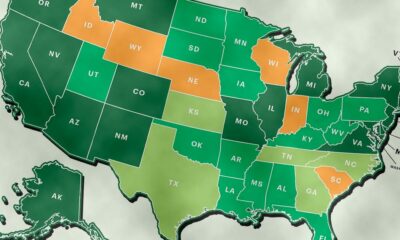
With the federal ban set to take effect in November 2026, Wisconsin lawmakers are rushing to decide whether to strengthen the ban or develop a regulatory framework to keep the industry alive.
Three bills are currently under consideration:
- A proposal by State Representative Lindee Brill would outright ban THC-based products derived from hemp, thereby bringing state law in line with the federal ban.
- Another bill, introduced by Representative Rob Swearingen, would authorize hemp-derived THC products but would impose age restrictions and strict marketing rules.
- A Senate bill to be introduced shortly by Republican Patrick Testin is expected to follow a similar regulatory path, although the details have not yet been released.
The stakes are particularly high in Wisconsin. Hemp businesses have become economic lifelines for rural communities since legalization, and entrepreneurs like Craig Thran, founder of Three Tall Pines, say the industry now supports dozens of jobs and hundreds of business partnerships.
Mr. Thran’s company handles cultivation, processing, formulation, and distribution. He states that thorough laboratory testing and accurate labeling are the norm for reputable producers. In his view, regulations should target «bad actors,» not the entire industry.
Retailers such as The Dispensary in Appleton emphasize their commitment to self-regulation: enforcing the 21-and-over rule, verifying IDs, and avoiding packaging designed to appeal to children. Assistant Manager Alex Hernandez notes that while some stores may cut corners, responsible businesses are already following the guidelines that lawmakers hope to formalize.
For proponents of regulation, the goal is simple: to maintain a thriving industry while ensuring consumer safety.
Tennessee Secures a Temporary Lifeline
In Tennessee, the hemp industry narrowly avoided an immediate crisis. A statewide ban on most THC-based products derived from hemp is set to take effect on January 1, with the aim of creating a strictly regulated market for edibles and beverages, while banning hemp-based products that can be smoked or vaporized.
But after negotiations with the Tennessee Healthy Alternatives Association, state agencies agreed to a temporary compromise: any retailer holding a license issued before December 31, 2025, may continue to sell the banned products until June 30, 2026, under the previous regulatory framework.
This agreement gives businesses a six-month grace period and effectively puts the legal battle the industry was preparing to wage against the state on hold. But Tennessee retailers know that this reprieve expires a few months before the federal ban takes effect.
Given the nationwide crackdown called for in the budget bill signed by President Donald Trump, Tennessee’s compromise feels more like a countdown than a victory.
Minnesota Becomes the Epicenter of the National Protest Movement
While some states are stalling or negotiating, Minnesota has launched the most coordinated resistance to the federal ban. Leading Democratic lawmakers—Senators Amy Klobuchar and Tina Smith, as well as Representative Ilhan Omar—are openly committed to preventing the collapse of an industry that they say their state has regulated «the right way.».
Klobuchar, a prominent member of the Senate Agriculture Committee, describes this moment as «decisive.» Minnesota’s approach—which strictly enforces sales restrictions for those 21 and older, labeling requirements, and packaging rules designed to prevent appeal to young people, has become one of the nation’s most respected models for hemp-derived THC beverages and edibles.
The senator argues that consumer products are an «essential» part of Minnesota’s economy, as they support farmers, breweries, processors, and retailers. She also points out that the federal ban was pushed through using last-minute tactics: senators received a massive spending package that included the hemp ban just one day before the vote.
Smith shares this concern, stating that Minnesota has created «one of the strongest and most responsible regulatory frameworks in the entire country.» She warns that the ban will lead to a «chaotic regulatory environment» and make banking «incredibly complicated.».
Rep. Omar was particularly vocal, denouncing the process as «unacceptable» and accusing a small group of lawmakers of sneaking the ban into the bill without consultation. «All of this will only destroy good jobs, reduce safety and consumer choice, and push people toward unregulated—and sometimes dangerous—black markets,» she said.
It is interesting to note that Minnesota’s lobbying efforts have garnered provisional support from Republicans. House Majority Whip Tom Emmer is reportedly «open» to alternatives, and Senator Rand Paul plans to introduce federal legislation allowing state regulatory systems to replace the national ban.
A High-Risk Year for the Hemp Industry
The next 12 months will determine the future of hemp-derived THC in the United States. State lawmakers are rushing to draft their own protective measures, industry leaders are lobbying Congress, and federal policymakers are under increasing pressure to replace the ban with regulation.
Whether the solution comes from a «streamlined Farm Bill,» bipartisan amendments, or state-level regulatory frameworks, one thing is clear: the hemp industry is no longer a niche sector. It is a national economic force preparing to fight for its survival.

















Contest: Win a trip to Quebec to experience the hemp harvest firsthand

Bedrocan on Hold Amid Uncertainty Over Medical Cannabis

Newsweed Launches Its Own AI
A new tax of 0.5% could disrupt the hemp industry in Canada

Medical Cannabis and Driving: New South Wales Ends Automatic Penalties for THC

China's Yongji Health Takes Control of Tasmanian Botanics

Autism and Cannabis: Results from the First Placebo-Controlled Trial of NTI164

Which countries legalized medical cannabis before France?

From the boom in dispensaries to a purely medical approach: Thailand is revising its cannabis policy

South Korea is preparing to begin local production of medical cannabis to meet rising demand
-
 Cannabis and driving3 weeks ago
Cannabis and CBD: French Drivers Can Now Lose Their License Even Without a Positive Test Result
-

 Cannabis in France4 days ago
Which countries legalized medical cannabis before France?
-
Cannabis in France3 weeks ago
Cannabis Legalization: The LFI Bill Has a Major Problem—THC
-
Cannabis in the Netherlands2 weeks ago
One year after the launch of the Dutch cannabis experiment, the first trends are emerging
-
Business5 days ago
South Korea is preparing to begin local production of medical cannabis to meet rising demand
-
Cannabis in Argentina2 weeks ago
Argentina Opens Its Market to Hemp Flowers Containing 1% of THC
-
Cannabis in France2 weeks ago
French medical cannabis remains stalled at the Ministry of Health
-
Cannabis in Thailand4 days ago
From the boom in dispensaries to a purely medical approach: Thailand is revising its cannabis policy














You must be logged in to post a comment Login