Jeff Sessions rescinds Obama-era federal cannabis protections

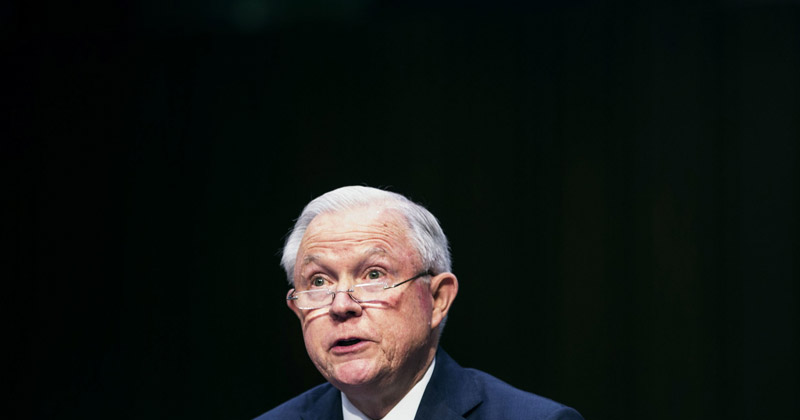
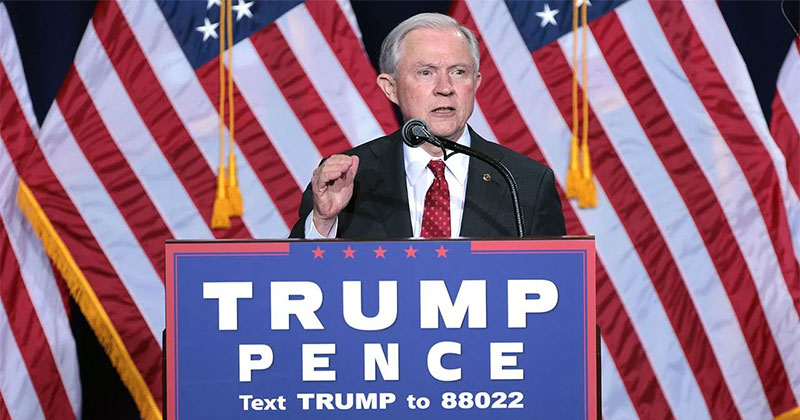
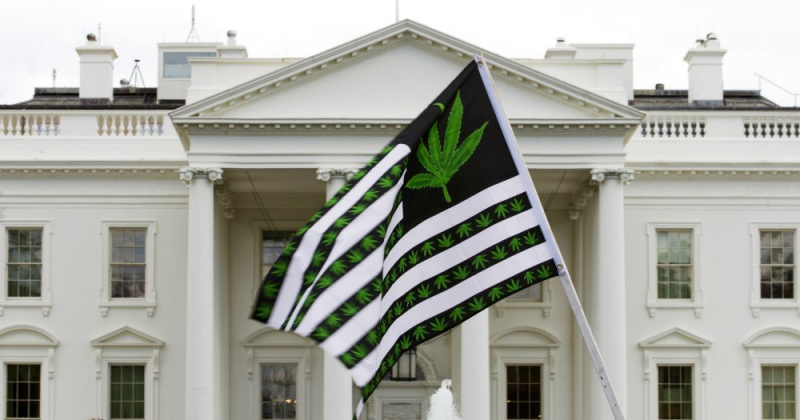
Just days after the California has legalized cannabis and opened its legal market, US Attorney General Jeff Sessions decided to attack the federal protections that allowed US states to reform their cannabis laws.
Cannabis is illegal federally, but…
Cannabis is illegal in the United States at the federal level. It is classified under Annex 1 of the list of controlled substances, just like heroin or cocaine, a list that recognizes no medicinal properties for these substances.
The legalization of cannabis in american states The repose is based on a series of memos issued during the Obama administration. These texts are non-binding and guide the actions of federal prosecutors. In the case of cannabis, they restrict federal intervention in state-level cannabis activities, provided that the state does not export cannabis to another state and that cannabis remains out of reach of children and criminal networks.
These texts are four in number:
- The 2009 Ogden memo Who enabled the development of the medical cannabis market
- Cole's Memos 2011, 2013 and 2014. The first led to a wave of crackdowns on the medical cannabis industry. The second aimed to address the apparent contradiction between federal cannabis prohibition and the votes to legalize it in Colorado and Washington State. It effectively outlined the contours of the recreational cannabis industry. The third attempted to address banks' concerns about handling money from the sale of a federally prohibited substance, with varying degrees of success.
The only real cannabis law, the Rohrabacher-Farr amendment, prevents the Department of Justice from spending funds to interfere with state medical cannabis laws.
Jeff Sessions Rescinds Memos
Two anonymous sources close to the matter told [us] yesterday that The Associated Press that Jeff Sessions intended to overturn the Cole memos, leaving federal prosecutors with the responsibility and freedom to enforce U.S. federal law in their districts. Jeff Sessions confirmed the information by issuing an official statement available here.
For Jonathan Blanks, a research fellow at the Project on Criminal Justice Reform at the Cato Institute, the rescission of the Cole memo «endangers legal state businesses and violates principles of federalism that have been central to the Republican Party for decades.».
«Although the cannabis consumer will not be targeted or arrested by the federal government, business owners directly or indirectly involved in the distribution of recreational cannabis could see their freedoms and livelihoods threatened by this action,» Blanks added. «Simply put, the Department of Justice is using criminal law to trample on state prerogatives and individual rights.»
However, the Rohrabacher-Blumenauer Amendment protects the medical industry and remains effective… until it expires on January 19th, along with the federal budget, and will be put to a vote again on that date.
What consequences?
It is highly unlikely that we will see an immediate and massive crackdown on the legal cannabis market. This would mean sending the army all over the West Coast of the United States, which seems complicated.
More certainly, this will add instability to a market that relies heavily on trust, and therefore dampen some enthusiasm, whether from entrepreneurs or banks that were starting to work with the sector. But no more than that.
We should also quickly see a legal battle organize to definitively protect the American cannabis industry from the whims of a Justice Minister who stated that he has no problem with the Ku Klux Klan until they found out they were also smoking cannabis.
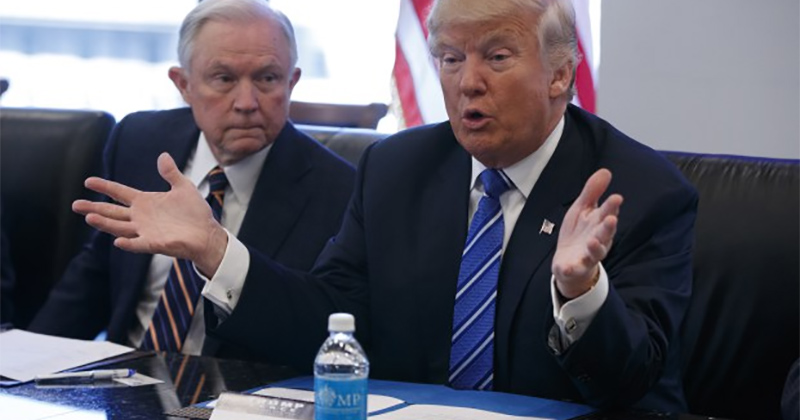
Donald Trump had promised during his campaign to not interfere with US cannabis laws. Following Sessions« statement, White House spokeswoman Sarah Huckabee Sanders, in a neat balancing act, maintained that Trump was not reneging on his campaign promises, but rather that the Department of Justice simply wished to »give prosecutors the tools to go after big dealers and enforce federal law. The President's position has not changed, but he strongly believes that we should enforce federal law."





«Vincy Gold»: Humboldt Seed Company on the Hunt for Saint Vincent Sativas

Cronos Completes the Acquisition of CanAdelaar for 57.5 million euros

Cannabis with a "bloody" twist: Discover Sensi True Blood and Sensi Sangria, the two new strains from Sensi Seeds

Hemp: The Council of the EU Takes a Stand on New Production and Marketing Rules

Missouri's legal cannabis market accounts for 93 % of consumer spending

THC Gummies: How to Read a Certificate of Analysis Before Buying

British patients now have access to THCV-rich cannabis flowers

Spain: Medical Cannabis Is Coming to About 50 Hospitals

JIHE 2026: Japan’s Largest Trade Show Dedicated to Hemp and CBD Returns to Tokyo with More Than 100 Industry Players

New Caledonia: The Courts Clear the Way for the Return of CBD
-
 Business3 weeks ago
The legal cannabis market in New York exceeds 4 billion $ in revenue
-

 Cannabis in France4 weeks ago
Which countries legalized medical cannabis before France?
-
Cannabis in France1 week ago
France already has 3,000 cannabis retail outlets. None of them are legal.
-
Cannabis in the U.S.1 week ago
A DEA report confirms that there are no fatal cannabis overdoses
-
Cannabis in Thailand4 weeks ago
From the boom in dispensaries to a purely medical approach: Thailand is revising its cannabis policy
-
Cannabis and driving4 weeks ago
Medical Cannabis and Driving: New South Wales Ends Automatic Penalties for THC
-
Cannabis in France3 weeks ago
France’s Drug Policy Chief Defends Cannabis Prohibition... and Runs Into the Facts
-
Studies on cannabis2 weeks ago
Cannabis Oil and Endometriosis: A Promising Study for Pain Relief
















You must be logged in to post a comment Login