
The Irish Parliament recommends decriminalizing all drugs


A committee of the Irish Parliament, the Joint Committee on Drug Use (Parliamentary Committee on Drug Use) published its final report, setting forth 161 recommendations aimed at fundamentally transforming the way the Irish government approaches the use of psychoactive substances.
At the heart of the document is the decriminalization of the possession of all drugs for personal use.
Repealing the 1977 law: the central focus of the report
The report's most symbolic recommendation concerns the repeal of the Section 3 of the Misuse of Drugs Act of 1977, the law that currently criminalizes the mere possession of drugs in Ireland. The committee calls for replacing this criminal justice approach with a public health-centered approach, without distinguishing between substances. No controlled substances list, no special regulations for cannabis: the committee is aiming for comprehensive reform, based, in its own words, on «a vast body of evidence» suggesting that such a measure would not lead to an increase in consumption.
Gary Gannon, committee chair and Social Democrat representative, was very clear in his introduction: «This is not just a minor adjustment. It is a recognition that criminalizing people for their own drug use has not reduced risks, and that a different approach is both possible and long overdue.»
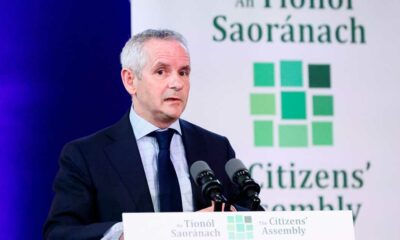
The report builds on the work of the Citizens’ Assembly on Drug Use, including the 36 recommendations published in January 2024 form the framework. Between September 2025 and April 2026, the committee held dozens of hearings, hearing from representatives of the Garda Síochána (national police), healthcare professionals, academics, international experts, and people directly affected by addiction.
The conclusion shared by most speakers is clear: the punitive approach has not reduced drug-related harm. In some cases, it has exacerbated the stigmatization and exclusion of the most vulnerable populations. Mary Fitzpatrick, vice chair of the committee and a Fianna Fáil senator, put it clearly: «Ireland must shift to a health-led approach. The evidence shows that an approach focused largely on the criminal justice system has not been effective enough.»
What the report specifically recommends
In addition to the decriminalization of possession for personal use, the 161 recommendations cover a wide range of measures:
- Development of harm reduction services, including supervised consumption rooms (including mobile devices) and the general release of the naloxone, an antidote for opioid overdoses
- Expanded access to the heroin-assisted therapy and extension of the model of the Drug Treatment Courts throughout the entire country
- End of Short Prison Terms for Nonviolent Drug Offenses
- Increased investment in family support services and caregivers
- Measures to prevention for young people, including youth centers and structured activities
- Mandatory health warnings on deodorant aerosols and restrictions on their sale to minors
Decriminalization of personal use
The report takes care to distinguish between personal possession and trafficking. It maintains strict criminal penalties against trafficking networks, organized crime, and any involvement of children in distribution networks. The committee further recommends that the legislation explicitly state that the repeal of Section 3 would in no way diminish the Garda’s powers to investigate supply and sale.
One point of contention remains: jurisdictions that have already decriminalized the offense have observed an increase in the consumption in public spaces. To address this, the committee proposes that local governments adopt specific municipal ordinances, similar to those governing alcohol consumption in public places.
What's next for the Irish government?
The report is to be reviewed by the Ministries of Health, Justice, and the Taoiseach’s Office before being debated in both houses of the’Oireachtas (Irish Parliament). It also calls for the creation of a Standing Committee on Drugs to ensure ongoing monitoring of policies.
The Irish government is currently working on a new National Drug Strategy, a draft of which has been submitted for public comment. The committee requests that its conclusions be incorporated into the final text before adoption.
Ireland's trajectory is similar to that of other European countries, from the Portugal, a pioneer in this field since 2001, at the’Germany, who has partially legalized on cannabis in 2024. If the recommendations were to become law, Ireland would join the growing number of countries that have chosen to treat the drug issue more as a matter of public health ...as a criminal matter.
It should be noted, however, that since 2018 and our first coverage of the Recommendations for decriminalization in Ireland, nothing has changed.



















A new tax of 0.5% could disrupt the hemp industry in Canada

Medical Cannabis and Driving: New South Wales Ends Automatic Penalties for THC

China's Yongji Health Takes Control of Tasmanian Botanics

Autism and Cannabis: Results from the First Placebo-Controlled Trial of NTI164

Which countries legalized medical cannabis before France?

From the boom in dispensaries to a purely medical approach: Thailand is revising its cannabis policy

South Korea is preparing to begin local production of medical cannabis to meet rising demand

In the United States, cannabis use among high school students has reached an all-time low

Medical cannabis use surges by 64 % in Denmark

Canopy Growth Enters the U.K. Market with Four Canadian Strains
-
 Cannabis and driving2 weeks ago
Cannabis and CBD: French Drivers Can Now Lose Their License Even Without a Positive Test Result
-

 Cannabis in France2 days ago
Which countries legalized medical cannabis before France?
-
Cannabis in France3 weeks ago
Cannabis Legalization: The LFI Bill Has a Major Problem—THC
-
Cannabis in the Netherlands2 weeks ago
One year after the launch of the Dutch cannabis experiment, the first trends are emerging
-
Cannabis in France2 weeks ago
French medical cannabis remains stalled at the Ministry of Health
-
Cannabis in Argentina1 week ago
Argentina Opens Its Market to Hemp Flowers Containing 1% of THC
-
Business2 days ago
South Korea is preparing to begin local production of medical cannabis to meet rising demand
-
Business2 weeks ago
The United Kingdom Is Moving Closer to a Regulated CBD Market














You must be logged in to post a comment Login