
US lawmakers try to avoid banning THC products derived from hemp

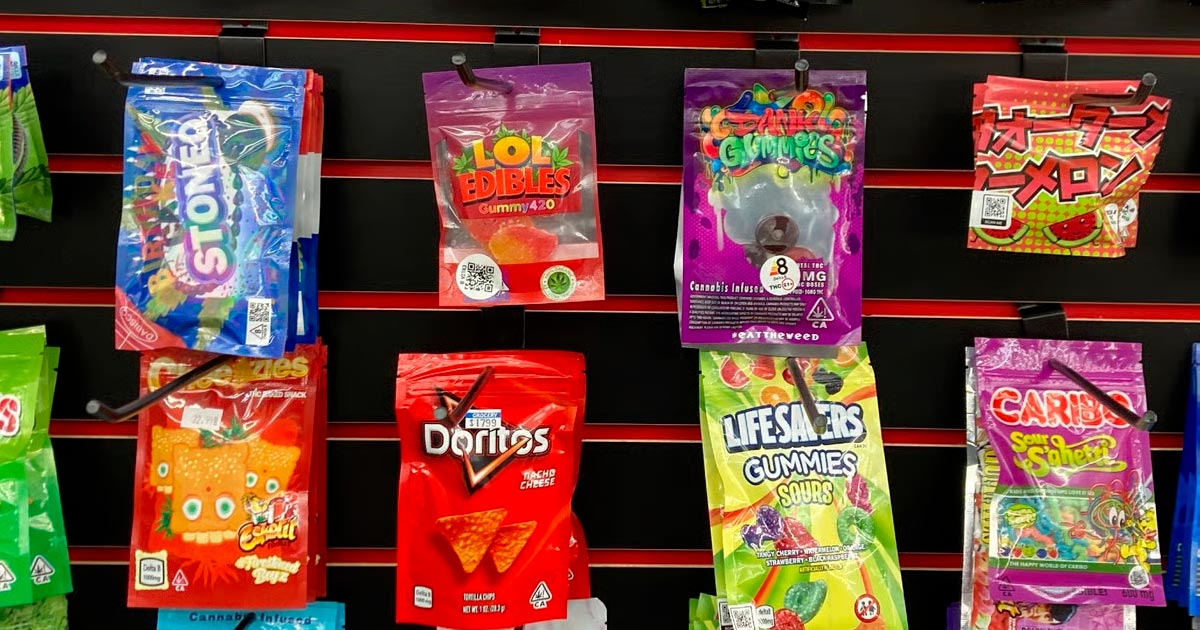
As the U.S. hemp industry prepares for a major regulatory shock this fall, lawmakers in both houses of Congress are proposing last-minute measures that could allow THC-based products derived from hemp to remain on sale, at least in some parts of the country.
This imminent crackdown is the result of a new federal law signed at the end of last year by President Donald Trump, which modifies the definition of legal hemp. While the 2018 farm bill legalized hemp derivatives containing less than 0.3 % of delta-9 THC, The new rule would considerably tighten this threshold.
From November 12, 2026, only products containing 0.4 milligrams of total THC per container would remain legal at federal level, a threshold that would wipe out virtually the entire market.
As this deadline approaches, Republicans in the House of Representatives and a bipartisan coalition in the Senate, in particular, are putting forward separate proposals to delay or circumvent the federal ban.
House Republican amendments aim to delay crackdown
In the House, Republican Rep. James Comer has tabled an amendment to the Farm Bill 2026 which would postpone the application of the forthcoming ban until november 2027. Mr. Comer's proposal would give the hemp industry another year to adapt, and potentially give Congress more time to develop a long-term regulatory framework.
This amendment is linked to the broader farm bill, officially entitled Farm, Food, and National Security Act of 2026 (H.R. 7567). The proposed amendments are expected to be considered shortly by the House Rules Committee, which will decide whether they can be put to a vote by the full House.
A second amendment by Republican Rep. Andy Barr aimed to redefine hemp while preserving the legal market, introducing restrictions on synthetic products and strengthening child safety regulations. According to the author's summary, it would have «altered the definition of «hemp» to preserve the legal hemp market while creating a regulatory framework that protects children, bans synthetic products and ensures that all products on the market are of U.S. origin.».
Barr's proposal was then withdrawn for obscure reasons, leaving Comer's initiative to delay the procedure as the most immediate option in the House.
Senate bill would allow states to opt out of ban
Meanwhile, the Senate is pursuing a different strategy: allowing states to ignore the federal ban altogether.
A new bipartisan proposal, the Hemp Safety Standards Enforcement Act (S.4315), was presented by the Senators Rand Paul, Amy Klobuchar and Joni Ernst. This bill would allow states and Native American tribes to opt out of federal prohibition and maintain their own legal markets for hemp-derived cannabinoids.
The bill would require participating jurisdictions to adopt «a minimum age requirement for the purchase of hemp-derived cannabinoid products», although it doesn't specify what that age should be. It would also preserve interstate commerce between states and tribes that choose to evade prohibition.
Paul framed the issue as both an economic and regulatory crisis. The new federal policy «will wipe out a multi-billion dollar industry, while depriving individuals of products they depend on to improve sleep, relieve anxiety and ease pain,» he said. «My bill would protect thousands of jobs, family farms and ensure safe access for veterans and seniors.»
He added: «About half the states, including Kentucky, have already established their own regulatory rules for hemp: age limits, portion size caps and testing requirements.»
Industry players support opt-out approach
The bill has been welcomed by major players in the hemp industry. Jonathan Miller, legal director of’U.S. Hemp Roundtable, said the group was «deeply grateful» to the bill's authors for their leadership, and described Ernst's endorsement of the bill as a «major development».
Eric Zipperle, co-founder and CEO of Cornbread Hemp, a Kentucky-based company, argued that this approach reflects the regulatory reality on the ground. «States are microcosms of democracy, and Kentucky is proof of that. We already have a solid and functional regulatory framework for hemp-derived THC: age verification, concentration limits and retailer licensing,» he said. «Washington doesn't need to reinvent the wheel. Let the states that have done the work continue to do so.»
The stakes are high as hemp-derived THC products continue to spread throughout the retail sector. Target, for example, is expanding the rollout of its hemp-derived THC beverages in Minnesota after testing cannabis drinks in 10 stores. The retailer has reportedly obtained licenses to sell low-concentration hemp edibles, including THC beverages, in all 72 of its Minnesota outlets.

















CBD is said to promote athletic recovery, without improving performance

294 cannabis clubs in Chile: a booming movement with uneven distribution

Chronic Sciatica: New York Approves First Clinical Trial of a THC-Based Medication

United States: The DEA is accelerating the integration of medical cannabis at the federal level

Florida is nearing one million patients using medical cannabis

Uruguay Revives Its Plan to Allow Tourists to Legally Access Cannabis

In Brazil, researchers are developing an innovative CBD eye drop

Autism: Medical Cannabis Is Linked to Reduced Anxiety

The $28 billion U.S. hemp market remains under threat

Jamaica Eases Small Farmers' Access to the Cannabis Market
-
 Business5 days ago
The legal cannabis market in New York exceeds 4 billion $ in revenue
-

 Cannabis in France2 weeks ago
Which countries legalized medical cannabis before France?
-
Business2 weeks ago
South Korea is preparing to begin local production of medical cannabis to meet rising demand
-
Cannabis in the Netherlands4 weeks ago
One year after the launch of the Dutch cannabis experiment, the first trends are emerging
-
Cannabis in Thailand2 weeks ago
From the boom in dispensaries to a purely medical approach: Thailand is revising its cannabis policy
-
Cannabis in France4 weeks ago
French medical cannabis remains stalled at the Ministry of Health
-
Cannabis in Argentina3 weeks ago
Argentina Opens Its Market to Hemp Flowers Containing 1% of THC
-
Cannabis and driving2 weeks ago
Medical Cannabis and Driving: New South Wales Ends Automatic Penalties for THC















You must be logged in to post a comment Login