Thailand wants to protect its cannabis strains

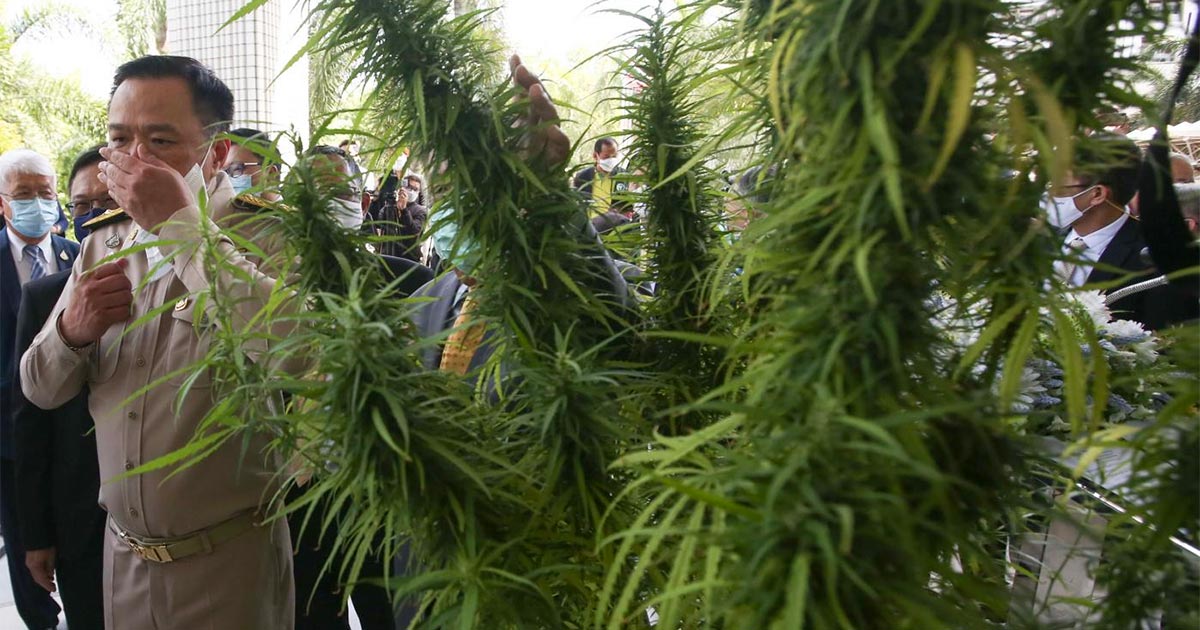
Thailand hasn't always been a progressive country when it comes to cannabis. By rolling out its medical legalization at breakneck speed, however, it has made up for lost time and become more progressive than many European countries, including France.
Thailand was the first country in Southeast Asia to legalize medical cannabis. Launched in 2018, Thailand’s medical cannabis program initially restricted cannabis cultivation to a university near Chiang Mai. As a symbol of the commitment to widespread access to cannabis, all Thai households are now able to grow cannabis for medical use and sell it to cooperatives.
The Thai government even provides loans at very low interest rates to aspiring cannabis growers. Given the the strictness of cannabis laws in the region, Thailand's policy in this area is particularly innovative.
UNESCO Recognition
The Department of Traditional and Alternative Thai Medicine announced its intention to register local cannabis varieties as part of the national heritage, promote research on their use, and then seek recognition from UNESCO.
The department has collected more than 30 local varieties and sequenced the DNA of each one to create a database of strains natively cultivated in Thailand, the information from which will be used to register geographical indications. The country is already using its own cannabis strains derived from landraces to create its medications.
Research on the benefits and uses of the strains will be conducted by the ministry, in collaboration with the University of Technology Rajamangala Isan Sakonnakhon Campus and the University Kasetsart Chalermphrakiat Sakon Nakhon Campus, said the deputy prime minister.
Promote Research
«This will generate economic benefits for the country and strengthen farmers» ability to compete in the global market, which will help reduce the trade deficit with other countries," he said.
In addition to its designation as a national heritage site, Anutin Charnvirakul, Thailand’s Deputy Prime Minister and Minister of Public Health, said that the Department of Medical Sciences has discovered that the cannabis roots can help restore lung function in patients whose lungs have been damaged by COVID-19.
Anutin Charnvirakul stated that he fully supports research on the subject, saying that it would be a huge benefit for Thai healthcare professionals if they could offer a treatment based on cannabis for patients diagnosed with COVID-19.
At the opening of a cannabis-themed event in Nakhon Phanom last December, Anutin Charnvirakul promised that cannabis, as well as the hemp, would be removed from the list of controlled substances in 2022, a process that has already begun by removing certain parts of the plant from the list. However, products containing more than 0.2% of THC are still illegal for recreational use at this time.
The start of a trend?
Thailand is, of course, not the only region in the world where cannabis strains are synonymous with the country itself. Jamaica is well known for its cannabis strains, as are South American countries such as Colombia and its famous Colombian Red strain.
Mexico, which is in the process of legalizing, like Jamaica and Colombia, is also famous for varieties such as the’Acapulco Gold, Michoacán and Oaxaca.














«Vincy Gold»: Humboldt Seed Company on the Hunt for Saint Vincent Sativas

Cronos Completes the Acquisition of CanAdelaar for 57.5 million euros

Cannabis with a "bloody" twist: Discover Sensi True Blood and Sensi Sangria, the two new strains from Sensi Seeds

Hemp: The Council of the EU Takes a Stand on New Production and Marketing Rules

Missouri's legal cannabis market accounts for 93 % of consumer spending

THC Gummies: How to Read a Certificate of Analysis Before Buying

British patients now have access to THCV-rich cannabis flowers

Spain: Medical Cannabis Is Coming to About 50 Hospitals

JIHE 2026: Japan’s Largest Trade Show Dedicated to Hemp and CBD Returns to Tokyo with More Than 100 Industry Players

New Caledonia: The Courts Clear the Way for the Return of CBD
-
 Business3 weeks ago
The legal cannabis market in New York exceeds 4 billion $ in revenue
-

 Cannabis in France4 weeks ago
Which countries legalized medical cannabis before France?
-
Cannabis in France1 week ago
France already has 3,000 cannabis retail outlets. None of them are legal.
-
Business4 weeks ago
South Korea is preparing to begin local production of medical cannabis to meet rising demand
-
Cannabis in the U.S.1 week ago
A DEA report confirms that there are no fatal cannabis overdoses
-
Cannabis in Thailand4 weeks ago
From the boom in dispensaries to a purely medical approach: Thailand is revising its cannabis policy
-
Cannabis and driving4 weeks ago
Medical Cannabis and Driving: New South Wales Ends Automatic Penalties for THC
-
Cannabis in France3 weeks ago
France’s Drug Policy Chief Defends Cannabis Prohibition... and Runs Into the Facts
















You must be logged in to post a comment Login