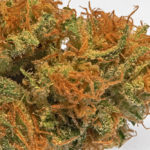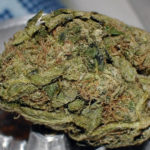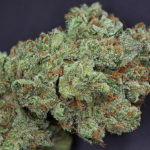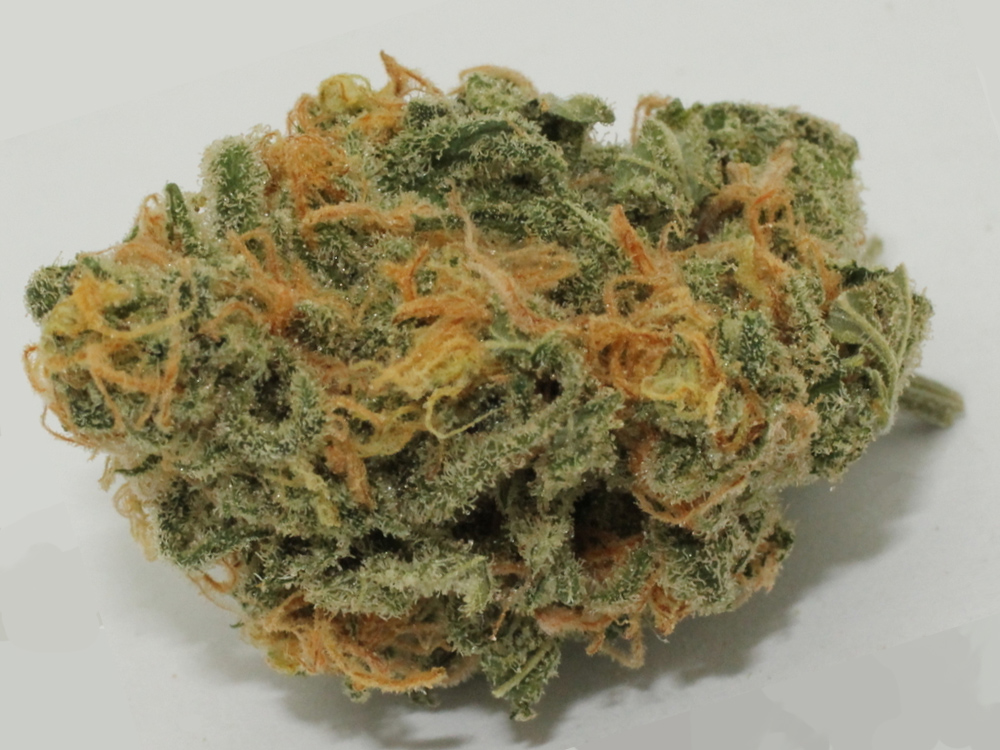
L’Acapulco Gold is a popular old variety. It has been compared to dining in a 3-star restaurant. This variety comes from the Acapulco region of Mexico. Its long orange hair makes it look like a golden nugget, with golden, green and brown highlights in its resin. A scent of heated caramel emanates from its heads when broken.
Acapulco Gold has the reputation of being one of the best cannabis strains ever conceived, and is less and less cultivated. It typically contains 23% of THC, making it a good choice for moderate pain relief.
The high of this sativa is known for being cerebral and energetic, and will put you in a good mood. Some may find Acapulco Gold a little too potent, partly because of its body effects, which can be very relaxing.
Medical patients appreciate the THC levels in this variety, ideal for combating depression and boosting mood.
Did the Acapulco Gold from the 1960s and 1970s really contain 20 % of THC?
The THC levels currently associated with Acapulco Gold should be viewed with caution when discussing the historic strain. Modern versions sold under this name can exceed 20% of THC, but that does not mean the cannabis circulating under the name Acapulco Gold in the 1960s and 1970s had the same concentrations.
The Marijuana Grower’s Guide by Mel Frank and Ed Rosenthal provides an interesting account of the analyses available at the time. The authors report that the majority of cannabis sold in the United States contained less than 1% of THC and mention, among the highest values they had encountered, 9.7% for Colombian cannabis and 13.2% for Mexican cannabis. They note, however, that the results varied widely depending on the sampling and analysis methods used.
Five samples of « Colombian Golds », which represent a place of origin rather than a distinct variety, were purchased in New York and San Francisco in 1976 and averaged only 2.59% of THC, in addition to 1.27% CBN. Frank and Rosenthal believed that a significant portion of the original THC had been converted to CBN between harvest and the product’s arrival on the U.S. market.
This data also helps explain why the «Gold» strains of that era enjoyed such an excellent reputation despite figures that seem extremely low by today’s standards. Colombian cannabis was often harvested, dried, stored, and transported under conditions that led to a substantial degradation of its cannabinoids. The authors explain that the same genetic material, when grown locally, harvested at maturity, and properly stored, could thus yield a product significantly more potent than imported cannabis.
We must therefore distinguish between The Historic Acapulco Gold, a Mexican population that was selected and marketed at a time when the measured concentrations were generally much lower, from Modern Acapulco Gold strains offered by seed banks. These varieties are the result of decades of selection, stabilization, and—depending on the commercial lines—genetic reconstitution. They do not necessarily represent an exact preservation of the Mexican population from the 1960s.
This difference is particularly noticeable with Barney’s Farm: its current feminized strain is advertised at 26% of THC, while the standard version is priced at 22%. The breeder himself describes his modern Acapulco Gold as a «new generation»—a recreation resulting from a breeding program designed to come as close as possible to this historic strain while adapting it to contemporary standards.