
Originally known for its very strict laws against drug users—and cannabis users in particular—Thailand became the first Asian nation to legalize medical cannabis in 2018.
In Thailand, cannabis, known as Ganja (Thai: กัญชา), was decriminalized on June 9, 2022, for several reasons.
The possession, cultivation, distribution, consumption, and sale of all parts of the cannabis plant are legal. However, recreational sale and consumption have not yet been legally regulated.
Decriminalized
Cannabis is decriminalized in Thailand and legal for medical use
Cannabis was decriminalized in Thailand in 2022, but recreational use has never been legalized. The current government is considering restricting the use of cannabis to medical purposes only.
Medical cannabis has been legal in Thailand since late 2018. It can be prescribed by hospitals, conventional doctors, and traditional doctors. Production is regulated and open to certain local entities, with restrictions on imports and production by foreign companies.
CBD and cannabis extracts with low THC content have been removed from Thailand’s list of narcotics. They may be used in medicines, cosmetics, and food products, and are available to licensed hospitals and research centers. Production, cultivation, and sale are limited to licensed Thai producers.
Cannabis has been decriminalized in Thailand since June 9, 2022, but recreational use has never been legalized. Possession of cannabis for personal use is not clearly regulated, and restrictions apply, particularly for people under 20, pregnant women, and nursing mothers. Possession of extracts containing more than 0.2% of THC requires a permit.
As of June 9, 2022, Thai citizens are allowed to grow cannabis at home for medical purposes, provided they register on the PlookGanja app or through a government website.
Last checked: October 7, 2026
Where in the world is cannabis legal?✨ Newsweed AI is based on our articles and verified data.
Cannabis has always been used in Southeast Asia as an ingredient, a food seasoning, a medicine, and a source of fiber.
The best-known historical example of cannabis being used as a spice in Thailand is a noodle soup called kway teeow rua (Boat Noodle Soup).
Although the use of cannabis as a spice has long been banned in Thailand, it can still be found in provincial markets in neighboring countries, Laos and Cambodia. Traditional Thai medicine and Thai massage practitioners have also historically used cannabis to treat various conditions.
The Thai Institute of Healing Arts describes cannabis as an «analgesic and sedative for pain management.«.
The fibers of the cannabis plant have historically been used for clothing and rope in Thailand. The Hmong people of Thailand, an ethnic minority group originally from China, have used hemp as a textile fiber to make clothing and other items. Even today, hemp-fiber clothing remains a popular export item in Thailand.
Hemp was also used in the early days of Muay Thai. Thai fighters protected their hands during matches with hemp bandages that ended in shell-shaped knobs at each knuckle. This method of hand protection was eventually replaced by Western-style boxing gloves in the 1920s.
Thailand’s association with recreational cannabis use first came to light in the late 1960s. Thailand was home to the main bases for U.S. soldiers serving in Vietnam, who discovered recreational cannabis use there.
Reports indicate that U.S. troops began smoking cannabis shortly after their arrival in 1963. Although Marines were subject to court-martial for possession of even the smallest amount of cannabis, the military only prosecuted dealers and users of hard drugs.
From the late 1960s to 1988, one of the world’s most prosperous drug cartels operated out of Bangkok, shipping hundreds of metric tons of «Thai stick» around the world.
For most of its history, Thailand, like many other countries, had no laws prohibiting the use or possession of cannabis.
This situation began to change in the early 20th century. As one of the first signatories to the League of Nations’ 1912 International Opium Convention, Thailand—then known as Siam—enacted anti-drug legislation that enabled it to receive international grants, loans, and benefits. Had it not done so, it would have forfeited or jeopardized those benefits.
In accordance with its status as a founding signatory, Thailand enacted its first anti-drug laws in 1922—the Narcotics Act B.E. 2465—which laid the foundation for the Kingdom’s current drug laws.
As a founding signatory, Thailand was also required to accede to an amendment to the original Convention, sponsored by the United States in 1928. This amendment required signatories to prohibit the export of Indian hemp to countries that had banned its use.
In 1937, Thailand’s second prime minister, General Phot Phahonyothin, criminalized cannabis in Thailand by enacting the country’s first law specifically targeting cannabis, the Marijuana Act B.E. 2477 (1937).
Until recently, possession of up to 10 kg of cannabis was punishable by up to 5 years in prison and/or a fine of 50,000 baht.
For possession of more than 10 kg, the penalty could range from 2 to 15 years in prison and/or include a fine of 20,000 to 150,000 baht.
The use of industrial hemp has been permitted since 2018. Under a regulation that took effect on January 5, 2018, licenses for the cultivation of hemp for industrial and medical purposes could be obtained.
Thailand made history in December 2018 by becoming the first country in Southeast Asia to legalize medical cannabis.
In June 2022, the Thai government removed cannabis from the list of narcotics whose use or distribution is prohibited and legalized it for medical and culinary purposes. This was followed by widespread decriminalization and the opening of several hundred cannabis shops across the country, much to the delight of Thais and tourists alike.


Four years after making unprecedented inroads in Asia, Thailand is preparing to establish clearer regulations governing the permitted uses of cannabis in the country. The...


Thailand continues to shape its cannabis regulations, ultimately aiming for a strictly regulated medical cannabis model. The Department of Traditional Medicine...


Thailand's Minister of Public Health, Pattana Promphat, confirmed this week that more than 7,000 cannabis stores have closed in...


Thailand has a new Prime Minister: Anutin Charnvirakul, often dubbed the «cannabis king» for his role in decriminalizing cannabis...


Since its historic decision to decriminalize cannabis in June 2022, Thailand has established itself as a regional pioneer in Southeast Asia. But three years...


Thailand is reportedly preparing to apply stricter regulations to cannabis consumption, requiring medical certificates for the purchase of cannabis. The...


The Thai cabinet, the main executive branch of the Thai government, has approved the proposed regulation of cannabis and hemp. The...


Thailand has finally decided to regulate its cannabis industry and maintain the use of cannabis for medical purposes. This development follows...


Thailand once again finds itself at a crossroads when it comes to its cannabis policies, this time in...


In 2022, Thailand made headlines around the world by removing cannabis from its list of narcotics. This decision created...


The decriminalization of cannabis in Thailand has attracted some of the world's biggest cannabis companies. Royal Queen Seeds has set up shop in December 2022...


While the country was the first in Asia to decriminalize cannabis in 2022, Thailand is now seeking to regulate the various uses of cannabis....


Strain Hunters unveil the second episode of their Thailand adventure. Led by Arjan, Dust, Mr. X and Heiko from Green House Seed Co, this journey...


Thailand's stance on cannabis is likely to change rapidly. Prime Minister Srettha Thavisin has announced his intention to reclassify...


Thailand's Ministry of Public Health has authorized the use of opium and psilocybin mushrooms, also known as magic mushrooms, for the treatment...


Strain Hunters unveil the first episode of their Thailand adventure. Led by Arjan, Dust, Mr. X and Heiko from Green House Seed Co, this journey...


As the French government relaunches its «XXL» war on drugs, and Germany legalizes cannabis, France 5 presents this Tuesday, April 2...


Thailand, always hailed as a pioneer of cannabis decriminalization in Asia, now finds itself at a crossroads as the government...


We saw it with our own eyes: the decriminalization of cannabis in Thailand has opened the floodgates to a Wild West of...
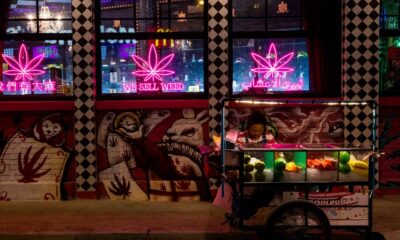

Thailand, a pioneer in Asia in the decriminalization of cannabis by 2022, has been reflecting for some months on real regulation of the sector. The decriminalization of...




