When trichomes grow in the sun: why it's impossible to reproduce authentic hashish

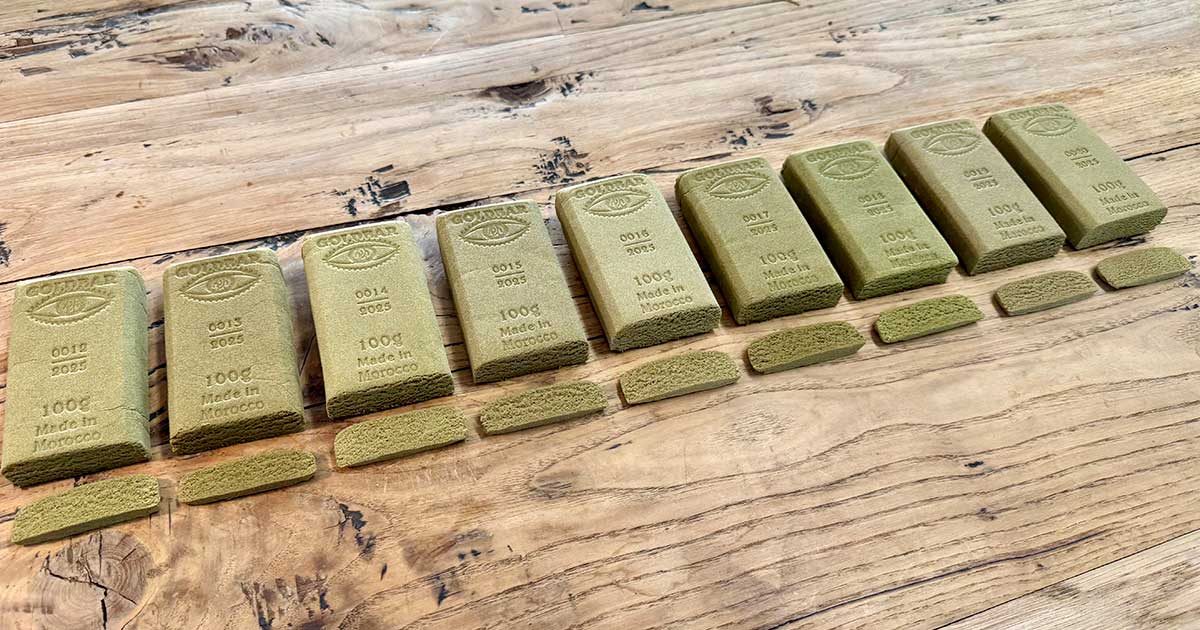
You might think that growing cannabis is mainly a matter of genetics and nutrients. But it’s first and foremost a matter of light—and more specifically, UV light.
This is where a fundamental difference lies between a plant grown outdoors at high altitude and one grown in a greenhouse or under artificial light. The concept is simple: a winter tomato grown in a heated greenhouse is nothing like a tomato that ripened in the middle of summer, in open ground. Biologically speaking, they are the same in both cases. But in only one case did the plant actually have to adapt to its environment.
The same logic applies to cannabis, except that the plant's "language" is conveyed not through sugar, but through trichomes.
UV light drives resin production, not nutrients
We often talk about nitrogen, potassium, or phosphorus. Much less often do we discuss what truly determines the density and richness of a resin: UV light.
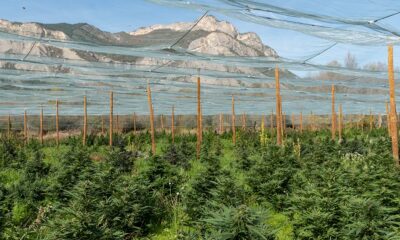
Trichomes are not merely an aesthetic “detail” of the plant. They are active structures produced as a direct response to the environment. At high altitudes, the air is thinner, sun exposure is more intense, UV rays are more aggressive, and temperature fluctuations are more pronounced. Faced with these conditions, the plant naturally increases its resin production to protect itself. This is a physiological reaction—a form of adaptation—rather than a fixed genetic trait.
It is precisely for this reason that outdoor crops grown at high altitudes often produce resins that are more complex, denser, and more aromatic. This isn’t a matter of “finishing” or post-production techniques: it’s the direct result of how the plant has built up its resin under the influence of the sun and the climate.
Altitude is not a marketing pitch
Growing at high altitudes means accepting challenges rather than seeking comfort: more UV radiation, more heat stress, more sudden fluctuations—and thus more natural selection. In return, the plant often develops a more expressive, denser, and more aromatic resin—but with one inescapable reality: less predictable yields and less control over the process.
This season, Goldbar420 has, in fact, chosen to deliberately cut its production in half in order to simultaneously establish a beldia supply chain for the medical market, with the goal of making its THC-infused products available to patients through pharmacies. Compounding this were repeated and prolonged heat waves, which weakened several strains. The result: a harvest of 700 kg, compared to 2.6 metric tons the previous year. Despite this decline, eleven different strains were maintained to ensure genuine diversity for their 350 partner stores.
Their land is also monitored by an independent biologist, who conducts strict and ongoing inspections to certify the complete absence of heavy metals, pesticides, insecticides, or other contaminants. This requirement applies to both CBD production and the Beldia line intended for the medical market.
Why do composite resins peel off in the opposite direction?
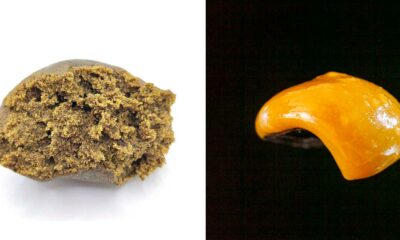
Since 2020, the position of GoldBar420 is clear: no synthetic molecules, no reconstituted products, no imitations of traditional resins—no fake «static,» no fake “frozen,” no fake “ice-o-lator,” and no “triple-filtered” resins whose results are then artificially altered.
The reason lies in the very logic of the process. In a natural resin, each step gradually concentrates what the plant has produced. In a reconstructed resin, the components are extracted, filtered, isolated, and then reassembled, and at each step, something is lost: rare terpenes, natural interactions, and microcompounds derived from living organisms.
For six years now, the CBD market has largely revolved around the same reconstituted resins: blended, standardized concentrates that are often disconnected from an actual plant and its natural life cycle. Goldbar420 has never sought to compete on that front. The brand doesn’t chase after competitions, doesn’t claim any rankings, and doesn’t build its image on trophies. And yet, its reputation has established itself in a different way: through word of mouth from shops and consumers, who regularly rank its resins among the market’s top choices.
This difference isn’t just a matter of storytelling. There’s also a chemical explanation for it. Cannabinoids and terpenes derived from solvent-based extractions—and then artificially reintroduced into a final product—do not behave like naturally formed resin. Depending on the method of consumption, only about 15% of these components are actually transferred. Conversely, a 100% natural production process—free of solvents and without reconstruction—retains a chemical integrity that allows for a much more complete transfer of its properties, regardless of the method of use.
The founder sums up the brand’s philosophy in no uncertain terms: «There’s no secret. Our materials evolve like great vintages. As producers, we’re able to enrich our lineup with the finest ingredients and offer to wine merchants those products that don’t meet our own selection criteria.»
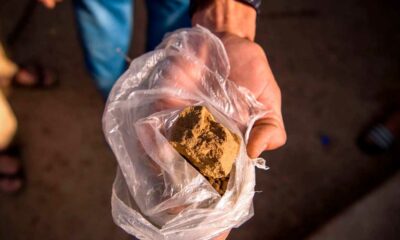
This season, only 700 kg were set aside under strict traceability requirements, with serial numbers. The rest is sold on the dealer market, without lot numbers or ingots, but from the same agricultural source.
Goldbar420 is also one of the first CBD brands to have built its reputation on high-quality products developed in collaboration with a Swiss pharmaceutical company.
There is a common misconception in the industry that filtering more means purifying—and therefore improving—the product. In reality, extensive filtration can increase certain apparent cannabinoid levels while depleting the resin’s aromatic and structural matrix. The «cleanest» cannabinoid profiles aren’t necessarily the richest in sensory experience.
Terpenes, UV, Altitude: What the Analyses Reveal
The terpene profiles observed in the various batches supplied by GoldBar420 reveal a broad aromatic spectrum, structured around clearly identifiable families: limonene, caryophyllene, humulene, bisabolol, and myrcene. These molecules are neither added nor “adjusted” afterward: they result directly from UV exposure, environmental stress, the genetics specific to each strain, and a carefully controlled natural drying process. In other words, they are not a fragrance, but a signature—a reflection of the terroir.
This is where the comparison with a greenhouse tomato really makes sense. A fruit grown off the ground can be uniform in size, shiny, and consistent. But it tells us nothing about the soil, because it doesn’t come from it. It’s produced in a controlled environment designed for consistency, not for expression.
The debate between “full spectrum” and “reconstituted” is often presented as a technical, almost chemical, issue. In reality, it’s much simpler: either you’re working with a plant that has gone through a certain process, or you’re manufacturing a product that seeks to imitate it.
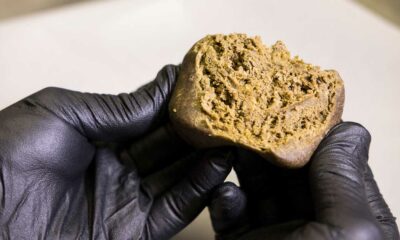
Altitude, UV radiation, heat stress, and natural cycles are not defects to be corrected on a production line. They are integral factors. And a hash resulting from these factors isn’t mass-produced: it forms slowly, shaped by the demands of the season.














«Vincy Gold»: Humboldt Seed Company on the Hunt for Saint Vincent Sativas

Cronos Completes the Acquisition of CanAdelaar for 57.5 million euros

Cannabis with a "bloody" twist: Discover Sensi True Blood and Sensi Sangria, the two new strains from Sensi Seeds

Hemp: The Council of the EU Takes a Stand on New Production and Marketing Rules

Missouri's legal cannabis market accounts for 93 % of consumer spending

THC Gummies: How to Read a Certificate of Analysis Before Buying

British patients now have access to THCV-rich cannabis flowers

Spain: Medical Cannabis Is Coming to About 50 Hospitals

JIHE 2026: Japan’s Largest Trade Show Dedicated to Hemp and CBD Returns to Tokyo with More Than 100 Industry Players

New Caledonia: The Courts Clear the Way for the Return of CBD
-
 Business3 weeks ago
The legal cannabis market in New York exceeds 4 billion $ in revenue
-
Cannabis in France1 week ago
France already has 3,000 cannabis retail outlets. None of them are legal.
-
Cannabis in the U.S.1 week ago
A DEA report confirms that there are no fatal cannabis overdoses
-

 Cannabis and driving4 weeks ago
Medical Cannabis and Driving: New South Wales Ends Automatic Penalties for THC
-
Cannabis in France3 weeks ago
France’s Drug Policy Chief Defends Cannabis Prohibition... and Runs Into the Facts
-
Studies on cannabis2 weeks ago
Cannabis Oil and Endometriosis: A Promising Study for Pain Relief
-
CBD2 weeks ago
In Brazil, researchers are developing an innovative CBD eye drop
-
Autism4 weeks ago
Autism and Cannabis: Results from the First Placebo-Controlled Trial of NTI164
















You must be logged in to post a comment Login