Will CBD edibles be banned on May 15 in France? An update on the situation

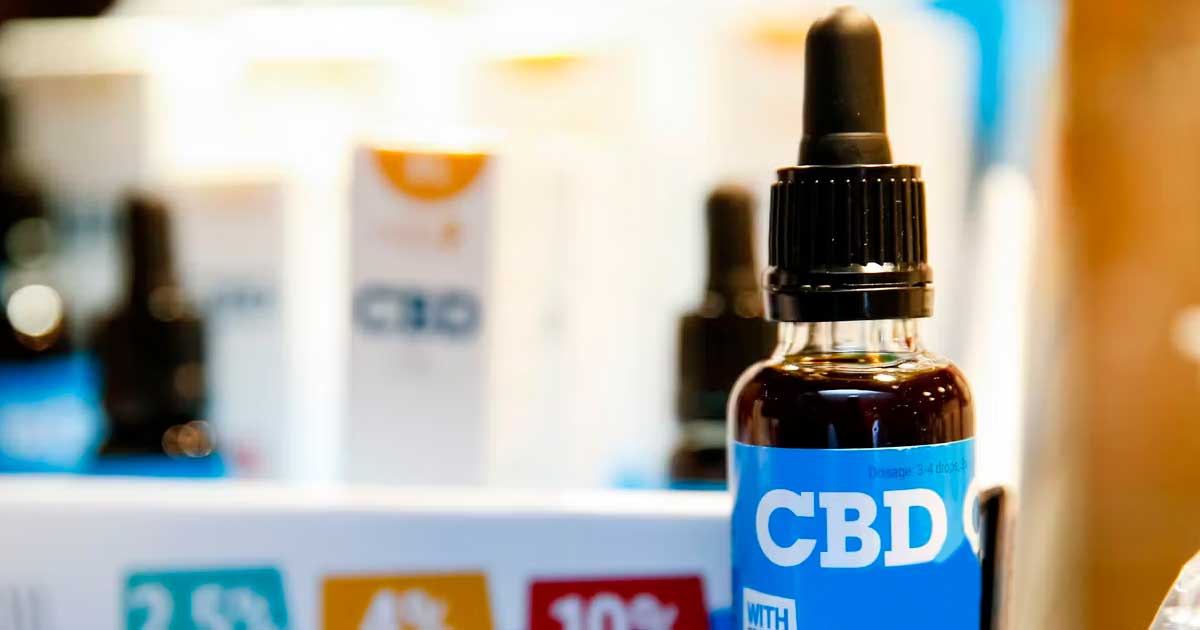
For several days now, a rumour has been swirling in the general media: products containing CBD will be “banned” in France from May 15, 2026. TV reports, alarmist articles, viral posts... the scenario seems written in advance: after the flowers, after the stores, after the sweets, it's the whole industry that will fall in one fell swoop.
But if you're looking for what new law would make this possible, you're in for a long spin.
Because to date, no legislative or regulatory text announces a general ban on CBD to May 15. What's at stake is different: french government prepares new inspection campaign, whose aim is clearly to dry up the market for cannabinoid-containing food products and dietary supplements.
And all this without an official ban, but through a administrative offensive, as the industry has seen many times before.
A sector weakened by ten years of regulatory instability
For years, the CBD market in France has been evolving in a gray area, made up of judicial advances and offensive administrative backlashes.
While the best-known episode remains the attempt to ban CBD flowers, for good cancelled by the Conseil d'État in December 2022, The war has never stopped. It has simply shifted: from flowers to oils, from oils to dietary supplements, and now to all food products claiming to contain cannabinoids.
Since 2023, the French administration has increased the number of control operations, often based on questionable thresholds or internal doctrines with no explicit normative value.
Act 1: 2023, the DGCCRF enters the scene
From 2023, the DGCCRF (Repression des Fraudes) is stepping up its controls, at the instigation of the DGAL (Direction générale de l'alimentation). The crux of the problem: the appearance of unofficial “limits”, often repeated during inspections but difficult to find in an enforceable text:
- a maximum daily dose of 50 mg/day recommended,
- a maximum concentration of 20 % in oils.
However, these thresholds are not based on no published regulations. However, their origins are well known: they were defended to the authorities by the’UIVEC, the organization representing the hemp extraction industry, which presents them as a compromise aimed at limiting health risks (notably drug interactions and THC contamination). Controls are particularly concerned with :
- traceability (batches, invoices, certificates),
- therapeutic claims,
- the daily dosage indicated on the label.
The word Novel Food is also becoming a recurring pressure tool. And yet, the Novel Food classification CBD isolates, and not full or broad spectrum extracts. Despite this, some controls already extend to 10 or 20% full-spectrum oils, or to food products (sweets, herbal teas, 30 % oils, etc.).
Act 2: 2024-2025, the THC argument “according to EFSA”
In 2024 and 2025, the strategy evolves: the administration relies more and more on a figure presented as indisputable, taken from an opinion by the’EFSA an acute reference dose (ARfD) set at 1 μg/kg body weight.
Problem: this ARfD originally concerned the THC in milk and animal products, and not CBD oils or candies. EFSA itself has reiterated this on several occasions.
Another essential point is that this notice is not a regulation. The European Commission has never set a harmonized maximum THC content in food., This leaves room for national interpretations... and therefore for conflict.
At the same time, the French legislator has planned ahead: products containing hemp extracts can contain up to 0.3 % of THC, in accordance with current regulations (https://www.legifrance.gouv.fr/loda/id/JORFTEXT000044793213/).
Despite this, many DDPP (Directions départementales de la protection des populations) attack brands and distributors, triggering procedures that are sometimes lengthy, often costly, and regularly postponed. Some of the cases referred to the merits are still awaiting judgment, while the administration is multiplying its requests for delays.
Act 3: 2026, the DGAL now targets all edible CBD
It is against this backdrop that the’act 3. According to information provided by Professional Hemp Association (SPC), on April 15, 2026, the DGAL presented a national control plan 2026 covering all food products and dietary supplements containing CBD, THC or any other cannabinoid. The new focus follows the strict application of the European regulation Novel Food (EU) 2015/2283.
The DGAL now considers that :
- cannabinoids (CBD, THC, etc.), whether extracted or synthetic,
- as well as extracts claiming their presence,
are classified as Novel Food, and therefore cannot be marketed without prior European authorization. The problem is that the Novel Food procedure for CBD is today blocked, and no authorization has been issued on a European scale.
EFSA sets a “provisionally safe” threshold... at 2 mg per day
The new French strategy also builds on a recent development: the updated EFSA opinion published in early 2026, which concludes that it is not yet possible to establish the safety of CBD in food. EFSA identifies liver as the main target organ for the toxic effects observed in animal and human studies, and proposes a “provisionally safe” threshold:
➡️ 0.0275 mg/kg/day, approximately 2 mg CBD per day for an adult weighing 70 kg.
But this limit is extremely limited: it only applies to CBD-containing dietary supplements. isolated, with a purity of at least 98 %, nanoparticle-free, and derived from processes that have excluded genotoxicity. In other words: most products on the market (full spectrum, broad spectrum, various extracts, macerations...) are not even included in the scope of assessment.
EFSA also specifies that this threshold will only be revised when more robust toxicological and human data are provided, via Novel Food dossiers or scientific research.
What happens from May 15?
If the DGAL plan is implemented as announced, most edible CBD products could be considered illegal and subject to withdrawal procedures. These include
- CBD oils sold as dietary supplements,
- gummies, sweets, drinks,
- capsules,
- products clearly displaying “CBD”, “THC” or “cannabinoids” on the label.
However, some products remain outside this control framework:
- hemp seeds and their derivatives (edible hemp oil),
- Aqueous infusions of hemp leaves,
- and cosmetics (subject to other rules).
The DGAL is planning several courses of action:
- cooperative“ withdrawal requested from companies,
- or imposed withdrawal via prefectoral decrees, after an adversarial procedure.
Above all, the DGAL specifies that there would be no no transition period, This could cause an immediate economic shockwave for the 2,000 stores, hundreds of online distributors and 20-25,000 people working in the sector.
Unions take to the front line
Faced with this announced tougher stance, the sector's representative organizations are coordinating their efforts. Visit SPC, theUIVEC, theAFPC and the’UPCBD denounce an attempt at global destabilization and demand :
- the immediate suspension of the 2026 control plan,
- maintaining the criteria previously applied,
- and a reorientation of controls towards the real health hazards: the synthetic cannabinoids narcotics, which contaminate part of the market and cause poisoning.
For the moment, according to the professionals, the administration shows no sign of opening up.
A ban without a law... but an industry under pressure
In reality, history is repeating itself: France is not issuing a clear text banning CBD, but is creating a climate in which marketing becomes legally uncertain, economically risky and administratively unbearable. Today, this is based on an administrative strategy of market cleaning with :
- a maximalist reading of Novel Food,
- health notices used as legal levers,
- and a coordinated control campaign.
In practice, companies may have to choose between :
- withdraw their products,
- fight legal battles on a case-by-case basis,
- or change commercial category (cosmetics, herbal tea, unenriched edible hemp).
The danger for the industry is not an official ban in the Journal Officiel. It's a de facto ban, through the accumulation of controls, withdrawals, reminders and procedures. And in this game, the administration has already shown that it can move ahead without waiting for the legislator.
If the announced campaign gets off to a good start in mid-May, the French CBD market could enter a new zone of turbulence, where only those companies capable of absorbing the legal shock... or reinventing themselves outside the food field, will survive.
⚖ Novel Food: what European law really says
Regulation (EU) 2015/2283 provides a framework for «Novel Food», i.e. ingredients with no significant history of consumption in the European Union prior to May 15, 1997.
A Novel Food can only be marketed if it has obtained :
- scientific evaluation,
- then formal authorization,
- and inclusion on the list of authorized novel foods.
In the case of CBD, the deadlock is total: over 200 applications have reportedly been submitted to Brussels, but very few have actually been evaluated, and no general authorization has been granted.
⚠ Controversial point: Historically, Novel Food was aimed solely at CBD isolates, but the French administration is now tending to extend this reading to all extracts claiming the presence of cannabinoids, including full-spectrum.
🔬 EFSA: a «provisionally safe» threshold at 2 mg/day
In February 2026, EFSA published a long-awaited update on the safety of CBD. Conclusion: the safety of CBD in food cannot be established based on available data.
→ Provisional safe value: 0.0275 mg/kg/day, i.e. approx. 2 mg/day for an adult weighing 70 kg.
This threshold only applies within a very strict framework:
- Isolated CBD,
- purity ≥ 98 %,
- absence of nanoparticles,
- processes that exclude genotoxicity.
The majority of products marketed in France (full-spectrum oils, gummies, enriched products) are not included in this field.
Primary target organ: liver (hepatotoxicity). Uncertainties identified on :
- reproduction,
- pregnancy,
- neurodevelopment,
- drug interactions.
🧪 ARfD: why the THC threshold at 1 μg/kg is disputed
The ARfD (Acute Reference Dose) is an acute reference dose used to assess a health risk linked to a one-off exposure. EFSA has set the ARfD at :
→ 1 μg/kg body weight for THC.
This figure is often presented as a European threshold applicable to all foods. However, there are several points that weaken this use:
- it is based on non-binding scientific advice,
- it has been designed for a specific context (dairy products in particular),
- it has not been transposed into a harmonized regulation.
⚠ This threshold is used as a standard, whereas it is not not a legal standard.



















France already has 3,000 cannabis retail outlets. None of them are legal.

Morocco's exports of legal cannabis have expanded to 15 countries

Aurora Cannabis Doubles Its Production Capacity in Germany

Tilray is accelerating its operations in Europe thanks to a license in Portugal

Boston will host the 10th annual State of the Cannabis Industry Conference on October 26

A DEA report confirms that there are no fatal cannabis overdoses

A British patient is challenging the NHS's refusal to reimburse medical cannabis

October 2026 CBD Highlights: 10 Strains and Hash to Discover from 5 French Producers

CBD in France: Traceability, Retail Stores, THC and Driving… What the New Bill Proposes

Organigram Enters the Race for Aurora Cannabis
-
 Business2 weeks ago
The legal cannabis market in New York exceeds 4 billion $ in revenue
-

 Cannabis in France3 weeks ago
Which countries legalized medical cannabis before France?
-
Business3 weeks ago
South Korea is preparing to begin local production of medical cannabis to meet rising demand
-
Cannabis in Thailand3 weeks ago
From the boom in dispensaries to a purely medical approach: Thailand is revising its cannabis policy
-
Cannabis and driving3 weeks ago
Medical Cannabis and Driving: New South Wales Ends Automatic Penalties for THC
-
Cannabis in Argentina4 weeks ago
Argentina Opens Its Market to Hemp Flowers Containing 1% of THC
-
Autism3 weeks ago
Autism and Cannabis: Results from the First Placebo-Controlled Trial of NTI164
-
Cannabis in France2 weeks ago
France’s Drug Policy Chief Defends Cannabis Prohibition... and Runs Into the Facts














You must be logged in to post a comment Login