
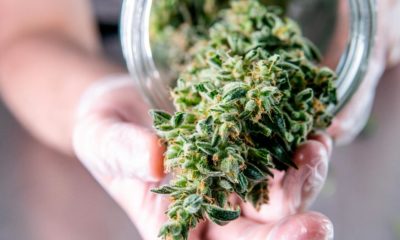
Greece also tries to ban the sale of hemp flowers


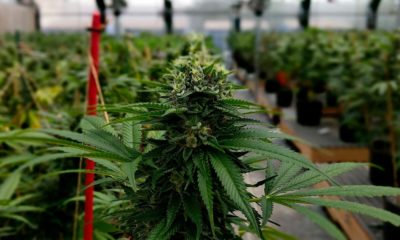
At the end of April, the deadline for the Greek industry to vote on a controversial new hemp ban expired. The draft law calls for a nationwide ban on the sale of CBD flowers, propelling a new EU member state into the heart of the perpetual «hemp war».
Just like what is currently playing out in the United States, This legislative initiative was prompted by the arrival of «intoxicating hemp» products, which are not yet regulated and are sold via vending machines and convenience stores across the country.
But, as in the US, the measures envisaged to combat these new substances are so far-reaching that they risk taking the legal industrial hemp and CBD sectors with them. Unlike the USA, however, Greece remains bound by the European legal framework.
The Greek industry believes that this «measure seems to conflict with the principle of free movement of goods». Even more significantly, the country's statutory advisory body ruled that it «goes against the European trend, where the distribution of CBD flowers is allowed under certain conditions».
The unbridled growth of psychoactive hemp
The origin of the problem goes back to the 2016 joint ministerial decision that created the regulatory framework for industrial hemp in Greece.
Based on Law 4139/2013, this regulation authorized the cultivation and industrial processing of Cannabis Sativa L varieties with a THC content of less than 0.2 %, and created a formal exemption from the definition of narcotic substances for harvested raw products.
What it did not do explicitly was authorize the retail sale of hemp flowers for human consumption. As the Greek publication parapolitika.gr in its account of the consultation, the retail market for CBD flowers has grown in the space left open by the regulatory framework far faster than regulation could keep up.
As seen in the USA and much of Europe from around 2022 onwards, legal hemp flowers, indistinguishable in appearance from cannabis with a high THC content, have been imported and enriched with synthetic cannabinoids, such as HHC and its derivatives, This created products with psychoactive effects that were in a legal grey area.
The Greek State has taken specific measures against HHC, classifying it as a narcotic in January 2024, before extending the list of banned synthetic cannabinoids in 2025.
The problem is that the chemical structures of synthetic cannabinoids mutate faster than regulators can keep up with them. «This constant modification makes it extremely difficult, if not virtually impossible, to clearly identify and reliably detect them in controls,» the publication noted.
The incident that crystallized political pressure was the hospitalization of a student from Thessaloniki on a school trip to Ioannina, after consuming semi-synthetic cannabinoid products.
What the proposals will really entail
Under Law 4139/2013, In its current version, raw hemp products containing up to 0.2 % THC are excluded from the definition of narcotic substances. The proposed Bill, under Article 41, would raise the THC limit to 0.3 % to bring it into line with broader European legislation, but would introduce a new paragraph 3A which removes dried hemp flowers entirely from this exclusion.
«Dried flowers derived from the cultivation of Cannabis Sativa L varieties with a THC content not exceeding 0.3 % and intended for retail sale, distribution and supply to consumers do not constitute a raw harvested product,» the new paragraph states.
As such, the retail sale, distribution, supply to consumers, purchase and use of these flowers on Greek territory would be declared «totally prohibited».
Import, storage and wholesale supply remain authorized, but only for industrial processing purposes for products such as cosmetics, foodstuffs and dietary supplements.
Operators caught marketing hemp flowers outside these parameters are liable to fines of up to €100,000, withdrawal of their operating license and prison sentences of up to five years, under articles 48 and 49 of the same bill.
At the same time, Article 42 reduces the fees for licenses to produce cannabis for export for pharmaceutical purposes from €2,500 to €500 per application.
Articles 45 to 49 create a new category of licensed cannabis product companies, which will become the only entities authorized to sell the remaining hemp-derived products on the market. These businesses must be located at least 500 meters from schools, register in a national Ministry of Health database and undergo inspection by the National Organization for Medicines.
The medical cannabis industry in Greece is not concerned by these proposals.
Two markets, one ban
Given that «hemp-based psychoactive» substances such as HHC and Delta-8 are often manufactured from, or simply sprayed onto, hemp with a THC content of less than 0.3 %, regulators have struggled to develop regulations capable of effectively controlling these new compounds without seriously harming the industrial hemp industry.
The United States is currently grappling with the same problem, while the Czech Republic is a global exception in its efforts to introduce a new category for these substances and regulate them according to their potential harmfulness.
The Greek proposals fall into the classic trap of failing to distinguish between legal hemp flowers, produced locally and sold in specialist stores, and semi-synthetic cannabis products sold on the grey market.
Of the 845 comments submitted on the bill as a whole during the year During the consultation period, exactly half of all objections related to Chapter E alone. The cannabis provisions of a health bill, nominally concerned with pharmaceutical funding reform, had attracted more formal objections than all the other sections combined.
Georgios Alexandros Velentsas, owner of two CBD stores, including one on a tourist island, said in his April 26 contribution, «Like thousands of other players in the sector, we bring in significant revenue to the Greek state every month through VAT. This revenue will be permanently lost.»
«At the same time, any citizen will be able to order the same products without restriction on foreign websites and in other EU countries. So, on the one hand, we're closing hundreds of Greek businesses and losing thousands of jobs, while on the other, we're leaving the market with no quality control, no age verification and no security whatsoever.»
«The bill was presented as a reaction to isolated cases of sales to minors. If we follow the same logic, why not introduce a general ban on the sale of alcohol in all stores because some people break the law? The right solution is to introduce stricter controls and impose heavy fines on those who break the law, not to eliminate an entire sector.»
Another anonymous business owner said on the same day, «Without too many words, I'll tell you that in our stores alone, eight families depend on this income, and if flower is banned altogether, they'll be out of work.»
«Ninety percent of our sales are flower-related, so in practice our business is becoming unviable and, in addition to our investments, eight full-time jobs are being lost. We're with you: ban everything synthetic. But the natural flower cannot pay the price, and with it, like a domino effect, thousands of businesses across Greece.»
The problem of European legislation
Efforts by EU member states to restrict hemp regularly ignore, question or disregard the legal precedents that should apply to all 27 member states.
The key case on which almost all these legal battles are based is the landmark CJEU judgment in Case C-663/18 - Kanavape, due in November 2020. The Court established that CBD is not a narcotic substance, that member states cannot impose blanket bans on the marketing of CBD products lawfully manufactured elsewhere in the Union, and that any restrictions must be based on clear, scientifically substantiated evidence a real risk to public health.
Greece's Economic and Social Committee, the OKE, the statutory consultative body responsible for examining draft legislation before it is submitted to Parliament, concluded in its formal opinion on the bill that this was not the case.
Having examined Article 41 directly, the OKE found that the measure «runs counter to the European trend whereby the distribution of CBD flowers is permitted under certain conditions» and «excessively restricts economic activity, stifling an entire retail sector».
With regard to the specific justification linked to public health, he considered that banning retail sales on the domestic market «will not eliminate the distribution of these products, but will abolish the national and controlled retail trade without any overall control of consumer access».
The OKE's official recommendation was to replace the general ban with reinforced market surveillance, strict age limits, traceability across all distribution channels and significantly higher fines.
Angelos Botsis, co-founder of Hempoil, told Business of Cannabis : «The very recent proposed regulation under CHAPTER E (Articles 33-49), which introduces a general ban on the sale of CBD flowers in Greece, raises serious concerns about its compatibility with EU law and its wider impact on competition in the market.
«From a legal point of view, this measure appears to conflict with the principle of the free movement of goods within the European Union... At the same time, the proposed ban effectively excludes an entire existing and legally operating sector, while the pharmaceutical cannabis market continues to develop through limited distribution channels.»
«In practice, this raises legitimate concerns about increased market concentration and the restriction of competition, as a large category of products is removed while others remain accessible through more controlled channels.»
Georgios Folias, after consulting a specialist in public law, stated in his public response to the proposals that the draft law is in «clear tension» with EU law.
«The State itself recognizes the possibility of a controlled market but withdraws the main product from it. This inconsistency will make it difficult to justify the regulation before a judicial review.»
«If the risk to public health comes mainly from synthetic and semi-synthetic products, as explicitly documented by the European Monitoring Centre for Drugs and Drug Addiction, banning low-THC natural flowers does not address the real area of risk. There are many less restrictive and equally appropriate measures: batch-by-batch laboratory analysis, distribution only from authorized outlets, digital age verification, autonomous processing of synthetic products. These do not appear to have been exhausted before the general ban is chosen.»
What next for Greece?
The bill was officially submitted to the Hellenic Parliament on May 5, 2026. It now passes through committee before a plenary vote, integrating Article 41 into a broader health bill whose flagship provision, the Drug Innovation Fund, benefits from its own political momentum.
This complicates the path to amendments in favor of the hemp industry, as amendments to a single chapter of an omnibus bill require a political decision to dissociate what the government has chosen to group together.
The most immediately exploitable legal tool potentially available to Greek operators is the fact that the government appears to have introduced Article 41 without filing the notification required under Directive 2015/1535/EU, the Technical Regulations Information System (TRIS), which obliges member states to notify the Commission of draft technical regulations before they are adopted, triggering a mandatory standstill period.
Business of Cannabis searched the TRIS database for Greek notifications for the years 2025 and 2026 and found no notifications relating to the bill or its cannabis provisions.
The Italian hemp industry raised the same procedural argument in its 2024 complaint to the Commission, with sufficient grounds for formal consideration.
In November 2025, the Italian Council of State submitted two questions to the CJEU, seeking clarification on whether EU agricultural law precludes a Member State from banning compliant hemp parts, and whether such a ban can be justified where the THC content is minimal and there is no scientific evidence of harm.
A ruling, expected at the end of 2026 at the earliest, would give Greek operators an immediate basis for challenging any restrictions adopted before the national courts, without having to start their own referral procedure from scratch.
Whether this will change the outcome is, at this stage, as much a political question as a legal one.


















CBD is said to promote athletic recovery, without improving performance

294 cannabis clubs in Chile: a booming movement with uneven distribution

Chronic Sciatica: New York Approves First Clinical Trial of a THC-Based Medication

United States: The DEA is accelerating the integration of medical cannabis at the federal level

Florida is nearing one million patients using medical cannabis

Uruguay Revives Its Plan to Allow Tourists to Legally Access Cannabis

In Brazil, researchers are developing an innovative CBD eye drop

Autism: Medical Cannabis Is Linked to Reduced Anxiety

The $28 billion U.S. hemp market remains under threat

Jamaica Eases Small Farmers' Access to the Cannabis Market
-
 Business5 days ago
The legal cannabis market in New York exceeds 4 billion $ in revenue
-
Cannabis and driving4 weeks ago
Cannabis and CBD: French Drivers Can Now Lose Their License Even Without a Positive Test Result
-

 Cannabis in France2 weeks ago
Which countries legalized medical cannabis before France?
-
Business2 weeks ago
South Korea is preparing to begin local production of medical cannabis to meet rising demand
-
Cannabis in the Netherlands4 weeks ago
One year after the launch of the Dutch cannabis experiment, the first trends are emerging
-
Cannabis in Thailand2 weeks ago
From the boom in dispensaries to a purely medical approach: Thailand is revising its cannabis policy
-
Cannabis in France4 weeks ago
French medical cannabis remains stalled at the Ministry of Health
-
Cannabis in Argentina3 weeks ago
Argentina Opens Its Market to Hemp Flowers Containing 1% of THC

















You must be logged in to post a comment Login