Dutch experience with legal cannabis: coffeeshops now limited to legal hashish produced in the country

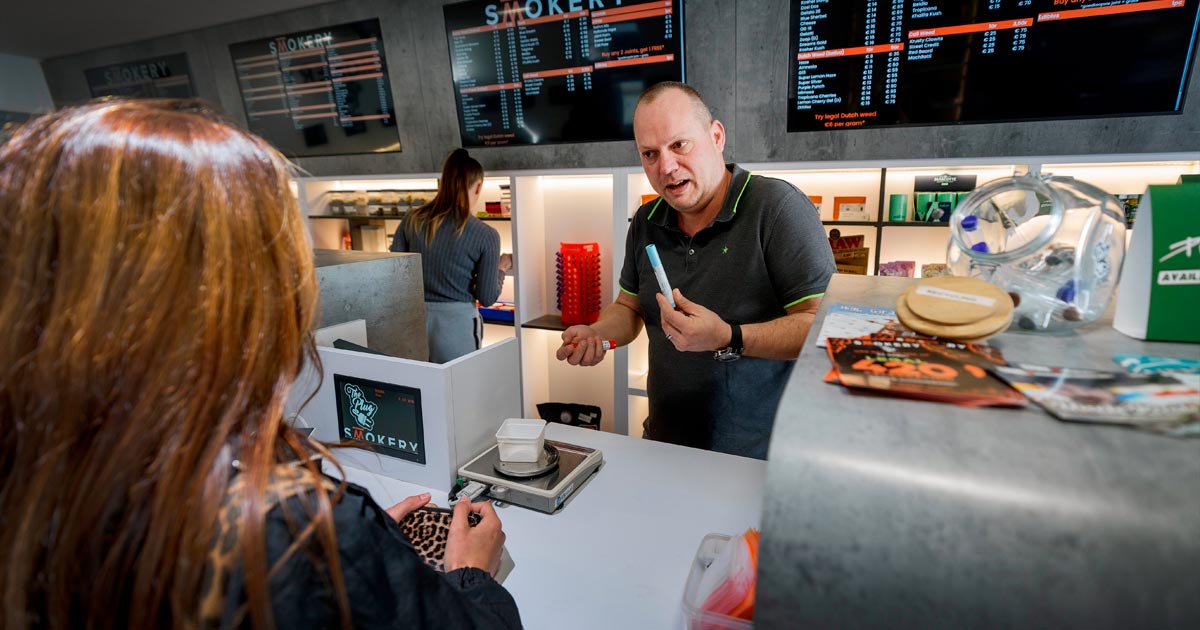
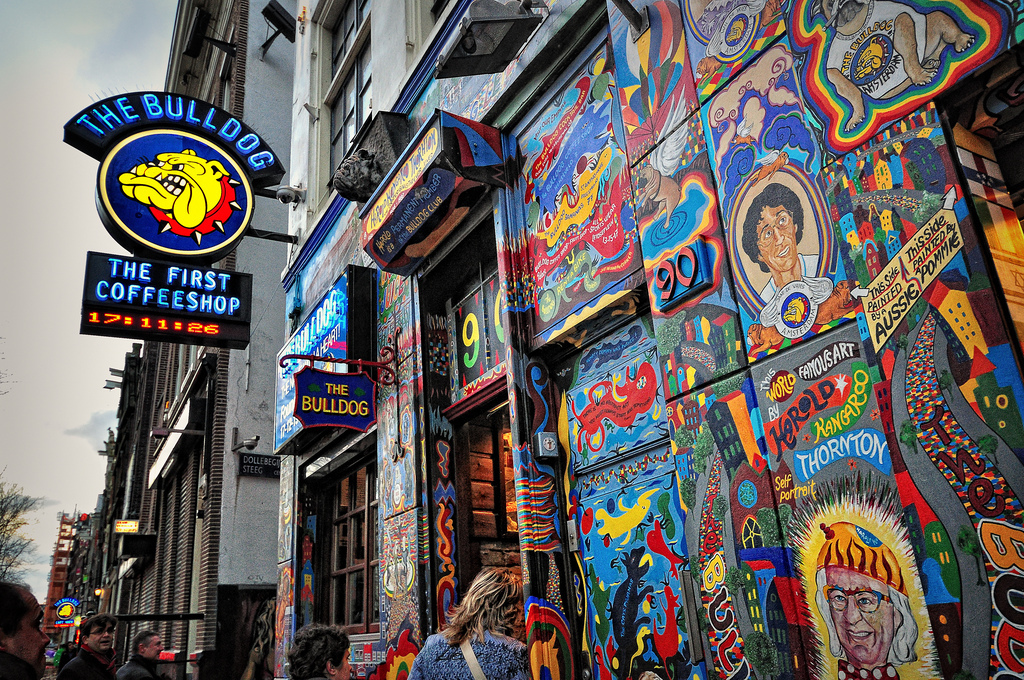
The Netherlands have entered a new phase in their development regulated cannabis experience. Since September, the 80 coffeeshops taking part in the trial have only been able to sell hashish produced by approved national growers.
While many entrepreneurs welcome the expansion of the legal offer, concerns remain about the disappearance of the Moroccan hashish, which has long been on the menu of Dutch coffeeshops.
The end of the «back door» for hashish
Since the experiment launched in april, the coffeeshops of ten municipalities, including Nijmegen, Arnhem, Groningen, Zaanstad, Almere, Voorne aan Zee, Heerlen, Maastricht, Breda and Tilburg, This initiative, which will run for four years, is designed to test the feasibility of going beyond the traditional Dutch policy of tolerance. The initiative, which will last four years, is designed to test the feasibility of going beyond the traditional Dutch policy of tolerance, which tolerates the sale of cannabis but whose production remains illegal.
Until now, coffeeshops were allowed to continue selling hashish from the «back door» of the illicit market. This exception ended on September 1, after domestic producers increased production to meet demand. According to the Dutch newspaper NRC, five growers now supply sufficient quantities of regulated hashish.
For coffeeshop owners, the transition proved easier than expected.
«With a few exceptions, regular customers have adapted quite easily,» said Maikel van Nieuwkasteele, owner of the Smokery in Wormerveer, quoted by NRC. In April, his store offered just three varieties of legal hashish; today, the menu includes fifteen.
Dutch hashish production on the rise
Behind this experiment are ten certified producers, operating under strict supervision. Facilities such as Hollandse Hoogtes in Bemmel employ hundreds of workers to produce both cannabis flowers and hashish.
«We can never reproduce Moroccan hashish, but we can offer an alternative,» explained Rick Bakker, director of Hollandse Hoogtes, in an interview with the NRC.
The methods used vary. Some producers focus on artisanal techniques such as the water hash or the rosin, while others, such as CanAdelaar, In order to keep costs down, these companies have opted for large-scale production in converted greenhouses. Prices range from €6 to €11 per gram for mass-market varieties, and can reach €40 or more for top-of-the-range products.
The expansion of the national offer also means that coffee shop menus are diversifying. Customers now have access to a wide range of legal products tested for pesticides and heavy metals, This guarantees higher safety standards than those found on the illicit market.
The absence of Moroccan hashish
Despite this progress, the absence of Moroccan hashish remains at the heart of the controversy. Renowned for its mild flavour, its smooth smoke and high CBD content, the Moroccan hashish dominates the Dutch market for decades. Farmers in mountains Rif in Morocco grow under unique climatic conditions - cold nights and hot days - that Dutch growers cannot replicate.
Coffeeshop owners fear that customers loyal to Moroccan hashish will return to the streets. «I think the conclusion of the experiment is that we can't replace Moroccan hashish with Dutch products alone,» said Van Nieuwkasteele. Rick Brand, coffeeshop owner De Baron in Breda, was even more direct: «This is the best hashish,» he told the NRC, deploring its disappearance from the shelves.
Researchers echo these concerns. According to Pien Metaal, from Transnational Institute, However, this policy risks backfiring: «Part of the experiment will fail if the Netherlands insists on selling only Dutch hashish. There's a good chance that the sale of Moroccan hashish will then shift to the street.»
Some consumers appreciate the affordability of Dutch hashish. «So they can go out to dinner again,» jokes De Baron's Rick Brand, pointing out that cheaper legal options benefit budget-conscious smokers. But for many traditional customers, the taste and experience of Moroccan hashish remains irreplaceable.
Fatima el Ouamari, manager of the Barbershop in Hellevoetsluis, observed a generation gap: «Older customers, in particular, remain loyal to Moroccan hashish. And it was already in decline anyway.» Younger smokers, on the other hand, seem more willing to adapt to the new Dutch products.
Calls for regulated imports
Numerous industry players and researchers have called on the Netherlands to consider regulated imports of Moroccan hashish. Supporters say it would reduce the black market, provide consumers with familiar products and even improve sustainability, as Moroccan production under the sun is much less energy-intensive than indoor cultivation in the Netherlands.
«Regulated imports of Moroccan hashish have their advantages,» Metaal told NRC. «Black market risk is reduced, consumer health improves and it's more sustainable.»
However, the Dutch government has so far ruled out such imports. Recreational hashish cultivation remains illegal in Morocco, and exports are restricted by international treaties. But by setting up a research facility, Morocco could easily and legally export its products.
The Morocco has itself embarked on the road to legalization, but only for medical and industrial purposes. Since 2021, licensed farmers in three provinces of the Rif region are authorized to cultivate cannabis for market medical and well-being. Thousands of smallholders now operate legally under state supervision, and their products are tested to meet strict standards.
According to Mr. Metaal, millions of kilograms of Moroccan cannabis and hashish are currently in storage, awaiting export. But difficulties persist: European pharmaceutical circuits are already saturated, and many Moroccan growers are struggling to meet stringent quality requirements. If no buyers are found for these products, experts warn that they risk returning to the illegal market.

















Medical Cannabis in Germany: THC Prices Vary by a Factor of 12

France already has 3,000 cannabis retail outlets. None of them are legal.

Morocco's exports of legal cannabis have expanded to 15 countries

Aurora Cannabis Doubles Its Production Capacity in Germany

Tilray is accelerating its operations in Europe thanks to a license in Portugal

Boston will host the 10th annual State of the Cannabis Industry Conference on October 26

A DEA report confirms that there are no fatal cannabis overdoses

A British patient is challenging the NHS's refusal to reimburse medical cannabis

October 2026 CBD Highlights: 10 Strains and Hash to Discover from 5 French Producers

CBD in France: Traceability, Retail Stores, THC and Driving… What the New Bill Proposes
-
 Business2 weeks ago
The legal cannabis market in New York exceeds 4 billion $ in revenue
-

 Cannabis in France3 weeks ago
Which countries legalized medical cannabis before France?
-
Business3 weeks ago
South Korea is preparing to begin local production of medical cannabis to meet rising demand
-
Cannabis in Thailand3 weeks ago
From the boom in dispensaries to a purely medical approach: Thailand is revising its cannabis policy
-
Cannabis and driving3 weeks ago
Medical Cannabis and Driving: New South Wales Ends Automatic Penalties for THC
-
Cannabis in Argentina4 weeks ago
Argentina Opens Its Market to Hemp Flowers Containing 1% of THC
-
Autism3 weeks ago
Autism and Cannabis: Results from the First Placebo-Controlled Trial of NTI164
-
Cannabis in France2 weeks ago
France’s Drug Policy Chief Defends Cannabis Prohibition... and Runs Into the Facts

















You must be logged in to post a comment Login