
Rima Hassan: When «Drugs» Become a Political Weapon
Were there «synthetic drugs» in Rima Hassan’s bag? The story, which was widely reported in the media in April, turned out to be largely inaccurate after testing. Even more troubling: according to *Complément d’enquête*, Laurent Nuñez himself may have helped spread the story to journalists. This case illustrates just how easily the word «drugs» can become a tool for political discrediting even before the substances have been analyzed.

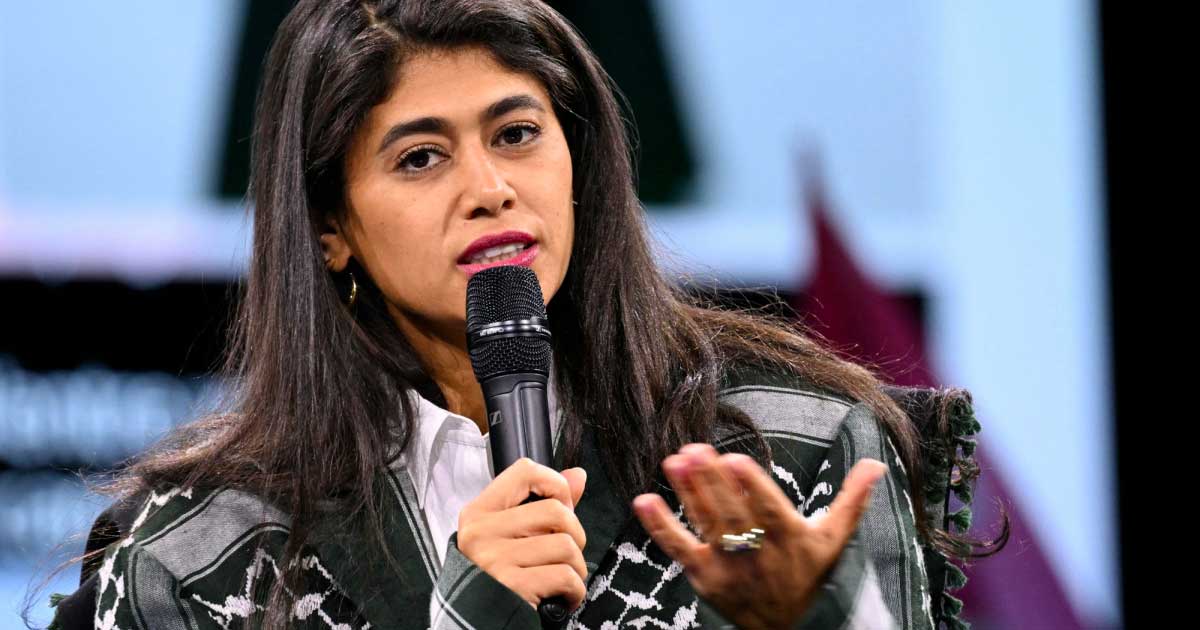
It took a few hours to turn two suspicious bags into «synthetic drugs.» A few days to discover that the reality was far less dramatic. And several months to learn that the interior minister himself had allegedly been involved in circulating the initial information.
On April 2, 2026, LFI Member of the European Parliament Rima Hassan was taken into police custody in a separate case involving alleged glorification of terrorism. While searching her belongings, police officers discovered two small containers.
In one: a brown substance. In the other: some white crystals. The police then suspected the presence of narcotics. An initial test on the crystals came back positive for synthetic cathinones, and the bag was sealed and labeled «3-MMC.» Very quickly, the news spread from the police station to newsrooms.
«Synthetic drugs» were reportedly found among Rima Hassan's belongings. And the media machine kicks into gear.
The Minister and «the synthesis thing»
Five months later, Further Investigation raises a particularly embarrassing issue. According to several journalists interviewed by the program, Laurent Nuñez himself allegedly helped spread this information on the day he was taken into custody.
On a train returning from Bordeaux, journalists interview the interior minister in the dining car. The conversation takes place «off the record,» meaning the remarks are not publicly attributed.
When asked about the presence of drugs in Rima Hassan’s cases, Laurent Nuñez reportedly replied: «That may be true.» He then reportedly referred to «some kind of synthetic substance» for one of the products and «a cocaine derivative» for the other, while acknowledging that he «doesn’t know much about it.».
According to Further Investigation, a reporter who was present reportedly called his newsroom to confirm the information, citing that exchange as evidence.
The minister’s aides offer a different interpretation: they maintain that Laurent Nuñez was responding to reporters’ questions about information that was already circulating and that he had, in fact, urged caution. They therefore dispute the notion that this was an operation intended to start a rumor.
The question of who wanted to do what therefore remains unanswered. On the other hand, we now have a much better understanding of what was actually inside the bags.
Plot twist: It was basically just CBD
The lab results came back two days later. The white crystals, which to the police officers looked like MDMA or 3-MMC? 82 % of CBD. Some’isolate.
The second packet was more complicated: it contained mostly CBD but also 1% of THC, which is higher than the legal threshold of 0.3%. It was therefore technically a narcotic, even though Rima Hassan claimed to have purchased it as CBD at a store in Brussels. The prosecutor’s office ultimately closed the investigation into the use, transportation, and possession of narcotics without further action.
In the meantime, of course, the «synthetic drug found at Rima Hassan’s place» had already had its moment in the media spotlight.
The Council for Journalistic Ethics and Mediation had even stepped in as early as April 10, calling on newsrooms to exercise greater caution after the report—which was ultimately refuted—was published.
The Minister Who Regretted… the Leaks
That’s when the story takes a rather unusual turn. The day after his detention, Laurent Nuñez was interviewed on RMC and BFMTV, and the minister was extremely cautious in his remarks.
«All of this is part of the investigation,» he explains publicly. He refuses to comment on the contents of the bag and even adds that he regrets the leaks, noting that only the district attorney’s office was authorized to speak about the case.
But if the account given by the journalists interviewed on the program is accurate, the minister—who publicly expressed regret over the leaks—had, a few hours earlier, discussed the alleged nature of the products found with journalists off the record. Nuñez therefore may not have necessarily created the story, but he may have helped lend it credibility.
Given the weight that even a cautious and unofficial confirmation from the Minister of the Interior can carry.
Drugs: That Powerful Machine for Discrediting People
Rima Hassan and her attorney believe that the dissemination of this information was intended to harm her. Her attorney is now requesting that a judicial investigation be opened to pinpoint the source of the leaks and that Laurent Nuñez be questioned.
LFI For its part, it is calling for the minister's resignation.
A preliminary investigation into a breach of investigative confidentiality had already been launched following the initial leaks.
















The Socialist Party still doesn't know how to approach the legalization of cannabis

Science in the City International: Paris at the Heart of Transatlantic Scientific and Medical Dialogue

Christine Fréchette is alienating Quebec’s cannabis industry

Rima Hassan: When «Drugs» Become a Political Weapon

From Marathons to Ultratrails: How Extreme Running Affects the Endocannabinoid System

Four days of THC may make breast cancer less aggressive, according to a new study

Medical Cannabis: 14 Organizations Finally Call for Enforcement of the Law

One year after the launch of the Dutch cannabis experiment, the first trends are emerging

High Ground: The Crash of a Plane Full of Marijuana That Made History in Yosemite

The United Kingdom Is Moving Closer to a Regulated CBD Market
-
 Cannabis and driving1 week ago
Cannabis and CBD: French Drivers Can Now Lose Their License Even Without a Positive Test Result
-
Cannabis in France1 week ago
Cannabis Legalization: The LFI Bill Has a Major Problem—THC
-

 Cannabis in the Netherlands2 days ago
One year after the launch of the Dutch cannabis experiment, the first trends are emerging
-
Cannabis in France3 days ago
French medical cannabis remains stalled at the Ministry of Health
-
Cannabis in Europe2 weeks ago
Andorra Paves the Way for Medical Cannabis Cultivation
-
Business2 days ago
The United Kingdom Is Moving Closer to a Regulated CBD Market
-
Cannabis in France2 weeks ago
Drought: Could Hemp Become the New Hope for French Farmers?
-
Cannabis in Quebec2 weeks ago
Cannabis in Quebec: The 21-Year-Old Age Requirement in the Spotlight






You must be logged in to post a comment Login