The French Academy of Pharmacy vetoes the legalization of cannabis

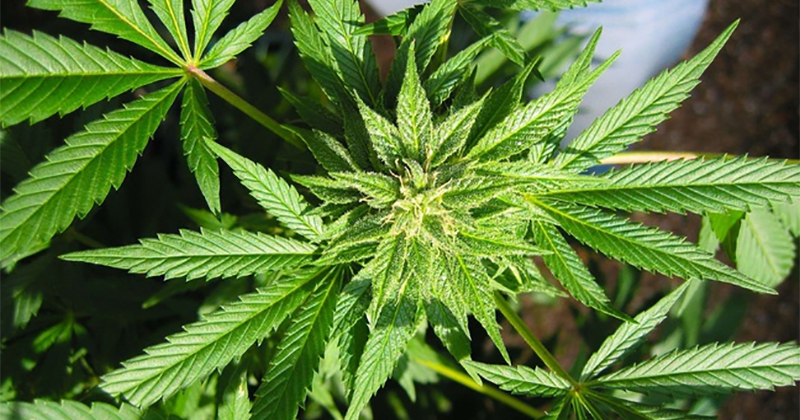
In a press release issued at the end of April, theNational Academy of Pharmacy is firmly opposed to the decriminalization of cannabis: «legalization would send a very bad message to our country's youth, and its consequences would be catastrophic in terms of public health, especially in a country where consumption is the highest in Europe». Read on.
What is the Académie nationale de pharmacie?
The Académie nationale de pharmacie (ANP) is a learned society with 250 members and 80 foreign correspondents, most of whom are pharmacists, concerned with issues of hygiene and public health. Description from Wikipedia closely resembles the French Academy's equivalent for pharmacy. Who said there were old fogies in a closed hemicycle?
What are his arguments?
Although the report's bibliography is well documented, some of the arguments are surprising.
1/ Increasing product power
ANP reports’actual increase in THC concentration in cannabis between the years 1993 and 2014, and uses this observation to say:
«Some people use this increase in potency as an argument for decriminalization, claiming that it will be controlled in the products sold. This is not the case, since in countries that have adopted decriminalization, there has been an expansion of self-cultivation that has never been controlled.»
Cannabis sold in dispensaries is well controlled, both in terms of potency and the pesticides used to grow it. Visit Colorado, for example, revises very often its pesticide policy so as not to put consumers at risk.
Self-cultivation is also controlled, with a limit on the number of plants per person, and in some countries a declaration to a national office, as is the case for the Cannabis Social Clubs. Offenders are generally punished and tried with the status of traffickers, and face heavy penalties.
Nor does the ANP tell us why the increase in THC concentration is dangerous. But never mind...
2/ Cannabis as a factor in accidents
Driving stoned or drunk is dangerous. Does this mean that alcohol is forbidden? As cannabis use increases in France, so does the number of people driving under the influence. In Colorado, there were only 40 more arrests for driving under the influence between before and after legalization.
In France, the number of road deaths fell from 16,000 in 1970 to 4,000 in 2010. During the same period, cannabis became more widespread. The state now has tests to detect driving under the influence of cannabinoids, which are positive if you have smoked within 12 hours.
Colorado, statistics also show that the number of accidents has not increased since weed was legalized.
Moreover, to use the comparison with alcohol, the cannabis increases the risk of road accidents by 1.4, while alcohol multiplies it by 4.
Edit of 05/16: Washington, unlike Colorado, has seen its number of accidents involving THC-positive drivers to rise. Clarification from the foundation behind the study: cannabis was not necessarily the cause of the accident, but the drivers did have THC in their blood.
3/ Cannabis can disrupt brain maturation
The ANP is stating the obvious. All the scientific studies agree on this: the cannabis affects brain development before the age of 21. Hence the need for prevention in schools and workplaces. French law, the basis of cannabis prohibition, currently prohibits such health measures.
In addition, the various legalizations in the United States began over 20 years ago, didn't create a generation of stoners. In Colorado, the number of teenagers who used cannabis fell between 2011 and 2013, from 22 to 20%, as the state legalized medical cannabis.
4/ Health risks
Schizophrenia, irreversible decline in IQ, escalation to hard drugs, vascular complications, reduced libido. The ANP doesn't mince its words. What do we really know about all this?
For IQ and the escalation to hard drugs, these old clichés have been disproved over and over again. For the gateway drug theory, you can look here, for IQ, here.
Intensive, long-term use decreases dopamine levels in the brain, possibly causing attention and memory problems.
With regard to schizophrenia, the ANP linke a study on healthy and schizophrenic patients. The disease would therefore not be created by cannabis but amplified by its consumption. Always good to know, but that doesn't make it a clincher.
As for vascular complications, are they due to the cannabis or to the tobacco inhaled with the cannabis? Cannabis tends to produce a slight tachycardia. In the context of a healthy lifestyle, could this tachycardia eventually trigger heart attacks? ANP doesn't elaborate enough for us to be able to judge, and doesn't report any studies revealing this correlation.
With regard to libido and reduced fertility, some varieties like Sexxpot are sold as libido enhancers. The findings are not without appeal.
Cannabis smoke is also said to be more carcinogenic than tobacco. Probably in the 18th century. A study published in the Journal of the American Medical Association in 2012 shows the opposite.
PNA also reports that cannabis is blamed for an aggressive variety of testicular cancer. We'd just have liked a link to understand where this is coming from.
5/ A dire situation
The PNA publication ends with: «In countries that have legalized cannabis use, the findings are catastrophic». With the following points, which we comment on each time:
- trivialization of the product and increase in the number of new users (in the U.S., inter-state comparisons show that prevalence of use is higher in states that have legalized than in others) > the statistical increase in the number of users is partly due to people «coming out of the closet» and daring to declare that they use cannabis now that it's legal, whereas they were hiding before. The increase in consumption is more marked among the 35+ age group, while consumption among young people is declining.
- increase in the number of addicts > in percentage terms, the number of addicts is still around 10%. If the total number of consumers increases (see point above), so does the number of addicts. It's mathematical. I'm not sure you need a 7-year degree to understand it.
- easier access to new varieties with higher concentrations of active ingredients (THC) > Yep. And?
- increased risk of switching to other hard drugs > Toujours pas
- explosion of self-cultivation and development of new modes of consumption > Yep. And?
- increase in the number of hospitalizations for acute and chronic intoxication > Indeed. Legal cannabis is a new product. Like the first binge, consumers have to learn to know their tolerance to cannabis. The only reassuring point: cannabis is not lethal.
- increase in the number of cases of accidental ingestion by children > Also true. In fact, Colorado immediately legislated to make space-food portions less accessible and less desirable, and to limit the amount of THC per serving to 10mg.
- increase in the number of’cannabis-related road accidents > Sauce?
Conclusion
Apart from wondering who commissioned this report, and who influenced its writing, this report scares the hell out of us.
Fear because it is clearly oriented against the medical use of cannabis.
Fear because it makes no mention of scientific advances in medicinal cannabis around the world, or of the development of medicines to treat or alleviate certain pathologies, usually treated with conventional medicines that are either ineffective or have side effects that cannabis does not have.
Fear because it calls for stepping up the fight against trafficking and prevention (an honourable thing to do), but without understanding that, in the light of our French experience of almost 100 years and the countries that have since legislated on the subject cannabis, prohibition prevents us from doing so effectively.
Fear because the conclusion is: «The evidence is now in that people die from cannabis, so it's not a soft drug». The figures also show that alcohol and cigarettes kill more than cannabis. So we'd love to see the ANP call for a ban on alcohol and cigarettes, based on the same findings. Or is it just another case of protecting the «French terroir»?
If the Académie nationale de pharmacie would like to contact us to explain each point of its report in detail, we'd be delighted to do so.
Théo Caillart and the watcher












«Vincy Gold»: Humboldt Seed Company on the Hunt for Saint Vincent Sativas

Cronos Completes the Acquisition of CanAdelaar for 57.5 million euros

Cannabis with a "bloody" twist: Discover Sensi True Blood and Sensi Sangria, the two new strains from Sensi Seeds

Hemp: The Council of the EU Takes a Stand on New Production and Marketing Rules

Missouri's legal cannabis market accounts for 93 % of consumer spending

THC Gummies: How to Read a Certificate of Analysis Before Buying

British patients now have access to THCV-rich cannabis flowers

Spain: Medical Cannabis Is Coming to About 50 Hospitals

JIHE 2026: Japan’s Largest Trade Show Dedicated to Hemp and CBD Returns to Tokyo with More Than 100 Industry Players

New Caledonia: The Courts Clear the Way for the Return of CBD
-
 Business3 weeks ago
The legal cannabis market in New York exceeds 4 billion $ in revenue
-

 Cannabis in France4 weeks ago
Which countries legalized medical cannabis before France?
-
Cannabis in France1 week ago
France already has 3,000 cannabis retail outlets. None of them are legal.
-
Business4 weeks ago
South Korea is preparing to begin local production of medical cannabis to meet rising demand
-
Cannabis in the U.S.1 week ago
A DEA report confirms that there are no fatal cannabis overdoses
-
Cannabis in Thailand4 weeks ago
From the boom in dispensaries to a purely medical approach: Thailand is revising its cannabis policy
-
Cannabis and driving4 weeks ago
Medical Cannabis and Driving: New South Wales Ends Automatic Penalties for THC
-
Cannabis in France3 weeks ago
France’s Drug Policy Chief Defends Cannabis Prohibition... and Runs Into the Facts

















mat
May 12, 2016 at 17 h 43 min
Thank you Romain & the Watcher , for these detailed and SCIENTIFIC explanations, backed up by evidence and reports...
I'm Outré to read their lousy arguments!!!!!!!
because I think we're up against a group of pseudo-scientific and rational lobbyists...
But the people, be they English, German, Italian, Spanish or French, know how to keep a clear head.
This Lobby serves no one and only follows an outdated policy derived from »old US propaganda from the last century ...which is clearly not what the people think nor the world scientific community!!!! ... Let's change European Policy fast!!!
Ps:: the best: testicular cancer to cry of laughter !!!! lamentable ...