
Cannabis Social Club: what is it?

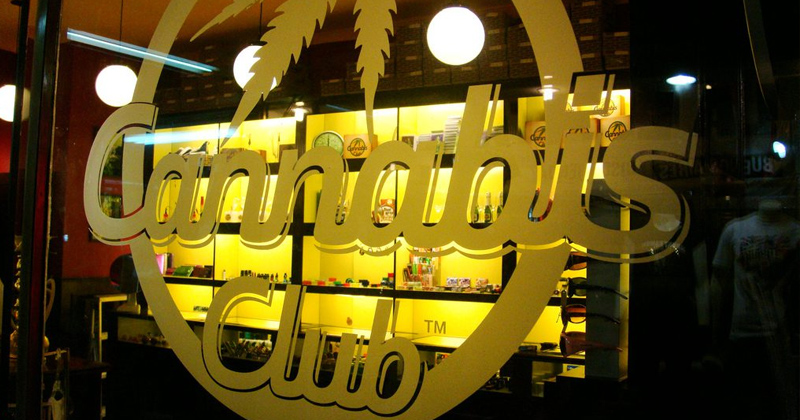
A Cannabis Social Club (CSC), in addition to being a place for exchange and socializing, is first and foremost a cannabis regulation model. The principle is simple: CSCs are registered, nonprofit organizations composed of adults who pool their expertise to manage the production and distribution of limited quantities of cannabis among their members.
The model was created by ENCOD, a pan-European drug policy NGO, in 2005 and therefore advocates for the legal production and distribution of cannabis among adults. The NGO is based on a European Union decision of 2004, which states that «Member States shall ensure that the unlawful cultivation of cannabis plants is a criminal offense,» but where Article 2.2 specifies that «are not included within the scope of this Framework Decision where the persons concerned engage in such activities exclusively for personal use as defined by national law.».
ENCOD has established five principles for a Cannabis Social Club:
- Supply follows demand, not the other way around: a CSC’s production capacity is based on the expected level of consumption by its members.
- Non-profit status: CSCs are non-profit organizations. Any profits generated are used to create legal jobs within the CSC and to expand its activities
- Transparency: CSCs are registered associations with publicly available bylaws and financial records, a democratic and participatory internal structure, and anonymous production and consumption records that can be accessed by members and authorities
- focused on public health: cultivation methods must be organic. Community health centers must implement policies to prevent problematic cannabis use and promote safe and responsible consumption through educational materials or studies conducted at the center
- open to dialogue with the authorities
As part of the CSCs, culture, the transport, Distribution and consumption are subject to quality and safety checks and are carried out without advertising or promotion of any kind. Association members fund the system through membership fees. Each member is allocated a fixed amount of cannabis per month and per year. The cannabis may not be resold, and the CSC must ensure that it is not consumed by minors. Unlike Cannabis Buyers Clubs In Canada and the United States, cannabis social clubs are not limited to patients.
Today, the CSCs are officially used in Spain, in Uruguay, Belgium, and the Netherlands, and to a lesser extent in the United Kingdom and France. Each country has adapted the model to its own needs and regulations.
In Spain, for example, membership in a CSC is only possible through the recommendation of an existing member. There are reportedly more than 400 CSCs in Spain today, with many more currently being established. Spanish CSCs welcome both recreational members and patients.
In Belgium, the CSC is only allowed to grow one plant per member. The best known is the Trekt Uw Plant (Tire ton plant in French) but other initiatives like the Mambo Social Club are trying to make a name for themselves despite the various legal proceedings.
Legal Issues Related to CSCs
Given the nature of the association’s work, the justice system takes a very close interest in these programs, both for preventive purposes (to ensure that everything is proceeding smoothly) and for corrective purposes (to punish violations of the law).
In 2013 in France, six CSCs attempted to officially register with the prefecture, at the initiative of the French Cannabis Social Club Movement (CSCF). The CSCs were all quickly dissolved by court order (except for the CSC Grand Nord Est, but proceedings are ongoing) and have returned to the shadows.
In Belgium, the law states that possession of 3 grams of cannabis or the cultivation of one plant per person cannot be prosecuted unless there is a public nuisance or aggravating circumstances. The managers of the CSCs Trekt Uw Plant and Mambo Social Club yet both were prosecuted. Trekt Uw Plant won both of his lawsuits, and Michel Degens, president of the Mambo Social Club, is awaiting the outcome of his appeal after having been found guilty of violating Belgian law, though he was not sentenced to any punishment.
In Spain, the justice system is primarily focused on enforcing the law regarding social cannabis clubs. The system is well-established there, and lawmakers no longer question whether they are legal or not. The main court rulings concerning them alleged cannabis trafficking behind the club’s pseudo-associative activities. This clearly highlights the importance of transparency in the CSC model so that the state can regulate—and, if necessary, sanction—the cultivation and distribution of cannabis within the framework of these associations.





CBD is said to promote athletic recovery, without improving performance

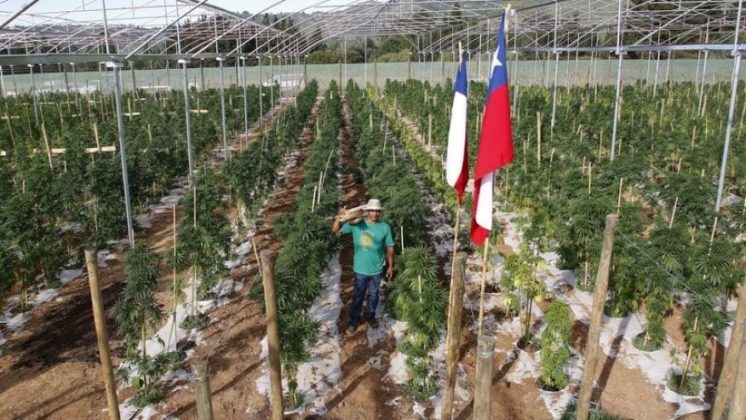
294 cannabis clubs in Chile: a booming movement with uneven distribution

Chronic Sciatica: New York Approves First Clinical Trial of a THC-Based Medication

United States: The DEA is accelerating the integration of medical cannabis at the federal level

Florida is nearing one million patients using medical cannabis

Uruguay Revives Its Plan to Allow Tourists to Legally Access Cannabis

In Brazil, researchers are developing an innovative CBD eye drop

Autism: Medical Cannabis Is Linked to Reduced Anxiety

The $28 billion U.S. hemp market remains under threat

Jamaica Eases Small Farmers' Access to the Cannabis Market
-
 Business5 days ago
The legal cannabis market in New York exceeds 4 billion $ in revenue
-

 Cannabis in France2 weeks ago
Which countries legalized medical cannabis before France?
-
Business2 weeks ago
South Korea is preparing to begin local production of medical cannabis to meet rising demand
-
Cannabis in the Netherlands4 weeks ago
One year after the launch of the Dutch cannabis experiment, the first trends are emerging
-
Cannabis in Thailand2 weeks ago
From the boom in dispensaries to a purely medical approach: Thailand is revising its cannabis policy
-
Cannabis in France4 weeks ago
French medical cannabis remains stalled at the Ministry of Health
-
 Cannabis in Argentina3 weeks ago
Argentina Opens Its Market to Hemp Flowers Containing 1% of THC
-
Cannabis and driving2 weeks ago
Medical Cannabis and Driving: New South Wales Ends Automatic Penalties for THC















You must be logged in to post a comment Login