The hidden war on cannabis: is France being manipulated to fuel prohibition?

In recent weeks, the eternal debate on the legalization of cannabis has resurfaced, giving rise to countless interviews and analyses.
While a growing consensus among specialists underlines the ineffectiveness of prohibition, public and political opinion remains widely divided. The most important factor for those who oppose legalization is not the economic impact or the fight against drug trafficking, but rather the perception of the dangers of cannabis.
But what if this perception were fundamentally flawed, or even deliberately shaped?
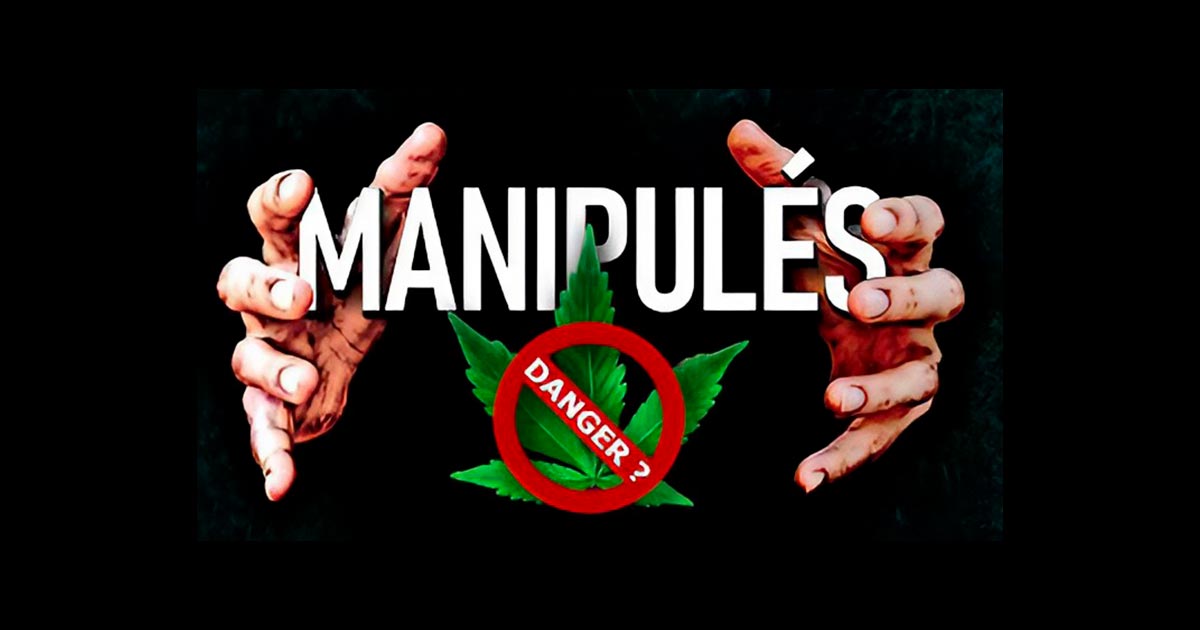
The video «INVESTIGATION: The other hidden war of cannabis» from the YouTube channel «L'Argumentarium» takes a look at what it describes as «scientico-political warfare» conducted behind the scenes, where science itself would be «particularly badly treated».
While acknowledging that cannabis is indeed a dangerous psychotropic substance with direct effects, particularly on adolescents, including memory disorders, anxiety, depression, dependence and links to psychosis or schizophrenia, especially in cases of excessive consumption, as well as cardiovascular, pulmonary and carcinogenic risks due to combustion, the video highlights a major inconsistency.
As the Argumentarium explains, substances such as alcohol and tobacco, which are equally dangerous - with alcohol causing 49,000 deaths a year in France and tobacco 78,000, compared with around 100 cannabis-related deaths in 2022 (none directly from overdose) - remain perfectly legal.
The question then becomes: is cannabis really more dangerous than our legal drugs?
In-depth studies carried out over the decades on various indicators such as mortality, dependence potential, neurotoxicity, social risks and cost to society have consistently placed cannabis at the bottom or in the middle of the ranking of dangerous substances, with alcohol almost always occupying first place.
The video reveals that despite these findings, a 2021 survey shows that 75 % to 90 % of French people are aware of the negative consequences of cannabis, but a 2015 study by Linermont indicates a «totally skewed perception», With 75 % to 85 % of those surveyed believing that cannabis is as dangerous as, or even more dangerous than, alcohol and tobacco.
Even in the medical world, a Dr Olivier Bertrand published in 2018 concluded that cannabis suffered from a «totally overestimated negative perception bias» among many French doctors. This overestimation of danger is the main driving force behind opposition to legalization.
Where does this prejudice come from? The video explores the ongoing opposition of institutions such as the prestigious Académie de Médecine, which regularly issues alarming press releases against legalization, citing serious public health problems.
These arguments, apparently backed up by scientific studies, are essential to fuel the prohibitionist discourse. The documentary highlights the relentless efforts of personalities such as the Dr Jean Constentin, a leading member of the French Academy of Medicine and Pharmacy, who spent two decades at the forefront of the fight against the decriminalization of cannabis and played a decisive role in developing the «scientific counter-argument».
The video suggests that in this «information war», «liberties are sometimes taken with science», indicating that supporters of prohibition might «regularly distort scientific data to demonize cannabis», by selectively choosing publications, This approach is identified as a typical example of «motivated reasoning». This approach is identified as a typical example of "motivated reasoning".
Finally, the video explores the ideological underpinnings of this position, revealing a growing conservative rigidity among prohibitionists, who often oppose addictologists advocating harm reduction policies.
She suggests that this group has put forward arguments which, although presented as scientific, have served to conceal the real dangers of cannabis from health professionals and the general public, thus contributing to a considerable delay in the implementation of harm reduction policies in France.
The video finally encourages viewers to be attentive to the way in which scientific knowledge is used in the service of political discourse and to learn to distinguish genuine scientific discoveries from ideological arguments, calling for a transition to a truly science-based policy.
And we invite you to take a look at it in the article 🙂




















JIHE 2026: Japan’s Largest Trade Show Dedicated to Hemp and CBD Returns to Tokyo with More Than 100 Industry Players
New Caledonia: The Courts Clear the Way for the Return of CBD

The Brazilian medical cannabis market continues to grow

Morocco: Three Cannabis-Based Medications Approved for the Treatment of Epilepsy

Canopy Growth Receives New EU-GMP Certification to Strengthen Its Presence in Europe

Three years after legalizing medical cannabis, Albania continues to establish regulations for it

The first plant-based medical THC spray arrives in the United Kingdom

Medical Cannabis in Germany: THC Prices Vary by a Factor of 12

France already has 3,000 cannabis retail outlets. None of them are legal.

Morocco's exports of legal cannabis have expanded to 15 countries
-
 Business2 weeks ago
The legal cannabis market in New York exceeds 4 billion $ in revenue
-

 Cannabis in France4 weeks ago
Which countries legalized medical cannabis before France?
-
Business4 weeks ago
South Korea is preparing to begin local production of medical cannabis to meet rising demand
-
Cannabis in France4 days ago
France already has 3,000 cannabis retail outlets. None of them are legal.
-
Cannabis in Thailand4 weeks ago
From the boom in dispensaries to a purely medical approach: Thailand is revising its cannabis policy
-
Cannabis in the U.S.5 days ago
A DEA report confirms that there are no fatal cannabis overdoses
-
Cannabis and driving3 weeks ago
Medical Cannabis and Driving: New South Wales Ends Automatic Penalties for THC
-
Cannabis in France3 weeks ago
France’s Drug Policy Chief Defends Cannabis Prohibition... and Runs Into the Facts

















You must be logged in to post a comment Login