
This study shows exactly how hash loses its power over time

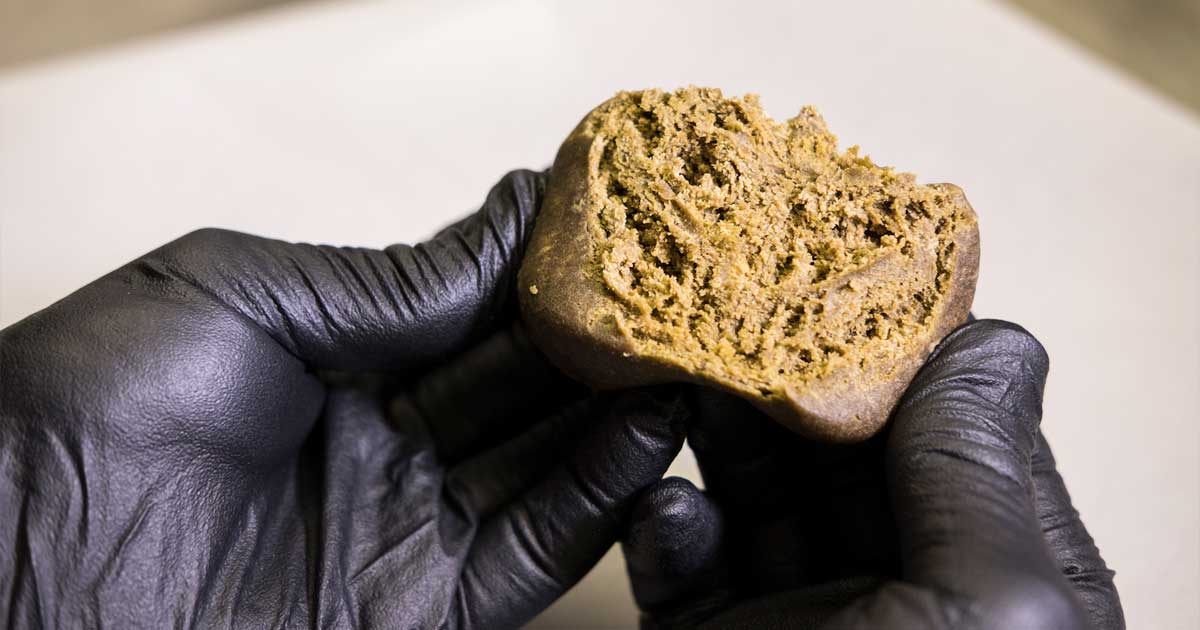
A new long-term chemical analysis of cannabis resin samples sheds light on how the THC, the CBD and the CBN change over the years of storage.
The researchers, who analyzed 150 resin samples seized by the Royal Moroccan Gendarmerie and stored for periods of up to eight years, measured cannabinoid concentrationsusing gas chromatography coupled with flame ionization detection (GC/FID).
Their goal: to map changes in cannabinoid profiles depending on storage and test predictive models linking the storage life based on chemical composition.
From fresh hash to aged hash
At time zero, the fresh resin samples exhibited a extraction yield high (approximately 37.9 ± 1.45 %) and a predominant concentration of Δ9-tetrahydrocannabinol (THC) (35.16 ± 3.87 %), with much lower concentrations of cannabidiol (CBD) (3.92 ± 0.40 %) and cannabinol (CBN) (0.87 ± 0.35 %).
As the storage period increased, three major trends emerged:
- The extraction yield drops sharply. After eight years, yields fell to approximately 5.10 ± 0.84 %
- THC levels drop significantly. THC levels fell from approximately 35 ppm to approximately 0.44 ppm in the 8-year-old group
- The CBD and CBN initially increase, then decrease. CBD peaks at nearly 6.71 % after two years and then declines; CBN peaks at nearly 6.94 % after two years before gradually declining.
Statistical tests confirm that the storage life (but not the extraction time) significantly affects yield and cannabinoid levels.
This pattern confirms and refines previous observations: THC degrades over time, converting to CBN through oxidation, while CBD follows a more complex trajectory. Previous studies had already noted a loss of THC and an accumulation of CBN, but few of them covered such long time periods or involved such large samples.
Part of the loss of chemical mass remains unexplained the THC does not break down not entirely CBN, so other byproducts or unknown compounds must account for the missing fractions.
The results ultimately confirm that the power decreases cannabis resin over time when stored at room temperature. Producers of cannabis concentrates, oils, or extracts derived from resin must take into account the loss of THC and potential changes in the therapeutic ratio between THC, CBD, and CBN. Even a resin that was originally THC-dominant can, over the years, become relatively enriched in CBD/CBN.
In a legal or criminal context, as was the case in this study, it is useful to be able to estimate the storage age of a resin sample. A high CBN/THC ratio has long been used as a rough indicator of age; this study formalizes a more precise multivariate model. The authors caution, however, against generalizing to vastly different conditions without further validation.




















CBD: Full-Spectrum Extracts Under Threat in Greece

Medical Cannabis and Back Pain: Opioid Use Has Dropped by 90 % in 10 Years

Cannabis: Wisconsin Could Finally Legalize It in 2027

Argentina Opens Its Market to Hemp Flowers Containing 1% of THC

The French Socialist Party still doesn't know how to approach the legalization of cannabis

Science in the City International: Paris at the Heart of Transatlantic Scientific and Medical Dialogue

Christine Fréchette is alienating Quebec’s cannabis industry

Rima Hassan: When «Drugs» Become a Political Weapon

From Marathons to Ultratrails: How Extreme Running Affects the Endocannabinoid System

Four days of THC may make breast cancer less aggressive, according to a new study
-
 Cannabis and driving2 weeks ago
Cannabis and CBD: French Drivers Can Now Lose Their License Even Without a Positive Test Result
-
Cannabis in France2 weeks ago
Cannabis Legalization: The LFI Bill Has a Major Problem—THC
-

 Cannabis in the Netherlands7 days ago
One year after the launch of the Dutch cannabis experiment, the first trends are emerging
-
Cannabis in France1 week ago
French medical cannabis remains stalled at the Ministry of Health
-
Business1 week ago
The United Kingdom Is Moving Closer to a Regulated CBD Market
-
Cannabis in Argentina4 days ago
Argentina Opens Its Market to Hemp Flowers Containing 1% of THC
-
Cannabis in Europe3 weeks ago
Andorra Paves the Way for Medical Cannabis Cultivation
-
Cannabis in France5 days ago
Rima Hassan: When «Drugs» Become a Political Weapon











You must be logged in to post a comment Login