Mixing cannabis and tobacco? Or how to disrupt your brain chemistry

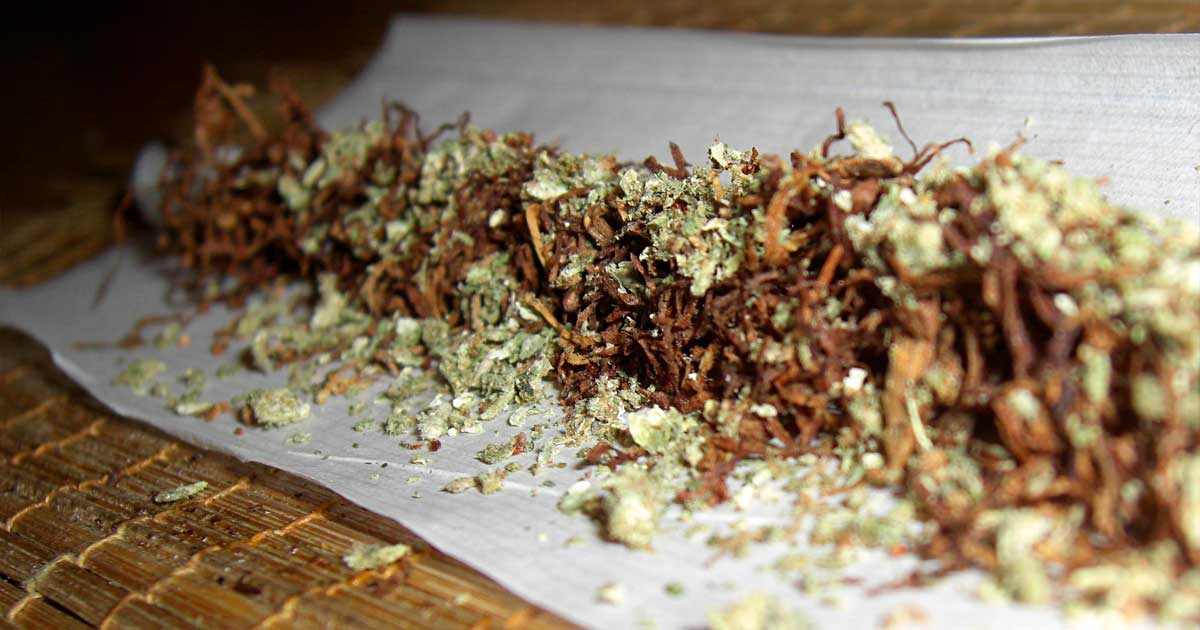
A new Canadian study sheds light on how the consumption of tobacco can change the endocannabinoid system in people who consume cannabis, suggesting that mixing the two substances could aggravate certain neurological and clinical effects.
Posted in Drug and Alcohol Dependence Reports, This study identifies significant neurobiological differences between people who consume cannabis alone and those who combine it with tobacco, as is often the case in France, highlighting increased activity of a key enzyme that regulates the brain's cannabinoid balance.
Understanding the endocannabinoid system and FAAH
The endocannabinoid system (SEC) plays a central role in maintaining mental and physiological balance. It works with molecules produced by the body, such as’anandamide, anandamide, often referred to as the «happiness molecule», which helps regulate mood, stress response and cognitive processes. Anandamide levels in the brain are tightly controlled by FAAH (fatty acid amide hydrolase), an enzyme responsible for its breakdown.
When FAAH activity is elevated, anandamide levels decrease, which has been associated with an increased risk of depression, anxiety and others psychiatric disorders. From previous research has already shown that chronic cannabis use can affect the SEC by temporarily reducing the density of the CB1 receptors and by modifying anandamide levels. Similarly, prolonged tobacco consumption is known to disrupt cannabinoid signaling and reduce CB1 receptor availability.
What remained unclear until now was how the joint consumption of these two substances interact within the brain's neurochemical systems.
A first-of-its-kind study on the joint consumption of cannabis and tobacco
The new study, conducted by Rachel A. Rabin and colleagues from the Centre for Addiction and Mental Health (CAMH) in Toronto, is the first to explore the influence of tobacco consumption on FAAH activity in regular cannabis users. Using positron emission tomography (PET) imaging with a specialized tracer called [11C]CURB, the researchers measured FAAH levels in several brain regions, including the prefrontal cortex, hippocampus, thalamus, sensorimotor striatum, substantia nigra and cerebellum.
Thirteen participants who regularly used cannabis were divided into two groups: those who also smoked tobacco on a daily basis and those who did not. By comparing the brain scans of the two groups, while taking into account variables such as gender and FAAH gene variants, the researchers found striking differences in enzyme activity.
High FAAH levels linked to tobacco consumption
According to the results, people who used both substances had a significantly higher FAAH activity in certain brain regions compared to those who consumed cannabis alone. The most pronounced increases were observed in the substantia nigra and the cerebellum, areas involved in motor control, reward processing and habit formation.
Statistical analysis revealed that higher levels of FAAH in the cerebellum were positively correlated with the number of cigarettes smoked per day, suggesting a direct relationship between the’tobacco exposure and theelevation of FAAH. Interestingly, no such correlation was found with levels of cannabis consumption, reinforcing the idea that it is tobacco, rather than cannabis itself, that may be behind these neurochemical changes.
The authors of the study suggest that increased FAAH activity could contribute to the’worsening of clinical results often observed in people who mix the two substances, including greater dependence, more intense withdrawal symptoms and increased anxiety or depressive symptoms.
Interaction between the nicotinic and cannabinoid systems
The interaction between nicotine and cannabinoid receptors has long intrigued neuroscientists. The two systems are closely linked and share overlapping pathways in the brain's reward circuitry. Animal studies have shown that nicotine exposure can sensitize the ECS, potentially amplifying the psychoactive effects of cannabis while accelerating the breakdown of anandamide.
This bidirectional relationship could explain why the combination of tobacco and cannabis leads to a distinct neurochemical profile. As the authors point out, the elevated FAAH levels observed in co-consumers «could reflect interactions between the systems endocannabinoid and nicotinic »Rather than the independent effects of either substance.
These results raise questions about how the blunt consumption or spliffs could influence not only immediate experiences, but also long-term mental health.
Implications for mental health and addiction
In clinical terms, elevated FAAH levels could be a marker of a increased vulnerability to dependency and mood disorders. Previous research has shown that people with naturally lower FAAH activity tend to have fewer withdrawal symptoms and a lower risk of cannabis dependence. Conversely, overexpression of FAAH has been associated with behaviours depressive and anxious.
In concrete terms, this could mean that people who mix cannabis and tobacco are more likely to suffer from dependency, of ties and’emotional instability during periods of abstinence.
Dr Rabin and his team suggest that pharmacological targeting of FAAH could one day serve as a therapeutic pathway to treat joint use of cannabis and tobacco or to alleviate withdrawal symptoms. FAAH inhibitors, which slow down the breakdown of anandamide, are already being investigated in experimental treatments for anxiety and substance use disorders.
A common but little-studied consumption pattern
Despite these implications, the combined use of cannabis and tobacco remains a an understudied public health problem. Surveys suggest that up to 80% of cannabis users also use tobacco in one form or another, most often by adding tobacco to their joints or by vaping both substances. Yet many large-scale studies fail to distinguish between patterns of exclusive cannabis use and joint use, which can lead to essential neurological and behavioral differences being overlooked.
The present study highlights the need for future research involving tobacco-only control groups and not using any substance to determine whether the elevated FAAH levels are due solely to tobacco or to the combined consumption of the two substances. Larger sample sizes and control of recent nicotine exposure would also clarify whether the acute effects of smoking play a role in the observed enzyme activity.
Towards a more nuanced understanding of cannabis use
Although these results are preliminaries Due to the small sample size, they open a valuable window on the biological basis of joint consumption. The evidence suggests that mixing tobacco and cannabis not only alters subjective experience, but can fundamentally change the way the brain regulates its own cannabinoid balance.
For the cannabis community, these results underline the importance of distinguishing between different consumption practices when assessing health impacts. As the authors note, «greater exposure to tobacco correlates with increased FAAH», providing a plausible neurobiological explanation for the fact that co-consumers often report poorer mental health outcomes than cannabis-only users.
Further research could help determine whether regulation of FAAH activity could become a viable strategy to help people stop or reduce their combined use of cannabis and tobacco. In the meantime, this study adds another piece to the complex puzzle of how the brain's cannabinoid system responds to the substances that so many people consume together.




















«Vincy Gold»: Humboldt Seed Company on the Hunt for Saint Vincent Sativas

Cronos Completes the Acquisition of CanAdelaar for 57.5 million euros

Cannabis with a "bloody" twist: Discover Sensi True Blood and Sensi Sangria, the two new strains from Sensi Seeds

Hemp: The Council of the EU Takes a Stand on New Production and Marketing Rules

Missouri's legal cannabis market accounts for 93 % of consumer spending

THC Gummies: How to Read a Certificate of Analysis Before Buying

British patients now have access to THCV-rich cannabis flowers

Spain: Medical Cannabis Is Coming to About 50 Hospitals

JIHE 2026: Japan’s Largest Trade Show Dedicated to Hemp and CBD Returns to Tokyo with More Than 100 Industry Players

New Caledonia: The Courts Clear the Way for the Return of CBD
-
 Business3 weeks ago
The legal cannabis market in New York exceeds 4 billion $ in revenue
-

 Cannabis in France4 weeks ago
Which countries legalized medical cannabis before France?
-
Cannabis in France1 week ago
France already has 3,000 cannabis retail outlets. None of them are legal.
-
Business4 weeks ago
South Korea is preparing to begin local production of medical cannabis to meet rising demand
-
Cannabis in the U.S.1 week ago
A DEA report confirms that there are no fatal cannabis overdoses
-
Cannabis in Thailand4 weeks ago
From the boom in dispensaries to a purely medical approach: Thailand is revising its cannabis policy
-
Cannabis and driving4 weeks ago
Medical Cannabis and Driving: New South Wales Ends Automatic Penalties for THC
-
Cannabis in France3 weeks ago
France’s Drug Policy Chief Defends Cannabis Prohibition... and Runs Into the Facts
















You must be logged in to post a comment Login