THC may improve Parkinson's symptoms

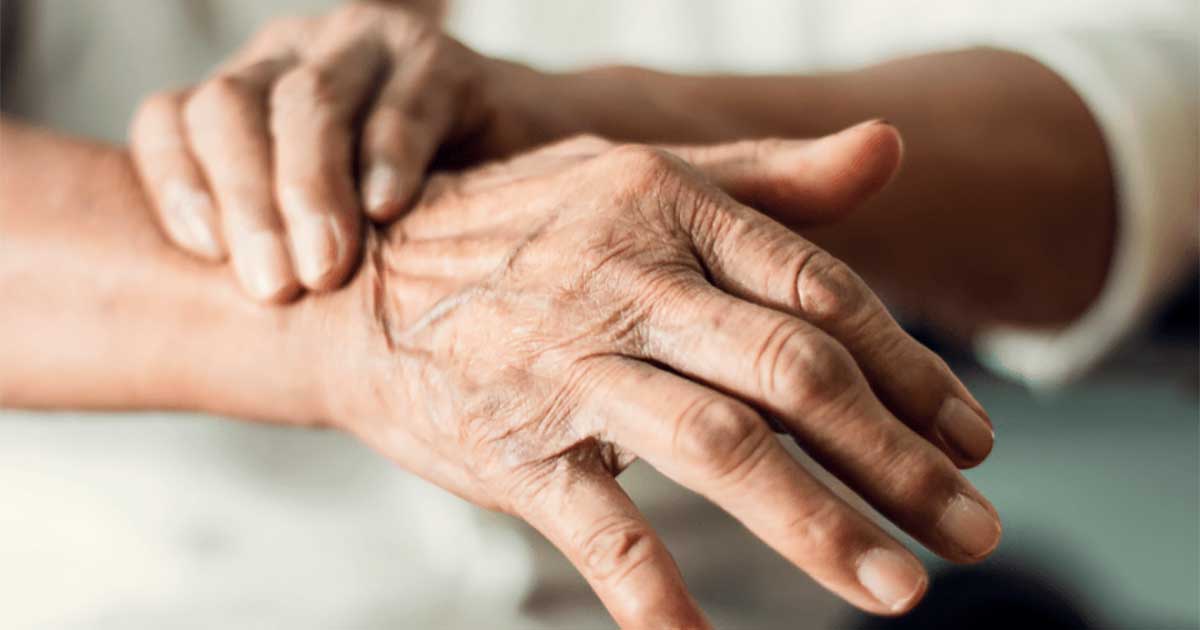
The use of cannabis in the treatment of neurological disorders has once again attracted the attention of scientists, this time focusing on the Parkinson's disease (PD). A recent study published in the Revista Brasileira de Farmacognosia presents the results of a case study on Eduardo Suplicy, Member of Parliament for the State of São Paulo, aged 83, whose symptoms improved considerably after treatment with’THC-rich cannabis oil.
A growing global health concern
According to the’World Health Organization (WHO), global prevalence of Parkinson's disease has doubled over the past 25 years, now reaching around 8.5 million people worldwide. This disorder, which causes both motor and non-motor symptoms, is responsible for 5.8 million disability-adjusted life years and over 329,000 deaths per year, a spectacular increase of over 100 % since 2000.
Traditionally, the levodopa is the main drug used to treat the symptoms of Parkinson's disease. However, its efficacy often diminishes over time, leaving patients struggling with tremors, bradykinesia and difficulty walking. This limitation has encouraged researchers to explore cannabinoids as potential adjunctive therapies.
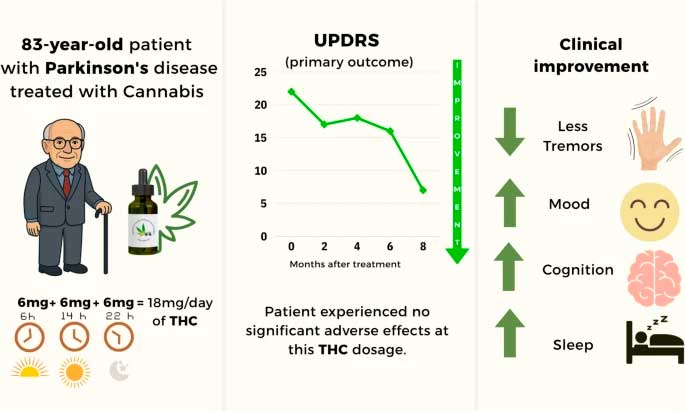
Graphic summary of the case study with information on the patient, dosage and improvements brought about by cannabis consumption.
Remarkable improvement in an 83-year-old patient
The Brazilian study, conducted by a consortium including the’Federal University of Latin American Integration, theSyrian-Lebanese hospital and theassociation Flor da Vida Medicinal Cannabis, The case of Suplicy, whose motor symptoms persisted despite the use of levodopa, was documented.
«This study presents the case of an 83-year-old patient with Parkinson's disease whose severe motor symptoms, including tremor, bradykinesia and difficulty walking, persisted despite levodopa treatment. As a result, a THC-rich cannabis oil was introduced as an adjunctive treatment,» wrote the researchers.
During a nine-month observation period, the patient received oils of Cannabis sativa L. with different concentrations of Δ9-tetrahydrocannabinol (THC) and cannabidiol (CBD). The aim was to determine the optimal dose by progressive titration while monitoring clinical results using the’Unified Parkinson's Disease Rating Scale (UPDRS).
After eight months, a daily dose of 18.25 mg THC, divided into three administrations, produced the most noticeable improvement. Suplicy reported «optimal physical well-being», coinciding with an 54.55 % reduction in UPDRS scores, This figure reflects a significant improvement in mobility and motor control.
Better mobility, sleep and quality of life
The patient's progress was not limited to mobility. The study observed «secondary benefits [that] included better quality of life and sleep, and a reduction in depressive and anxiety symptoms». Suplicy himself is said to have regained the ability to perform everyday tasks such as tying his shoes, writing legibly and holding a cup without spilling it.
No significant adverse reactions were reported, despite the relatively high dose of THC. The researchers noted that this could be partly explained by the low bioavailability of oral THC, estimated at between 4 % and 12 %, compared with up to 35 % when inhaled, which reduces the risk of excessive accumulation and sedation.
«These results suggest that high-dose THC may be safe and effective in alleviating the motor and non-motor symptoms of Parkinson's disease. Cannabinoids, in particular THC, have therapeutic potential for the management of Parkinson's disease, but larger-scale studies are needed to confirm their long-term efficacy and safety,» they conclude. the authors.
Although this case cannot be generalized to all patients, it represents an important step in understanding how the cannabinoids could complement the traditional treatments for Parkinson's disease. The authors of the study call for more rigorous, controlled clinical trials to explore the safety profile and therapeutic scope of High-dose THC in neurological disorders.



















Dr. Pascal Douek, a tireless advocate for medical cannabis in France, has died

Kentucky now has 26 medical cannabis dispensaries

«Vincy Gold»: Humboldt Seed Company on the Hunt for Saint Vincent Sativas

Cronos Completes the Acquisition of CanAdelaar for 57.5 million euros

Cannabis with a "bloody" twist: Discover Sensi True Blood and Sensi Sangria, the two new strains from Sensi Seeds

Hemp: The Council of the EU Takes a Stand on New Production and Marketing Rules

Missouri's legal cannabis market accounts for 93 % of consumer spending

THC Gummies: How to Read a Certificate of Analysis Before Buying

British patients now have access to THCV-rich cannabis flowers

Spain: Medical Cannabis Is Coming to About 50 Hospitals
-
 Business3 weeks ago
The legal cannabis market in New York exceeds 4 billion $ in revenue
-
Cannabis in France2 weeks ago
France already has 3,000 cannabis retail outlets. None of them are legal.
-
Cannabis in the U.S.2 weeks ago
A DEA report confirms that there are no fatal cannabis overdoses
-
Cannabis in France4 weeks ago
France’s Drug Policy Chief Defends Cannabis Prohibition... and Runs Into the Facts
-
Studies on cannabis2 weeks ago
Cannabis Oil and Endometriosis: A Promising Study for Pain Relief
-
Business2 weeks ago
Tilray is accelerating its operations in Europe thanks to a license in Portugal
-
CBD3 weeks ago
In Brazil, researchers are developing an innovative CBD eye drop
-
Cannabis in France2 weeks ago
CBD in France: Traceability, Retail Stores, THC and Driving… What the New Bill Proposes















You must be logged in to post a comment Login