4 families of aromas define each cannabis variety

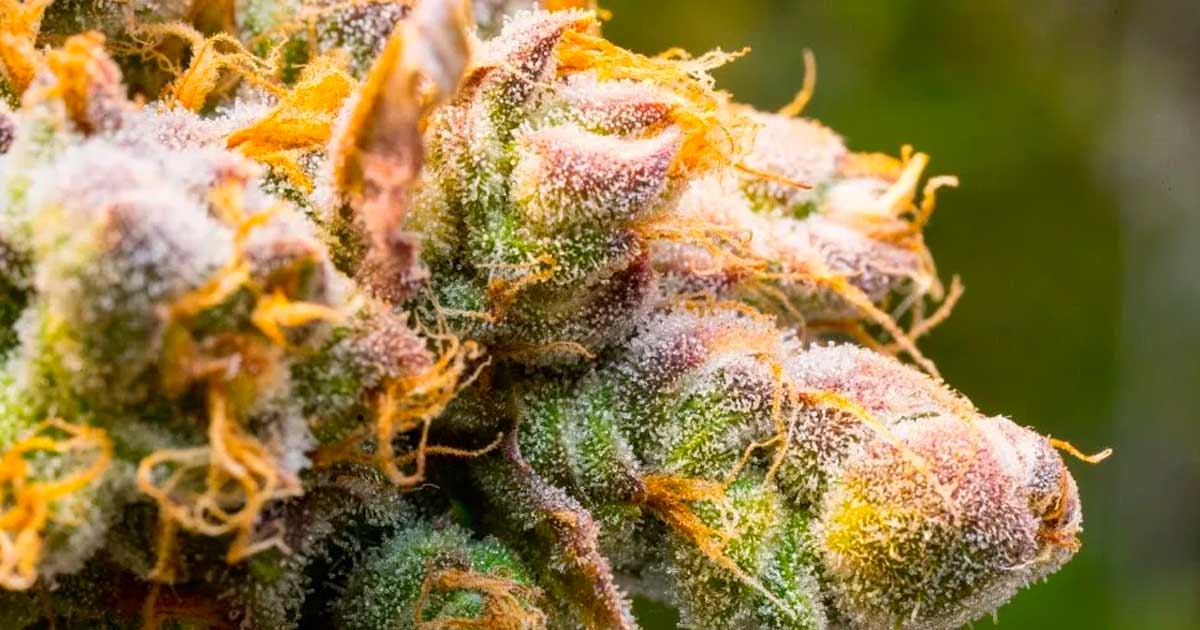
The link between cannabis chemistry and its perceived aroma is complex, nuanced and often misunderstood. Recent research comparing cannabis varieties from type I (THC-dominant) and type III (CBD-dominant) have begun to clarify the way in which terpenes and volatile sulfur compounds (VSC) influence the sensory experience of cannabis, revealing patterns that are sometimes predictable, sometimes surprisingly counter-intuitive.
As Cannabis becomes more widespread, understanding its sensory profiles is important not only for the’consumer education, but also for breeders, growers and the emerging cannabis market, where aroma can influence product differentiation and perceived quality.
Type I vs Type III: subtle similarities and differences
While type I (THC dominant) and type III (CBD dominant) cannabis varieties occupy a significant share of the market, type II (THC dominant) and type III (CBD dominant) cannabis varieties occupy a significant share of the market. sensorial space similar overall, a detailed analysis reveals distinct trends. Sensory evaluation shows that herbaceous, citrus, fruity, candy, floral and tropical notes are more frequently associated with type III cannabis.
Type I samples, on the other hand, tend to have higher aromas of ammonia, musty, fuel, animal, skunk and hazelnut/toasted bread.
To quantify these differences, the researchers used the agglomerative hierarchical clustering (AHC) to group samples according to their sensory profiles. This method identified four main sensory groups:
- Group 1: characterized by notes fruity, berry, candy and cake flavours
- Group 2: characterized by citrus and chemical notes
- Group 3: dominated by cheese and vomit/fecal matter aromas
- Group 4: mainly type I cannabis with earthy, musty, straw, black tea, skunk, nutty and woody aromas.
These groups demonstrate that, although Type I and Type III cannabis share overlapping aromatic qualities, some specific sensory attributes may statistically align with one type rather than the other.
Terpenes: key contributors with limited predictive power
The terpenes, The organic compounds responsible for much of the aroma of cannabis were analyzed in all samples, and 21 compounds were detected above sensory thresholds. Of these, seven were the main factors of variation: the ß-myrcene, d-limonene, terpinolene, α-pinene, humulene, beta-caryophyllene and farnesene.
It is interesting to note that the myrcene, terpinolene and limonene accounted for over 80% of the variation in terpene profiles, indicating that a small set of terpenes dominate the aromatic composition of cannabis. The terpinolene, In particular, it was associated with citrus and chemical notes, especially in sensory group 2.
However, despite these correlations, the study revealed that terpene composition alone was insufficient to reliably predict perceived aroma. For example, some samples in Group 4, dominated by earthy and skunky aromas, had high levels of d-limonene without any pronounced citrus perception. This underlines the complexity of the olfactory perception, which is based not only on individual compounds, but also on the interactions between several terpenes and other volatile molecules.
Volatile sulfur compounds: the skunky signature
The volatile sulfur compounds (VSC) are often regarded as the main contributors to skunky notes and pungency of cannabis. In Type III cannabis samples, the researchers detected 43 sulfur-containing peaks, including dimethylsulfide (DMS), hydrogen sulfide, methional, dimethyltrisulfide and diethyl disulfide.
Despite the identification of these compounds, it proved difficult to link their concentrations directly to specific sensory groups. Only a few samples showed extreme levels of VSCs, suggesting that it is subtle combinations of VSCs, rather than individual compounds, that influence perceived aroma. This finding challenges the common assumption that a strong skunk smell is always associated with high levels of VSC.
Multivariate analysis: complex relationships
The study used statistical tools such as Principal Component Analysis (PCA), Multifactor Analysis (MFA) and Partial Least Squares Regression (PLSR) to explore the relationships between chemical composition and sensory perception.
These analyses have confirmed that, while chemical composition influences aroma, it also has an impact on taste. cannot be fully predicted. The weak correlations between terpene or VSC concentrations and sensory descriptors underline the the multidimensional nature of cannabis aroma, suggesting that unmeasured compounds such as esters, aldehydes and other volatile compounds, could play an essential role.
This complexity helps explain why two cannabis samples with similar terpene profiles can have totally different odors, and why aroma perception can vary from one individual to another. It also highlights the importance of combine chemical analysis with sensory evaluation qualified to gain a complete understanding of the characteristics of cannabis.
Implications for consumers, breeders and the market
For consumers, understanding the difference between type I and type III cannabis aromas can enhance product enjoyment, guiding choices according to personal preference rather than THC or CBD content alone.
For breeders and growers alike, these results underline the importance of considering chemical interactions and overall sensory results when developing new varieties. Terpene selection alone may not be enough to create the desired aroma; breeders need to take into account the synergy between terpenes, VSCs and other volatile compounds.
From the market's point of view, precise characterization of sensory profiles can improve the quality of the product.’product labeling, marketing and quality assurance, This is a key factor in helping consumers to identify varieties that match their preferences, and to set realistic expectations in terms of aroma and flavor.
This research shows that if terpenes and VSC contribute significantly to the aroma of cannabis, they do not entirely explain the’complex sensory experience type I and III cannabis. Common assumptions, such as that the d-limonene always produces citrus notes, are not always backed up by data, which underlines the importance of considering the chemical synergy.






















«Vincy Gold»: Humboldt Seed Company on the Hunt for Saint Vincent Sativas

Cronos Completes the Acquisition of CanAdelaar for 57.5 million euros

Cannabis with a "bloody" twist: Discover Sensi True Blood and Sensi Sangria, the two new strains from Sensi Seeds

Hemp: The Council of the EU Takes a Stand on New Production and Marketing Rules

Missouri's legal cannabis market accounts for 93 % of consumer spending

THC Gummies: How to Read a Certificate of Analysis Before Buying

British patients now have access to THCV-rich cannabis flowers

Spain: Medical Cannabis Is Coming to About 50 Hospitals

JIHE 2026: Japan’s Largest Trade Show Dedicated to Hemp and CBD Returns to Tokyo with More Than 100 Industry Players

New Caledonia: The Courts Clear the Way for the Return of CBD
-
 Business3 weeks ago
The legal cannabis market in New York exceeds 4 billion $ in revenue
-

 Cannabis in France4 weeks ago
Which countries legalized medical cannabis before France?
-
Cannabis in France1 week ago
France already has 3,000 cannabis retail outlets. None of them are legal.
-
Business4 weeks ago
South Korea is preparing to begin local production of medical cannabis to meet rising demand
-
Cannabis in the U.S.1 week ago
A DEA report confirms that there are no fatal cannabis overdoses
-
Cannabis in Thailand4 weeks ago
From the boom in dispensaries to a purely medical approach: Thailand is revising its cannabis policy
-
Cannabis and driving4 weeks ago
Medical Cannabis and Driving: New South Wales Ends Automatic Penalties for THC
-
Cannabis in France3 weeks ago
France’s Drug Policy Chief Defends Cannabis Prohibition... and Runs Into the Facts
















You must be logged in to post a comment Login