
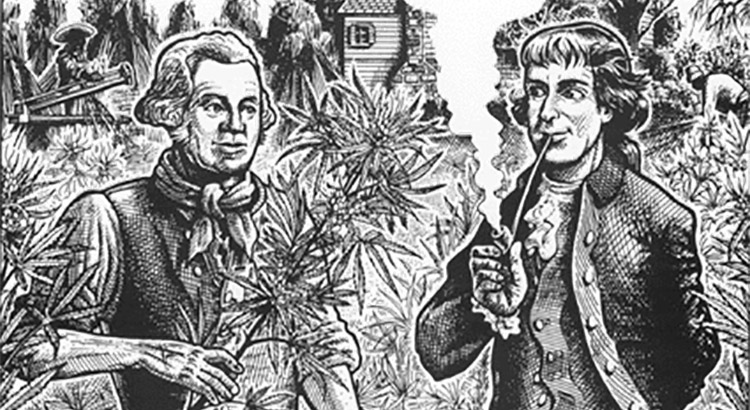
A brief history of cannabis
The cannabis was taboo for centuries. In recent years, Public opinion is becoming increasingly open-minded on this issue, particularly in the wake of various moves in the United States to decriminalize and legalize cannabis. In Europe, the Netherlands is spearheading the movement, even though—despite having long been the only country to have decriminalized cannabis—cross-border trafficking has not decreased.
The collective imagination portrays the pot smoker as a depressed person cut off from the world, who spends his days on the couch filling his living room with smoke while watching bad TV shows. To change perceptions of marijuana use, we believe it’s necessary to take a look back at history, which will allow us to see how certain stereotypes emerged and evolved.
2700 B.C.: Marijuana is mentioned in Chinese writings. According to legend, the Chinese Emperor Shen Nung is said to have discovered the plant’s healing properties, particularly for treating rheumatism, malaria, and anxiety. Other written records from 1,000 years later mention its use in treating diarrhea and dysentery, as well as for stimulating the appetite. Source
1545 A.D.: Spanish sailors bring with them seedlings of hemp in Chile, to use its fibers, marking the plant's first appearance in the Americas. Source
1532 : The French physicist Rabelais mentions the medical benefits of cannabis in *The Life of Gargantua and Pantagruel*. He calls it the Pantagruelion herb.
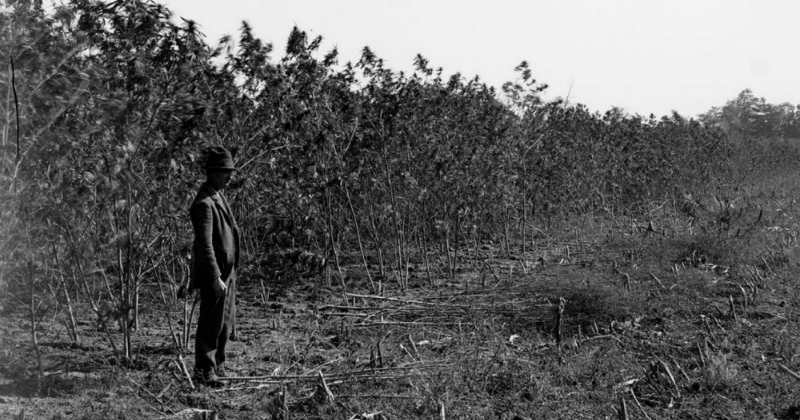
1611 : The English introduced hemp to the Jamestown colony (Virginia), marking the plant’s first appearance in what would become the United States. Hemp fiber would become a major export, particularly in the form of its byproducts: rope, tallow, oil, paper, etc. Virginia passed its first legislation regarding hemp in 1619: it required farmers to grow hemp, under penalty of fines. Source
1798 : During the Egyptian campaign, Napoleon discovered the use of cannabis, particularly among the less privileged classes in Egypt. The French soldiers are returning from Egypt carrying with them certain amounts of hashish. Napoleon completely banned cannabis in France, even as its use was gradually becoming more widespread.
Around 1830: Irish physician William O’Shaugnessy, who discovered marijuana at the Calcutta Medical College, introduced cannabis to the Western medical world. He first tested his preparations on animals and then treated patients suffering from muscle spasms and pain. He also achieved positive results in treating diarrhea and vomiting, symptoms of cholera that are often fatal. Source
Around 1850: The French authors Gautier and Baudelaire published, respectively, The Club of the Hashishins and Artificial Paradises. They met regularly with Gérard de Nerval, Victor Hugo, Honoré de Balzac, Eugène Delacroix, and many others to consume substances made from dawamesk, a kind of hashish jam. Meanwhile, the physicist Moreau published Hashish and Mental Illness (extracts), where he is studying the effects of cannabis use.
1894 : The Indian Hemp Commission (Indian Hemp Drugs Commission) brings together Indian and Western doctors to discuss the benefits of the medical use of cannabis. The commission concluded that «moderate use of marijuana causes no harm» and «has no detrimental effect on the mind.» It acknowledged, however, that marijuana can lead to toxic use, and therefore recommended its prohibition. Source
1910 : The Mexican Revolution led thousands of migrants to leave for the United States. They brought with them a more established culture of recreational marijuana use. After 1910, stories of Mexican immigrants committing violent crimes while under the influence of marijuana became commonplace in the U.S. Source
1931 : Fueled by the Great Depression and the resulting mass unemployment, resentment toward Mexican immigrants (and marijuana use) increased. «Research» at the time linked marijuana use to violence and criminal behavior. The criminals identified often belonged to disadvantaged classes and communities then deemed «racially inferior.».
1936 : Release of the anti-marijuana propaganda film Reefer Madness (trailer here). The film follows a group of students who find themselves in unlikely situations because of pot smoking: hit-and-runs, murder, rape… Barely exaggerated!
1937 : Ignoring the recommendations of the American Medical Association, the U.S. Congress passed the Marijuana Tax Act, which imposed severe restrictions on the prescription and sale of marijuana. Most U.S. pharmaceutical companies halted production of marijuana-based medications, which became illegal in the United States. The prohibition campaign was spearheaded by the Federal Bureau of Narcotics and its director, Harry J. Anslinger. Source
1942 : Marijuana has been removed from the U.S. Pharmacopeia, an official compendium of medicines, on the grounds that it is addictive and harmful.
1944 : The New York Academy of Medicine has published a report, the La Guardia Committee, and notes that marijuana does not cause insanity or violence, much less addiction, nor does it lead to the use of other, stronger drugs. Anslinger questions the scientific validity of the document, and claims that «Hollywood degeneracy» commissioned the report. Several undercover operations in Hollywood led to the arrests of actors who smoked marijuana, and Anslinger now controls how Hollywood portrays marijuana in its films.
In the 1960s: Recreational marijuana use affects all segments of society, including the middle and upper classes. The Kennedy and Johnson presidential commissions once again indicate that marijuana does not lead to violence or the use of harder drugs.
1967 : Hippies, as well as media outlets such as Newsweek or Life, wonder Why Is Marijuana Illegal?. At the same time, arrests related to cannabis are on the rise.
1968 : Richard Nixon was elected president and promised to restore order in a country gripped by civil unrest. Nixon asked radio stations to stop playing music associated with drugs and television networks to air anti-drug programs.
1970 : The U.S. Congress classifies marijuana as a «Schedule 1» drug, alongside LSD, MDMA, peyote, and hallucinogenic mushrooms. This is the most restrictive classification, typically reserved for drugs that are extremely addictive and have a high potential for abuse. Cocaine, opium, morphine, and amphetamines are classified as «Schedule II» drugs. Source
1972 : The Commission on Drug Abuse and Marijuana publishes its report and calls for the decriminalization of personal use, as well as an end to Nixon’s costly and ineffective anti-drug policy. Between 1972 and 1977, 11 states decriminalized cannabis, and many others reduced criminal penalties.
1977 : President Jimmy Carter calls for the decriminalization of marijuana, echoing the views of certain medical organizations such as the American Medical Association and various media outlets, including the very conservative National Review.
1986 : Reagan reversed the trend and signed the Anti-Drug Abuse Act, which established mandatory sentences for marijuana-related crimes. Federal sentences increased and were based on the amount of marijuana involved in the crime.
1996 : California became the first state to legalize the medical use of marijuana. Several other states would follow suit in the decades that followed.
2012 : Colorado and Washington are the first two states to legalize the sale and use of marijuana for recreational purposes by people over the age of 21.
One of the recurring trends throughout history has been the clash between the medical and legal communities. While the former extolled the medicinal virtues of cannabis and supported its decriminalization, the latter consistently condemned it and called for its prohibition. Public opinion, for its part, has ultimately shifted from viewing cannabis users as «dangerous criminals with a penchant for violence» to «lazy, apathetic stoners.».














CBD is said to promote athletic recovery, without improving performance

294 cannabis clubs in Chile: a booming movement with uneven distribution

Chronic Sciatica: New York Approves First Clinical Trial of a THC-Based Medication

United States: The DEA is accelerating the integration of medical cannabis at the federal level

Florida is nearing one million patients using medical cannabis

Uruguay Revives Its Plan to Allow Tourists to Legally Access Cannabis

In Brazil, researchers are developing an innovative CBD eye drop

Autism: Medical Cannabis Is Linked to Reduced Anxiety

The $28 billion U.S. hemp market remains under threat

