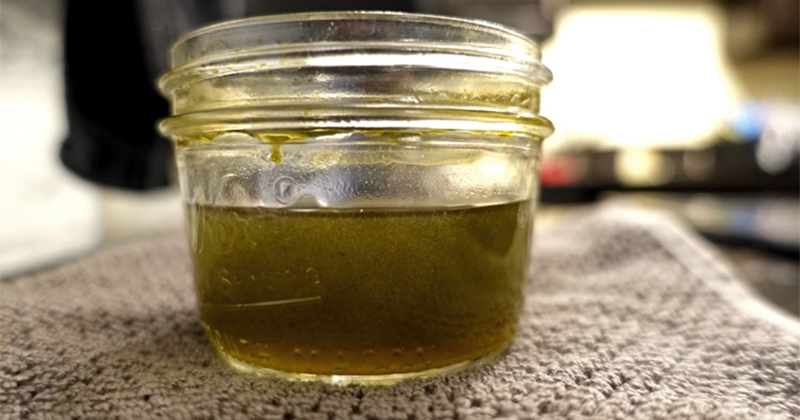
Tincture of cannabis: what is it?
The cannabis tinctures, also known as Green Dragon, Golden Dragon or Dragon's Breath,are ethyl alcohol-based cannabis extracts. Long forgotten in favor of combustion and edibles, they are now coming back into favor for their practical advantages: no combustion, relatively rapid onset, ease of integration into other preparations and excellent shelf life.
History of cannabis tinctures
Tinctures have long been the dominant medical form of cannabis in the West. The first official account in Western medicine dates back to 1843, in a medical journal that included a recipe. As early as 1851, tinctures entered the United States Pharmacopoeia under the name of’Extractum Cannabis Purificatum (purified extract of Indian hemp).
They were so well accepted medically that in the UK, Queen Victoria's personal physician prescribed a tincture of cannabis to relieve her menstrual cramps.
Prohibition put an end to this era: the Marihuana Tax Act of 1937 in the USA made cannabis prohibitively expensive to use, and it was withdrawn from the US pharmacopoeia in 1941. Australia followed suit in 1977, and the UK in the 1970s.
Why use a tincture rather than a joint or edible?
| Dye | Seal/spray | Edible | |
|---|---|---|---|
| Onset | 10-45 min (sublingual) | A few seconds | 45-90 min |
| Duration of effects | 2-4 hours | 1-3 hours | 4-8 hours |
| Combustion | No | Yes/No | No |
| Calories | Near-zero | — | High |
| Discretion | Excellent | Low | Good |
| Dosage | Precise (ml) | Approximate | Variable |
| Conservation | 1-5 years (strong alcohol) | A few months | A few days |
The main advantage of the sublingual route is speed: the buccal mucosa allows direct passage into the venous bloodstream, partially bypassing the liver. The effect is more rapid than that of an edible, but unlike combustion, it does not produce any 11-OH-THC in high concentrations, so the effect is generally less intense and more controllable.
How to make a cannabis tincture
There are several methods, depending on the time available and the quality required.
Long method (maceration - 10 days)
The classic, simplest method:
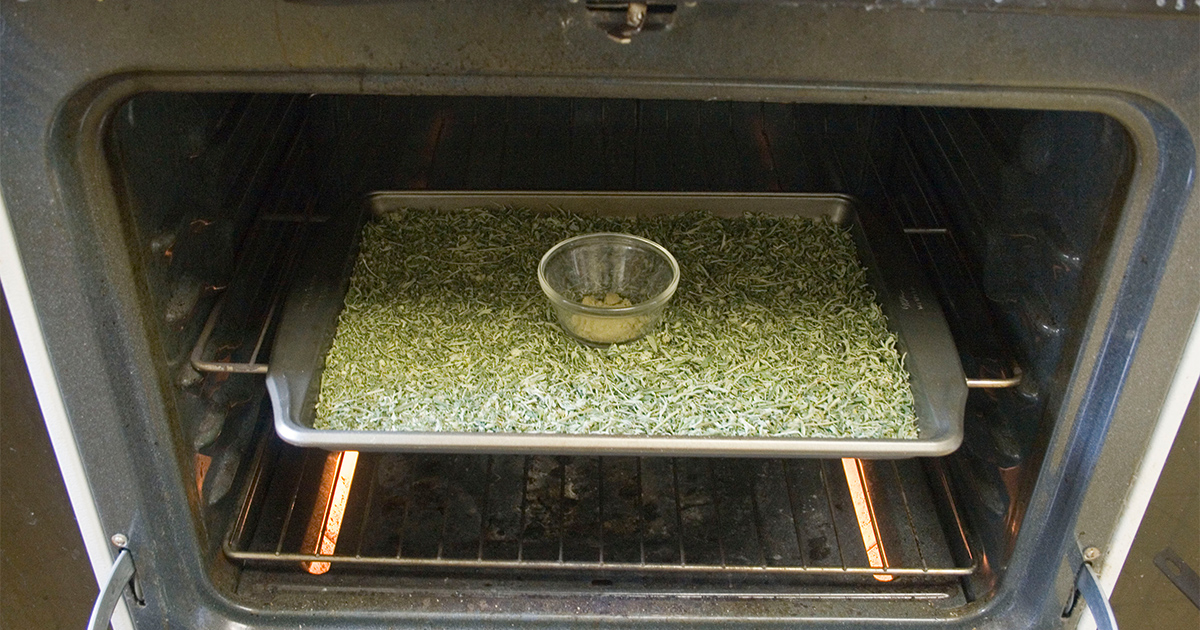
- Decarboxylate flowers in the oven (110-115°C, 45 min) to activate THCA into THC
- Place the crushed flowers in an airtight glass jar: Recommended ratio: 10g of flowers for 100ml of 90-96% alcohol.
- Close tightly and store in a cool, dark place.
- Shake daily for 10 to 14 days
- Filter through a coffee filter or fine cheesecloth
- Store in tinted glass vials with dropper pipettes, protected from light.
The result is a green-brown liquid, concentrated in cannabinoids. The longer the maceration, the more concentrated the product - but the more chlorophyll extracted, the more pronounced the herbaceous taste.
Quick method (QWET - Quick Wash Ethanol)
Inspired by’ethanol extraction (EHO) cryogenic :
- Place the decarboxylated flowers and alcohol in the freezer for at least 24 hours.
- Stir rapidly for 1 to 3 minutes (no more, to limit chlorophyll extraction).
- Filter immediately
- Optional: partially evaporate alcohol to concentrate
The result is clearer, less chlorophyllated, with a better-preserved terpene profile. This is the preferred method for quality tinctures.
CBD tinctures vs THC tinctures
Cannabis tinctures for medical or wellness use are increasingly being produced from CBD hemp flowers, legal in France, using exactly the same protocol. The result is a non-psychoactive CBD-dominant tincture for everyday use.
The main difference at the manufacturing stage: for a CBD tincture, decarboxylation may be partial or omitted if the aim is to retain the CBDA (non-decarboxylated acid form of CBD) with distinct anti-inflammatory properties.
Dyes are also the basic principle of the RSO (Rick Simpson Oil), an ethanol dye concentrated by almost complete evaporation of the solvent.
Dosage and precautions
Start with 1 ml under the tongue, Hold for 60 seconds before swallowing, and wait 45 minutes before reconsuming. Concentration varies enormously according to the strength of the raw material and the ratio used, so caution is advised, especially if the flowers are very high in THC.
Tinctures can be added to smoothies, juices, desserts, sauces or soups, but in this case, the oral (digestive) route slows absorption and amplifies the effects like a classic edible.






France already has 3,000 cannabis retail outlets. None of them are legal.

Morocco's exports of legal cannabis have expanded to 15 countries

Aurora Cannabis Doubles Its Production Capacity in Germany

Tilray is accelerating its operations in Europe thanks to a license in Portugal

Boston will host the 10th annual State of the Cannabis Industry Conference on October 26

A DEA report confirms that there are no fatal cannabis overdoses

A British patient is challenging the NHS's refusal to reimburse medical cannabis

October 2026 CBD Highlights: 10 Strains and Hash to Discover from 5 French Producers

CBD in France: Traceability, Retail Stores, THC and Driving… What the New Bill Proposes

