“Synthetic cannabis: say hello to neocannabinoids

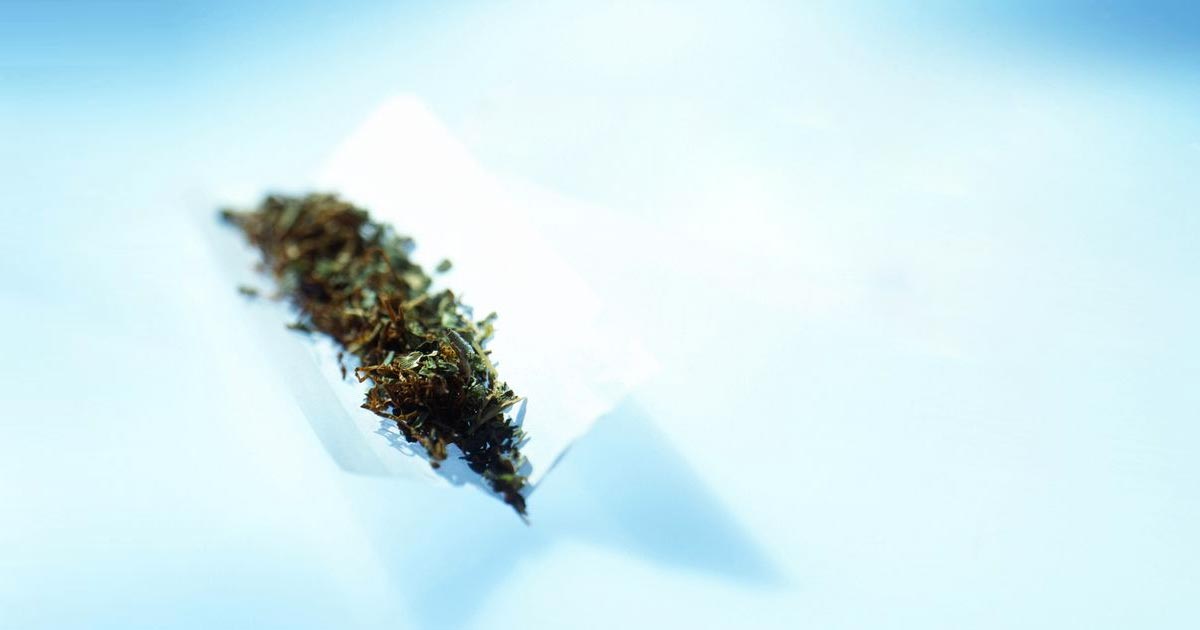
In recent months Bordeaux à Sedan, through Besançon, a “chemically doped cannabis herb”, capable of “taking you to the emergency room” with just a few puffs of smoke, has arrived on the (deregulated) cannabis market. But what are these risky molecules related to cannabis, a drug well known for its real but moderate health risks, and certainly not for its propensity to cause death or hospitalization through simple consumption? And what are we really talking about?
Germany has already paid a heavy price, with 5 deaths in 2020, alarming both cannabic environments that the scientific press. In January, Vice published a documentary about a dealer of these famous “synthetic cannabinoids”.” in Berlin, already viewed over a million times. From October 2020 authorities and Swiss doctors warned of the presence of « Dangerous synthetic cannabis on the black market »They specified that “the synthetic cannabinoid CUMYL-4CN-BINACA, [...] very potent, has been associated with more than 100 deaths in Europe” (including 33 in 2020) adding that “since this summer, it is the synthetic cannabis MDMB-4en-PINACA, 50 to 100 times stronger than ∆9-THC, which is the subject of repeated alerts.” To date, there are no fewer than 169 different “synthetic cannabinoids”.” listed by the European Drugs Observatory, with a resurgence since the start of the pandemic.
So what are we really talking about? First and foremost, the expression “cannabis of synthesis”.” because cannabis is a plant that cannot, today, be copied, imitated or chemically reproduced. It is only the cannabinoids ∆9-THC or CBD (well-known molecules in the composition of cannabis) that can be chemically reproduced, by the whole of “cannabis”.
We can obtain ∆9-THC or CBD in the laboratory, without using the plant. The resulting molecules are indeed synthetic cannabinoids. Yet whether natural or synthetic, ∆9-THC and CBD have exactly the same effects on the body. They are the same molecules, simply obtained in different ways: extracted from the plant, or reproduced in a different way. in vitro.
Nowadays, there is also a third way to obtain ∆9-THC or CBD: from genetically modified living organisms (plants, micro-organisms or others). Even obtained in this way, ∆9-THC or CBD remain the same molecules with which we are familiar, widely studied and experimented with over the centuries.
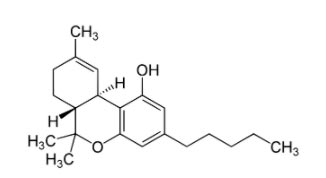
∆9-THC and CBD, originating from the hemp plant (Cannabis), they are referred to as phyto-cannabinoids (meaning cannabinoids from the plant, from the Greek φυτόν, phyto-, plant“). Since the way they are obtained does not affect their chemical structure or pharmacological effect, CBD and ∆9-THC are phytocannabinoids in all cases, even if they are obtained in the laboratory.
 |
|
|
| A ∆9-THC molecule from a hemp plant (Cannabis). | A ∆9-THC molecule derived from genetically modified micro-organisms. | A ∆9-THC molecule made by chemists in the laboratory. |
As we can see, no matter how they are obtained, phytocannabinoids are always exactly the same -whether synthetic phytocannabinoids or plant phytocannabinoids.
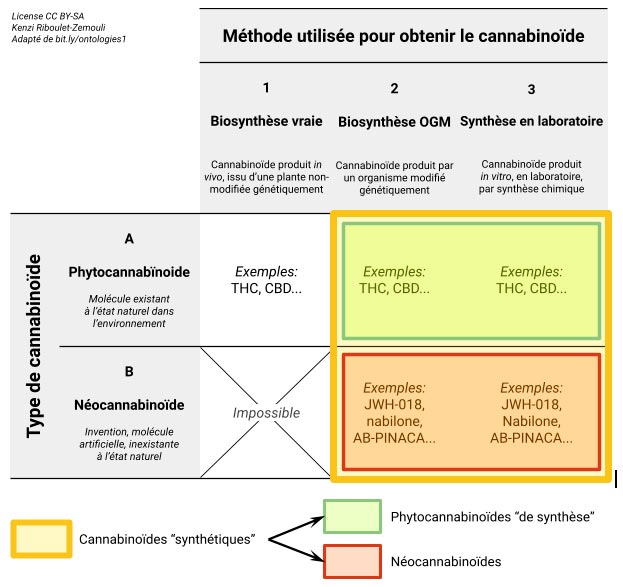
Synthetic ∆9-THC, for example, is used as a drug (like Marinol®, available in France for a few patients), and synthetic CBD is used in certain cosmetics (for example in creams from Swiss company Blossom). But synthetic phytocannabinoids are also sometimes found on the black market, although this is marginal.
It's not these molecules that worry the experts and panic the media.. The cannabinoids AB-PINACA, CUMYL-4CN-BINACA or MDMB-4en-PINACA (and many other identified by substance analysis services) are not phytocannabinoids. They do not occur naturally in the environment Unlike synthetic ∆9-THC, they are not a reproduction of a molecule already known and studied; on the contrary, they are inventions, new molecules, formerly called “designer drugs” and generally placed in the “new synthetic products” (NPS) category by the authorities. We call them neocannabinoids to differentiate them from synthetic phytocannabinoids. However, they're not as new as all that: the first neocannabinoids invented date back to the 70s, with neocannabinoids such as JWH-018, better known as «spice” and the (aforementioned), but also some marketed as medicines, like AB-PINACA, HU-210, or nabilone.
A case made a lot of noise in 2016, following the death of a patient in Rennes, and the hospitalization of four others after testing a neocannabinoid in clinical trials for the treatment of Parkinson's disease.
As you can see, the term “synthetic cannabinoid” covers a wide range of molecules. As chemical compounds continue to diversify and their presence in pharmacies increases, as does their availability on illicit markets, the term “neocannabinoid” (similar to the term “neonicotinoid” derived from the Greek νέος, neo-, new“), the result of a profound thoughts on cannabinoid terminology, deserves consideration.
“The use of a word tells us about the world around it, informs us about its connotation, defines who uses it and who receives it... the word conveys multiple pieces of information, true or false, conscious or unconscious” Swiss addictologists remind us. In this sense, the term “neocannabinoid” will undoubtedly make it easier for all those involved to understand, and avoid misunderstandings about molecules that have appeared in recent decades, and for which the scientific community still has few studies and data to assess their real health consequences.
And in the meantime, if you have any doubts about a product, it's always a good idea to let the’NORML association or to SINTES device, who monitor the composition of cannabis in France.


















«Vincy Gold»: Humboldt Seed Company on the Hunt for Saint Vincent Sativas

Cronos Completes the Acquisition of CanAdelaar for 57.5 million euros

Cannabis with a "bloody" twist: Discover Sensi True Blood and Sensi Sangria, the two new strains from Sensi Seeds

Hemp: The Council of the EU Takes a Stand on New Production and Marketing Rules

Missouri's legal cannabis market accounts for 93 % of consumer spending

THC Gummies: How to Read a Certificate of Analysis Before Buying

British patients now have access to THCV-rich cannabis flowers

Spain: Medical Cannabis Is Coming to About 50 Hospitals

JIHE 2026: Japan’s Largest Trade Show Dedicated to Hemp and CBD Returns to Tokyo with More Than 100 Industry Players

New Caledonia: The Courts Clear the Way for the Return of CBD
-
 Business3 weeks ago
The legal cannabis market in New York exceeds 4 billion $ in revenue
-

 Cannabis in France4 weeks ago
Which countries legalized medical cannabis before France?
-
Cannabis in France1 week ago
France already has 3,000 cannabis retail outlets. None of them are legal.
-
Business4 weeks ago
South Korea is preparing to begin local production of medical cannabis to meet rising demand
-
Cannabis in the U.S.1 week ago
A DEA report confirms that there are no fatal cannabis overdoses
-
Cannabis in Thailand4 weeks ago
From the boom in dispensaries to a purely medical approach: Thailand is revising its cannabis policy
-
Cannabis and driving4 weeks ago
Medical Cannabis and Driving: New South Wales Ends Automatic Penalties for THC
-
Cannabis in France3 weeks ago
France’s Drug Policy Chief Defends Cannabis Prohibition... and Runs Into the Facts















You must be logged in to post a comment Login