
Delta-8-Tetrahydrocannabinol
When we talk about THC, we’re generally referring to delta-9-tetrahydrocannabinol, which is responsible for the psychoactive effects of cannabis. But it’s not the only one. Delta-8-tetrahydrocannabinol is another isomer of THC. Although it is not as potent as delta-9, delta-8-THC also has psychoactive and therapeutic effects.
History of Delta-8-THC
Delta-8-THC differs from delta-9-THC by only a few electron bonds. And even though it is one of the cannabinoids Among the more than 110 known compounds, it is often present in amounts of less than 0.1% of the dried flower's content. Delta-9-THC is found in greater quantities, the cannabidiol (CBD) and the cannabinol (CBN).
In terms of power, the Research suggests that delta-8 is only two-thirds as potent as delta-9, which is still more potent than the THCV For example, one that only goes up to 25%.
Delta-8 binds to the same receptors as delta-9-THC and is thought to boost the release of the neurotransmitter acetylcholine, a deficiency of which is believed to contribute to Alzheimer’s disease and other cognitive disorders.
Delta-9-THC vs. Delta-8-THC: Similarities and Differences
You can compare these two compounds in several different ways.
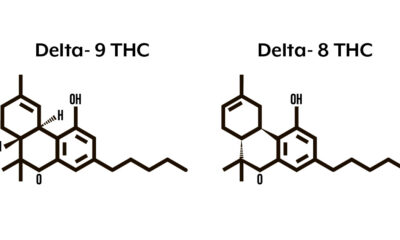
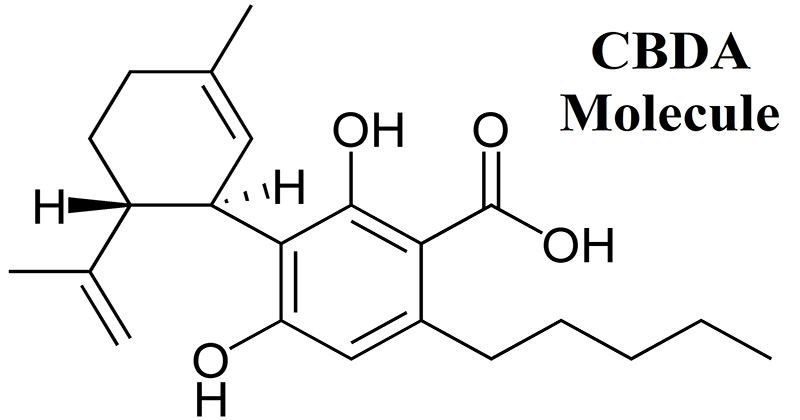
The chemical structure. From a chemical or structural standpoint, delta-8-THC differs from delta-9-THC due to the location of a critical chemical bond. Both forms of THC contain double bonds in their molecular chains. Delta-8-THC has this bond on the 8th carbon atom, while delta-9-THC has it on the 9th carbon atom. Although this may seem like a subtle difference, it has a major impact on the shape of these molecules. This shape directly determines the molecules’ ability to bind to the body’s endocannabinoid receptors.
Molecular stability. Delta-9-THC is less stable than delta-8-THC. Delta-9-THC is easily oxidized to form cannabinol (CBN) or delta-8-THC. Delta-8-THC is stable, does not oxidize into CBN, and has a long shelf life. Such stability is desirable in a medicinal compound.
Affinity for cannabinoid receptors. When inhaled, delta-8-THC binds to the CB1 receptor like delta-9-THC, but its affinity for the receptor is different due to its slightly modified molecular structure and conformation. The CB1 receptor is responsible for mediating most of THC’s psychotropic effects. This differential binding could explain why delta-8-THC produces a clearer, less anxiety-inducing high than delta-9-THC. It is also possible that the molecular structure of delta-8-THC affects how it interacts with other receptors and neural pathways.
Effects of consumption. There is ample clinical and anecdotal evidence indicating that delta-9-THC has intoxicating effects when consumed by inhalation or ingestion. We know much less about the effects of delta-8-THC. Some say that delta-8-THC produces a milder and clearer high than delta-9-THC, even at higher doses. However, from a pharmacological standpoint, delta-8-THC capsules work very similarly to delta-9-THC capsules, as both molecules are converted to 11-hydroxy-THC in the liver. Since there is still much to learn about delta-8-THC and its effects vary significantly depending on whether it is ingested or inhaled, it is wise to treat these products with the same caution as THC-based products.
Therapeutic Effects of Delta-8-THC
The American Cancer Institute defines Delta-8-THC as a «THC analog with antiemetic, anxiolytic, appetite-stimulating, analgesic, and neuroprotective properties.».
A 2004 study A study on rodents suggests that low doses of delta-8 stimulated appetite more than delta-9-THC.
A 1974 study Research conducted on mice also highlighted delta-8's ability to inhibit tumor growth. In 1995, a study led by Raphaël Mechoulam, the scientist who discovered THC studied the effect of delta-8-THC on childhood cancers. By the time the article was published, 480 cancer treatments involving delta-8-THC had proven successful. The cannabinoid had also demonstrated its ability to stop vomiting.
Where can you find delta-8-THC?
Delta-8-THC extracts are relatively hard to find, even in the United States. A few companies have made this their specialty and offer a distillate that comes in the form of a fairly thick liquid.
Guild Extracts, a California-based brand, is one such company, and recommends inhalation, as ingestion produces a derivative—11-hydroxy-delta-8-THC—whose effects are not well understood.
According to Brad from Guild Extracts, Delta-8-THC also causes fewer psychoactive effects and stimulates appetite more, making it easier to administer to patients who do not like the effects of delta-9-THC.
Side Effects and Warnings
Since it is a minor cannabinoid, we still have a lot to learn about delta-8-THC, which calls for a cautious approach to its use. Currently, this cannabinoid is generally available in concentrated form, as cannabis flowers typically contain less than 1 % of delta-8-THC.
To obtain a substantial amount of this cannabinoid, a significant amount of extraction and refinement must take place. While some delta-8-THC concentrates are isolates, other products may combine delta-8-THC with CBD and/or delta-9-THC for a more comprehensive effect.
If you are considering using delta-8-THC, it is essential to understand that much of what is currently known about this cannabinoid is based on animal studies. Animal research reported that delta-8-THC (as well as delta-9-THC) caused an increase in blood pressure by temporarily constricting blood vessels. The rise in blood pressure was then followed by a drop in blood pressure and a slowing of the heart rate.
The effects observed in animals may differ significantly from those observed in humans, as evidenced by a 2018 systematic review published in Pharmaceuticals. For example, while delta-8-THC significantly slowed heart rate in animals, it actually increased it in humans. The authors of the review concluded that data on the effects of delta-8-THC are limited and that additional studies need to be conducted in human populations to understand how it induces changes in blood flow.














CBD is said to promote athletic recovery, without improving performance

294 cannabis clubs in Chile: a booming movement with uneven distribution

Chronic Sciatica: New York Approves First Clinical Trial of a THC-Based Medication

United States: The DEA is accelerating the integration of medical cannabis at the federal level

Florida is nearing one million patients using medical cannabis

Uruguay Revives Its Plan to Allow Tourists to Legally Access Cannabis

In Brazil, researchers are developing an innovative CBD eye drop

Autism: Medical Cannabis Is Linked to Reduced Anxiety

The $28 billion U.S. hemp market remains under threat

