150 Marseilles personalities call for controlled legalization of cannabis


In an op-ed published yesterday in the Sunday Journal, 150 prominent figures from Marseille are calling for an end to the «cannabis ban,» which they believe is responsible for the «highly organized drug trafficking» plaguing the city of Marseille and the numerous gang-related killings that left 27 people dead in 2016.
Among the signatories, Patrick Menucci, which has been calling on the government for many years to update its cannabis legislation, as well as numerous doctors and public health experts who are concerned about the public health consequences of using a drug that may be adulterated, and of its excessive use in the absence of a public health prevention policy.
For everyone, the ban on cannabis is a failure, both in terms of ineffective law enforcement and the waste of police and judicial resources.
The signatories therefore call for «legalization" »controlled production, sale, and consumption, as already exists in several countries." This state regulation would, in particular, put an end to mafia networks, yield substantial savings in the justice and law enforcement sectors, allow for the taxation of cannabis sales—which would bring revenue into the state coffers— and to organize new production that would create jobs in agriculture.
In the current context of the presidential election, this op-ed aims to raise awareness among potential candidates about an issue that is rarely discussed, even though nearly 5 million French people smoke at least one joint a year.
On the side of Les Républicains, the candidate François Fillon is maintaining a very hardline stance on this issue for now. On the left, Benoît Hamon is the only Socialist Party candidate to have included the legalization of cannabis in his platform, whereas Jean-Luc Mélenchon, who will not be running in the Left’s primaries, has also spoken out very clearly in favor of state regulation of cannabis.











JIHE 2026: Japan’s Largest Trade Show Dedicated to Hemp and CBD Returns to Tokyo with More Than 100 Industry Players

New Caledonia: The Courts Clear the Way for the Return of CBD

The Brazilian medical cannabis market continues to grow

Morocco: Three Cannabis-Based Medications Approved for the Treatment of Epilepsy

Canopy Growth Receives New EU-GMP Certification to Strengthen Its Presence in Europe

Three years after legalizing medical cannabis, Albania continues to establish regulations for it

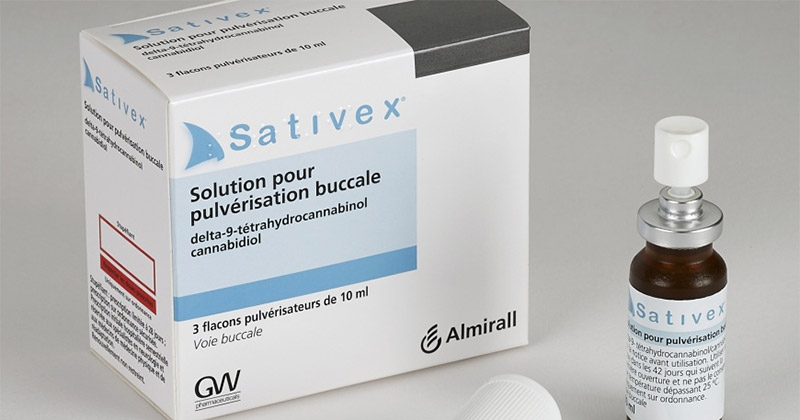
The first plant-based medical THC spray arrives in the United Kingdom

Medical Cannabis in Germany: THC Prices Vary by a Factor of 12

France already has 3,000 cannabis retail outlets. None of them are legal.

Morocco's exports of legal cannabis have expanded to 15 countries
-
 Business2 weeks ago
The legal cannabis market in New York exceeds 4 billion $ in revenue
-

 Cannabis in France4 weeks ago
Which countries legalized medical cannabis before France?
-
Business4 weeks ago
South Korea is preparing to begin local production of medical cannabis to meet rising demand
-
Cannabis in France4 days ago
France already has 3,000 cannabis retail outlets. None of them are legal.
-
Cannabis in Thailand4 weeks ago
From the boom in dispensaries to a purely medical approach: Thailand is revising its cannabis policy
-
Cannabis in the U.S.5 days ago
A DEA report confirms that there are no fatal cannabis overdoses
-
Cannabis and driving3 weeks ago
Medical Cannabis and Driving: New South Wales Ends Automatic Penalties for THC
-
Cannabis in France3 weeks ago
France’s Drug Policy Chief Defends Cannabis Prohibition... and Runs Into the Facts

















Infodrogue
January 9, 2017 at 2:41 p.m.
It is essential to base our thinking on solid facts grounded in common sense, rather than on «simplistic» opinions repeated ad nauseam through relentless propaganda: «Prohibition has failed,» «The war on drugs is a failure—make way for peace,» «we must cut the ground from under the dealers» feet,« »we must dry up the criminal networks,« »we must hit the dealers where it hurts”—and so on.
If «prohibition» were the cause of this consumption, how could we explain that countries with very strict laws on this issue—such as Sweden, Finland, Norway, Greece, Cyprus, Romania… In short, why are the other European countries with similar laws—namely, those where consumption is the lowest in Europe (less than half the European average)—in this situation?
How can we explain the fact that cannabis use declined for eight consecutive years (from 2005 to 2012) even though the law has not changed since 1970?
For a society to survive, it is essential that the behavior of its members be governed by laws. These laws are designed to protect both individuals and members of society in order to ensure the society’s survival.
As a simple example, we might ask what would happen if there were no traffic laws: of course, running a red light might have no consequences if there were no one on the other side! This is in response to those who say that «smoking a joint at home once in a while poses no danger to others»—which, incidentally, is false and reveals a profound ignorance of what cannabis actually is.
But would you be willing to drive if there were no traffic laws, if you risked coming face-to-face with someone at every turn?
The need for a law prohibiting dangerous behavior is therefore self-evident based on common sense alone.
So the question remains whether cannabis is «yes» or «no» dangerous to society…
And ALL serious scientific studies confirm this: cannabis is dangerous both to the individual and to the society in which he or she lives! And these dangers are, for the most part, greatly underestimated—or even ignored—by most people, who are constantly bombarded with propaganda that is far from innocent!
When discussing the dangers of cannabis use, there are:
• The physical consequences,
• The psychological consequences and
• Genetic consequences—that is, those that will affect future generations.
All of this is well known, documented, and beyond dispute: the findings of these studies are not vague possibilities but certainties.
All attempts at legalization or decriminalization around the world have ended in resounding failure and have never reduced consumption. How could anyone imagine that things would be any different in France? How can we reasonably ignore the numerous attempts in this direction, particularly in those U.S. states that have recently legalized it?
I’m not talking here about the «boastful claims widely reported in the media about «the money they’re making,»” but rather about actual statistics on how consumption has changed since legalization: the results speak for themselves! See the official HIDTA report dated September 1, 2016, on the consequences of legalization in Colorado…
NewsWeed
January 9, 2017 at 15 h 04 min
Yes, but the Highway Code doesn’t actually prohibit driving—it regulates it, while acknowledging the risk of accidents. Your example is so poor that, unfortunately, you end up falling into the exact same traps as the people you’re criticizing.
«All attempts at legalization or decriminalization around the world have ended in bitter failure» > Have you heard of Portugal?
Infodrogue
January 9, 2017 at 19 h 40 min
The traffic code does not prohibit driving, of course, but this was a shorthand way of referring to behaviors that the Highway Code does prohibit—such as driving on the left, running red lights, or crossing a solid white line—which do not necessarily cause an accident if there is no oncoming traffic. This is in response to those who say that «smoking a joint at home from time to time is harmless to others»—which, incidentally, is false and demonstrates a profound ignorance of what cannabis actually is.
As for Portugal, it has never legalized any drugs. However, while most European countries have seen an 8% increase in cannabis use over the past 10 years, this has not been the case in Portugal…
But at the same time, there has been a 14,00% increase in methadone use—a sign of a drastic rise in opioid use, an exponential increase in AIDS cases, and a rise in cocaine use, drug trafficking… all of which have turned it into Europe’s leading narco-state. Please refer to the official statistics from the EMCDDA on this subject.
I can therefore confirm that all attempts ended in a bitter failure and… that it was the children who bore the brunt of it…
NewsWeed
January 10, 2017 at 11 h 47 min
You're playing with words and not giving any examples. Could it be that your arguments are hollow?
Can you provide more details on > ««Smoking a joint at home from time to time is harmless to others,» which, incidentally, is false and reveals a profound ignorance of what cannabis is»?»
Just saying something is false doesn't make it false. Let's assume we don't know anything about it and explain to us what cannabis is.
Regarding Portugal, to quote you, «All attempts at legalization or decriminalization that have been made around the world have ended in bitter failure.» Portugal did, in fact, decriminalize all drugs 15 years ago. We did not discuss legalization, but rather decriminalization, as you yourself noted.
As for the stinging failure, Portugal has seen its overall cannabis use decline, particularly among young people, who are now starting to use cannabis at an earlier age. The spread of STDs and other nasty diseases like hepatitis and HIV/AIDS has decreased, as have overdoses (by half!).
The fact that consumers are turning away from heroin and toward methadone is, on the contrary, a sign that they are returning to a «legal» pattern of drug use monitored by health authorities, and that they are trying to get by.
Where is the crushing defeat?
The only issue on which we agree with you is the surge in drug trafficking. But even though we start from the same observation, I believe our conclusions differ. This increase in trafficking is primarily due to the fact that there is no legal system for the production and distribution of drugs. Decriminalization is a solution that addresses demand without directly tackling supply. Legalization and state regulation might make it possible to tackle the various forms of drug trafficking head-on (at least, that is what we are currently seeing in the United States).
Telpo
January 10, 2017 at 1:25 p.m.
The author of this ridiculous post is Mr. Robert Galibert, a Scientologist… that explains it…