
The United Kingdom Is Moving Closer to a Regulated CBD Market

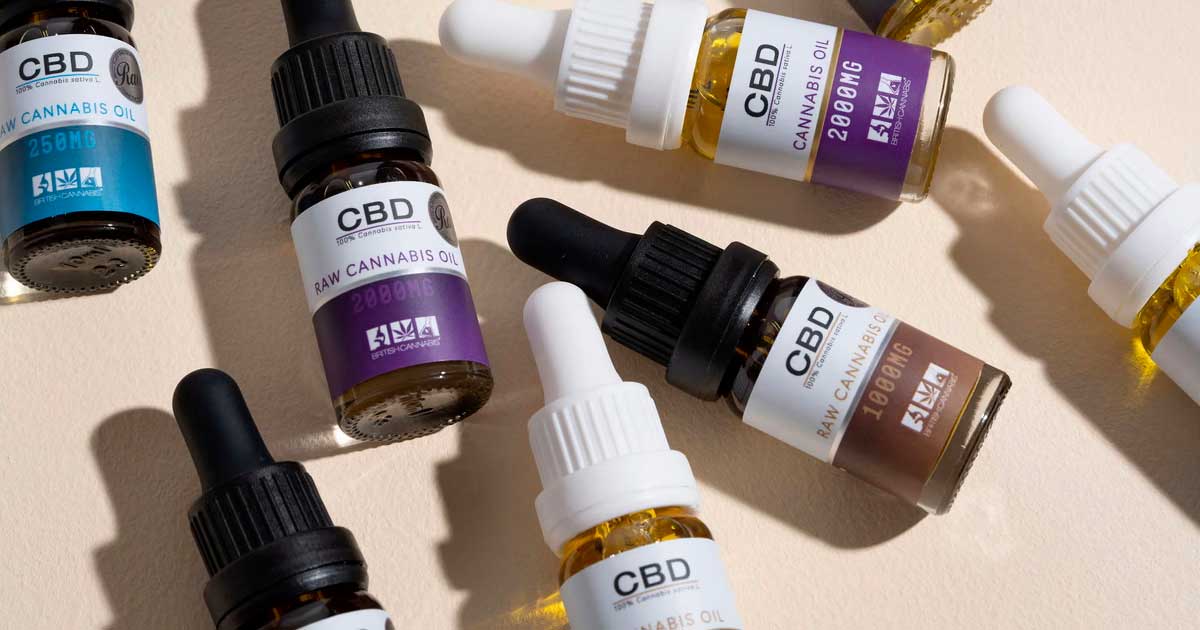
After more than six years of regulatory work, the United Kingdom is about to take a decisive step toward its CBD market.
TheFood Standards Agency (FSA) is preparing to recommend the first official authorizations in the country for «novel foods» containing CBD, which could make it possible to incorporate approximately 3,000 products within a comprehensive regulatory framework.
But this progress could be part of an exceptionally short-term outlook. An agreement between the The United Kingdom and the European Union could eventually replace British regulations with the European framework, which could force companies to adapt to a significantly lower recommended daily dose and widely debated.
Three applications related to CBD have reached the final stages
At its meeting on September 16, the board of directors of the FSA is set to consider recommendations regarding three requests related to the CBD: the Synthetic CBD from Pureis, a isolate presented by Cannaray Brands and a hemp-derived isolate from the consortium of the European Industrial Hemp Association (EIHA).
These three applications have undergone safety assessments and a public consultation. If the board of directors approves the recommendations, they will be submitted to the ministers of England and Wales, who retain the authority to make the final decision.
This development is significant because CBD-based products have been sold in the United Kingdom for years without having received final authorization as novel foods. Instead, thousands of them remained on the FSA’s public list while their applications were being evaluated.
The number of pending cases has decreased significantly. According to Business of Cannabis, approximately 800 applications have been submitted under the novel food procedure, but only 15 have passed the safety assessment, and only three are currently the subject of a recommendation for authorization. The public list itself has shrunk from nearly 12,000 products in 2022 to approximately 3,000.
A maximum daily dose of 10 mg of CBD
The proposed authorizations are subject to significant restrictions. The products would be marketed in accordance with the provisional acceptable daily intake established by the FSA 10 mg of CBD for an adult.
They must contain high-purity CBD (i.e., isolate) and meet specific production and safety requirements. Warning labels would also identify groups for whom consumption is not recommended, including pregnant or breastfeeding women and people taking medication.
The scope of the requests varies. Cannaray's RP 350 Application covers beverages and confectionery in addition to dietary supplements, whereas the requests from Pureis and EIHA are limited to dietary supplements.
As for the case of the EIHA consortium, the application was developed collaboratively to enable many operators using plant-based CBD to access the costly toxicological data required by the novel food procedure. Essentially, the goal is to allow as many companies as possible to benefit from it once the raw material has been approved.
The agreement between the United Kingdom and the European Union could change everything
The regulatory safety promised by these authorizations could, however, be only temporary. The United Kingdom and the European Union are currently negotiating a new Sanitary and Phytosanitary (SPS) Agreement. Depending on its ultimate scope of application, the United Kingdom could dynamically align certain parts of its food regulations with European law.
The FSA itself has acknowledged that, without an exemption, existing British authorizations for novel foods could cease to apply, and that companies would then have to apply for authorization under European law.
For companies in the CBD industry, the difference is far from being purely technical. While the FSA currently enforces a provisional limit of 10 mg per day, the European Food Safety Authority (EFSA) recommended in 2026 a provisional safe intake level equivalent to approximately 2 mg per day for a 70-kilogram adult.
This discrepancy—which represents a fivefold difference—could have a significant impact on product formulations and the commercial viability of some of them if EU regulations were to take precedence, not to mention the actual effectiveness of these products, which, at such low concentrations, will be more akin to homeopathy.
The SPS Agreement is expected to move toward implementation in 2027, barring any delays.
















The United Kingdom Is Moving Closer to a Regulated CBD Market

Mexico's Supreme Court Authorizes Cannabis-Infused Edibles for Personal Use

French medical cannabis remains stalled at the Ministry of Health

Things are heating up between Sherbinski and Doja

Cookies Ordered to Pay $61.5 Million in a Dispute with Its Investors

Frenchfarm is launching its B1G1 clearance sale + free gift

Czech Republic: CBD shops selling synthetic cannabinoids are in the police's crosshairs

Cannabis and CBD: French Drivers Can Now Lose Their License Even Without a Positive Test Result

Could CBN protect the aging brain? Scientists uncover a promising new mechanism

In Haute-Savoie, a town is trying to combat drug trafficking… with posters
-
 Cannabis and driving5 days ago
Cannabis and CBD: French Drivers Can Now Lose Their License Even Without a Positive Test Result
-
Cannabis in France1 week ago
Cannabis Legalization: The LFI Bill Has a Major Problem—THC
-
Cannabis in Europe2 weeks ago
Andorra Paves the Way for Medical Cannabis Cultivation
-
Cannabis in France2 weeks ago
Drought: Could Hemp Become the New Hope for French Farmers?
-
Cannabinoids1 week ago
What if CBD enhanced the effects of THC? A comprehensive analysis challenges a common misconception
-
Cannabis in France23 hours ago
French medical cannabis remains stalled at the Ministry of Health
-
Cannabis in the U.S.2 weeks ago
United States: Congress Rejects Ban on THC Derived from Hemp
-
Cannabis in Quebec2 weeks ago
Cannabis in Quebec: The 21-Year-Old Age Requirement in the Spotlight













You must be logged in to post a comment Login