Cannabis Europa London 2026: Key points, Day 2

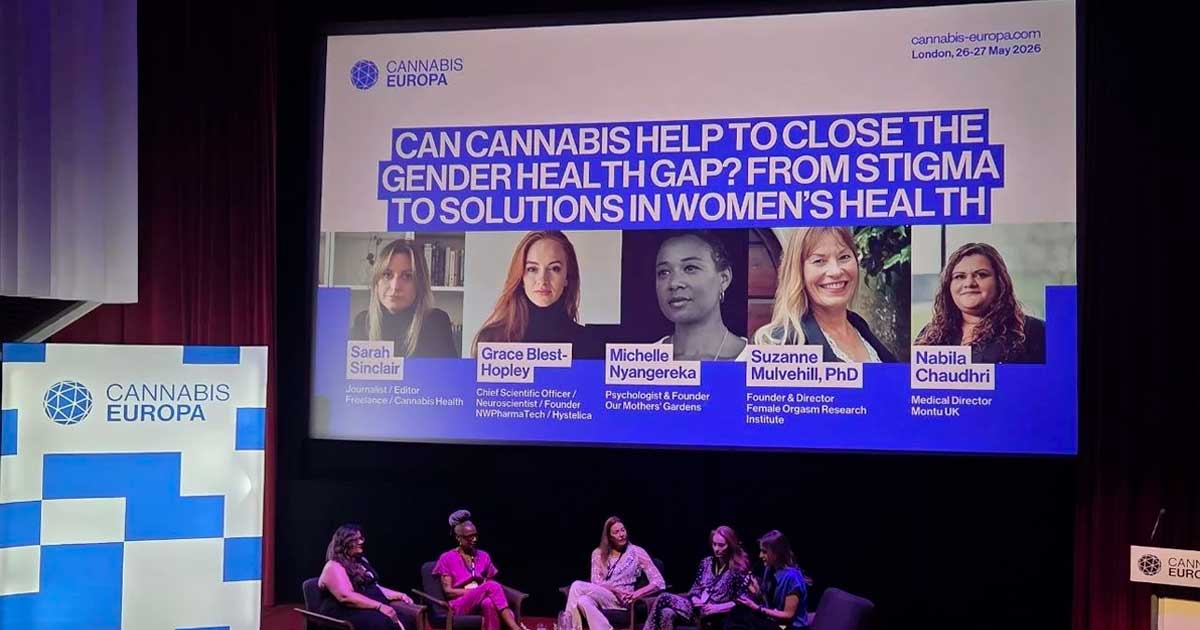
From Plant to Patient: Why Genetics Must Be at the Heart of Medical Cannabis Outcomes
Arjan Roskam, Green House Genetics; Dave Auger, Big League Genetics; Adele Hollman, Sanity Group; moderator: Alex Fraser, Grow Group
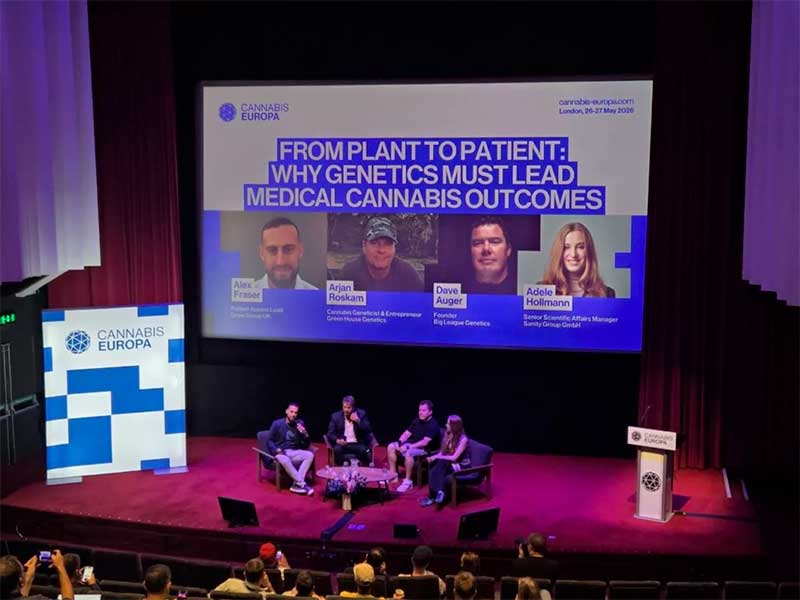
Conference: «From Plant to Patient»
- Adele Hollman, Head of Medical Affairs at Sanity Group, told the audience: «Genetics is the first variable we can control to achieve predictable outcomes for patients. If we succeed in that, the rest of the process will follow.»
- The post-harvest phase has been identified as the point at which the industry most consistently fails patients. «Nine out of ten producers cut corners by drying their products in six, seven, or eight days, even though everyone knows it takes 14,» Roskam said. «Companies under financial pressure are rushing their products to market too quickly, and it’s the patients who pay the price.»
- Incorrect labeling of strains exacerbates the problem. Distributors who purchase strains and market them under different names make it impossible for patients who have found an effective product to reliably access it.
- The feedback loop between patient outcomes and prescribers is virtually nonexistent. «We rarely ask patients how the final product made them feel,» Hollman said. «We don’t have the ability to develop specific products for specific conditions because we don’t track the data or share it with the prescriber.»
- Roskam will launch a tool called Cannabigator within the month—an app that allows patients to enter their medical conditions and current treatments and receive a recommended cannabinoid profile, with a parallel interface for clinicians. «Doctors think they always want to prescribe 25% THC, but 25% doesn’t mean it’s always good for you. A sativa with 22 or 23% THC can be much more beneficial, and people don’t realize that.»
- On the issue of clinical terminology, Hollman proposed a workable compromise. «Variety names are useful for cultural understanding and patient familiarity, but chemical varieties—that is, the exact chemical fingerprint—constitute the language of doctors. The two can coexist.»
- Auger emphasized that regulatory fragmentation is a direct obstacle to product quality. «Fresh cannabis is like fresh bread: it’s simply better. When each country imposes different regulatory barriers, patients end up with a product that has been in transit for six months.»
Telemedicine in Germany: Maturity, Regulation, and Future Prospects
Kristine Lütke, 365 Sherpas GmbH; Dirk Heitepriem, German Cannabis Business Association; Sascha Mielcarek, Canify; Niels Lutzhöft, Bird & Bird LLP; moderated by Moritz Förster, Krautinvest

Conference: «Telemedicine in Germany»
«The hottest topic in the European cannabis industry right now»—that’s how moderator Moritz Förster opened the session. Telemedicine was the the driving force behind Germany's post-CanG growth, causing the number of patients and imports to rise, which exceeded 200 tons in 2025. Yet while international observers marvel at the German model, Germany itself is trying to scale it back.
The bill and the reasons for its stalling
- The restrictions proposed by the Ministry of Health centered on two key points: a mandatory in-person consultation at the start of treatment and a ban on the mail-order sale of cannabis flowers. The bill passed its first reading in Parliament in December 2025. Since then, there has been almost complete silence.
- Sascha Mielcarek, CEO of Canify, was blunt about the political reality. «It’s a bit of a false debate, used to negotiate positions. Do you want people to go back to an illicit market where they don’t pay taxes, while you’re implementing economic reforms to cut costs and raise taxes? I think that’s the real question.» He doesn’t expect any imminent changes, but warned that the danger remains. «It’s a bill on hold. It could be introduced in Parliament at any moment.»
- Kristine Lütke, a former member of the Bundestag and one of the architects of the original medical cannabis legislation, was also unconvinced by the public health argument. «I’m not convinced that restricting telemedicine and flower delivery will have a positive effect on public health. People will turn back to the illicit market, or patients will consume cannabis grown at home that isn’t subject to quality control. I don’t see any positive effect.»
- Dirk Heitepriem, president of the German Cannabis Business Association, went back to basics. «We reminded policymakers where we came from—why medical cannabis was legalized in Germany in 2017. It was a court ruling: either allow patients to grow at home or provide them with regulated access. They said they didn’t want home cultivation because quality couldn’t be guaranteed. That’s something they need to remember.»
The legal challenge against the project
- Niels Lutzhöft, a partner at Bird & Bird, explained why the proposal faces serious legal obstacles. It conflicts with Germany’s reclassification of cannabis, which is now a prescription drug; it cannot be treated differently from other drugs without justification. The Federal Constitutional Court has consistently invalidated inconsistent legislation.
- Regulating the practice of doctors based outside Germany also raises issues under European law. «If these doctors are based outside Germany, their practice is regulated—and that requires a valid justification. Now that cannabis has been removed from the list of narcotics, it becomes very difficult to argue that it is equivalent to a narcotic,» he said. A referral to the Court of Justice of the EU regarding related advertising restrictions is already underway.
- A recent Supreme Court ruling prohibiting platforms from advertising cannabis with specific medical claims has also drawn attention. Mr. Mielcarek stated that compliant platforms were not affected. He added a more general point: «If you look at these websites that post photos of flowers and strain names, that’s what catches people’s attention. There’s no business reason not to adapt to an industry that’s presented in a more medical way. That would help both sides.»
The threat of reimbursement withdrawal and what the industry needs to do
- A separate proposal to end public health insurance coverage for cannabis flowers sparked the strongest reaction of the session. «This is an attack on people who are truly, truly sick,» said Mr. Heitepriem. «We’re shifting from “we don’t like potential recreational users entering the medical market” to “we’re going to cut off reimbursement for people who are genuinely sick.” It’s a brutal idea.» ” He noted that the budget argument doesn’t hold water: the cost to public insurers is negligible compared to the overall health budget, making this a political rather than an economic decision.
- Heitepriem concluded with a direct call to action. «The more the industry speaks with one voice, the better. Join your professional associations, collaborate with patient groups, doctors, and pharmacies. Establish common positions. That’s the only way to succeed.» He acknowledged that self-regulation remains difficult to implement in a constantly evolving market, but argued that a unified message from the industry, in tune with patients and clinicians, is the most powerful tool at our disposal.
- Mielcarek presented the most concise defense of the German model during this session. «The statistics show that there aren’t more users; people are shifting from the illicit market to a formalized, standardized market subject to quality controls. I would call that a success. So I wonder why we’re having this discussion.»
Can cannabis help reduce gender health disparities? From stigma to solutions in women’s health
Dr. Grace Blest-Hopley, Hystelica; Suzanne Mulvehill, PhD, Female Orgasm Research Institute; Dr. Michelle Nyangereka, Our Mothers’ Gardens; Nabila Chaudhri, Alternaleaf; moderated by Sarah Sinclair, Cannabis Health
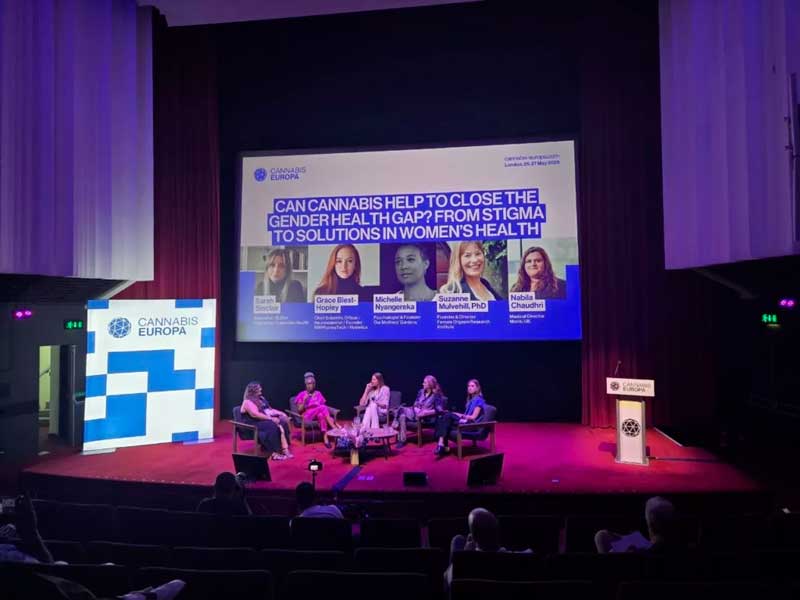
Conference on «Cannabis and Gender Inequality»
- Dr. Grace Blest-Hopley, a neuropsychopharmacologist and chief scientific officer at Hystelica, opened the discussion with a clear diagnosis of the underlying problem. «Western medicine has treated women like little men. We excluded women from research because hormones were considered too difficult a variable to control, and then we wondered why we didn’t have any answers. » It takes an average of eight years to diagnose endometriosis. Funding for endometriosis research accounts for about one-fifth of that allocated to erectile dysfunction.
- The majority of patients with chronic pain are women, and they wait significantly longer than men to be prescribed pain medication, often because they are simply not believed.
- Dr. Michelle Nyangereka, a psychologist and founder of Our Mothers’ Gardens, brought up an intersectional dimension that the sector rarely addresses. In the United Kingdom, maternal mortality among Black women is three to four times higher than among white women. «What makes the difference is having a Black doctor. It’s not a question of physiology; it’s a question of whether or not medicine sees us.»
- The science behind the interaction between cannabis and the female body remains woefully underdeveloped, but what is known is striking. Blest-Hopley explained that estrogen and progesterone are powerful neurosteroids that directly modulate the endocannabinoid system, altering how anandamide is broken down and how cannabinoids function in the body. «As women lose estrogen and progesterone during perimenopause, they experience increased breakdown of anandamide, as well as increased pain, anxiety, sleep disturbances, and depression—all areas where cannabinoids have proven potential. » New research conducted by Maastricht University examines how the response to cannabis changes throughout the menstrual cycle. A paper published this week revealed that THC’s modulation of fear in women is cyclical; it does not work consistently as it does in men.
- Suzanne Mulvehill, founder of the Female Orgasm Research Institute, described her efforts to have female orgasmic disorder recognized as a condition eligible for medical cannabis in certain U.S. states. Eight states rejected the request; two approved it. Illinois became the first state to legislate gender-specific conditions eligible for medical cannabis, adding endometriosis, ovarian cysts, uterine fibroids, and female orgasmic disorder. «When we specifically addressed the issue of female orgasm, it was not socially acceptable. Yet research shows that cannabis has a statistically significant effect on female orgasmic function and that there is no validated first-line treatment for the majority of women suffering from orgasmic difficulties.»
- Blest-Hopley was blunt about the industry’s product issues. «The entire medical cannabis industry needs to take a long, hard look in the mirror to determine whether it wants to be a pharmaceutical industry or a recreational market for cannabis users.’ The UK market consists almost entirely of high-THC flowers. There are no prescription products with high CBD content other than the’Epidiolex. If you have to take your kids to school, do the laundry, and attend a parent-teacher meeting, are high-THC flowers really appropriate? »Suppositories are beginning to establish themselves as a format better suited to women’s needs, but she noted that many have been designed by men without adequate life experience, leading to basic formulation errors.".
- When it comes to safety, Blest-Hopley was just as categorical. «Women should not use cannabis during pregnancy or while breastfeeding.» The European Food Safety Authority classified cannabidiol as a reproductive toxin last week. THC is already classified as a reproductive toxin internationally. «The endocannabinoid system plays an extremely specific role during gestation and adolescence. The introduction of a potent exogenous cannabinoid during these periods carries serious risks, whether it is prescribed or recreational.»
- Nyangereka presented the panel’s most concrete closing argument to male allies. «Include the endocannabinoid system in medical textbooks. If you understand the ECS, prescribing cannabinoids becomes a no-brainer. You stop thinking about the euphoric effect and start thinking about how to introduce cannabinoids into the body in a way that serves the patient’s best interests.» She invoked the Hawaiian concept of kuleana, which refers to both privilege and responsibility. «Your privilege comes with a responsibility. If women aren’t being heard, talk to each other about it.»




















JIHE 2026: Japan’s Largest Trade Show Dedicated to Hemp and CBD Returns to Tokyo with More Than 100 Industry Players

New Caledonia: The Courts Clear the Way for the Return of CBD

The Brazilian medical cannabis market continues to grow

Morocco: Three Cannabis-Based Medications Approved for the Treatment of Epilepsy

Canopy Growth Receives New EU-GMP Certification to Strengthen Its Presence in Europe

Three years after legalizing medical cannabis, Albania continues to establish regulations for it

The first plant-based medical THC spray arrives in the United Kingdom

Medical Cannabis in Germany: THC Prices Vary by a Factor of 12

France already has 3,000 cannabis retail outlets. None of them are legal.

Morocco's exports of legal cannabis have expanded to 15 countries
-
 Business2 weeks ago
The legal cannabis market in New York exceeds 4 billion $ in revenue
-

 Cannabis in France4 weeks ago
Which countries legalized medical cannabis before France?
-
Business4 weeks ago
South Korea is preparing to begin local production of medical cannabis to meet rising demand
-
Cannabis in France4 days ago
France already has 3,000 cannabis retail outlets. None of them are legal.
-
Cannabis in Thailand4 weeks ago
From the boom in dispensaries to a purely medical approach: Thailand is revising its cannabis policy
-
Cannabis in the U.S.5 days ago
A DEA report confirms that there are no fatal cannabis overdoses
-
Cannabis and driving3 weeks ago
Medical Cannabis and Driving: New South Wales Ends Automatic Penalties for THC
-
Cannabis in France3 weeks ago
France’s Drug Policy Chief Defends Cannabis Prohibition... and Runs Into the Facts

















You must be logged in to post a comment Login