Poor soil makes for potent Cannabis? Scientists explain why

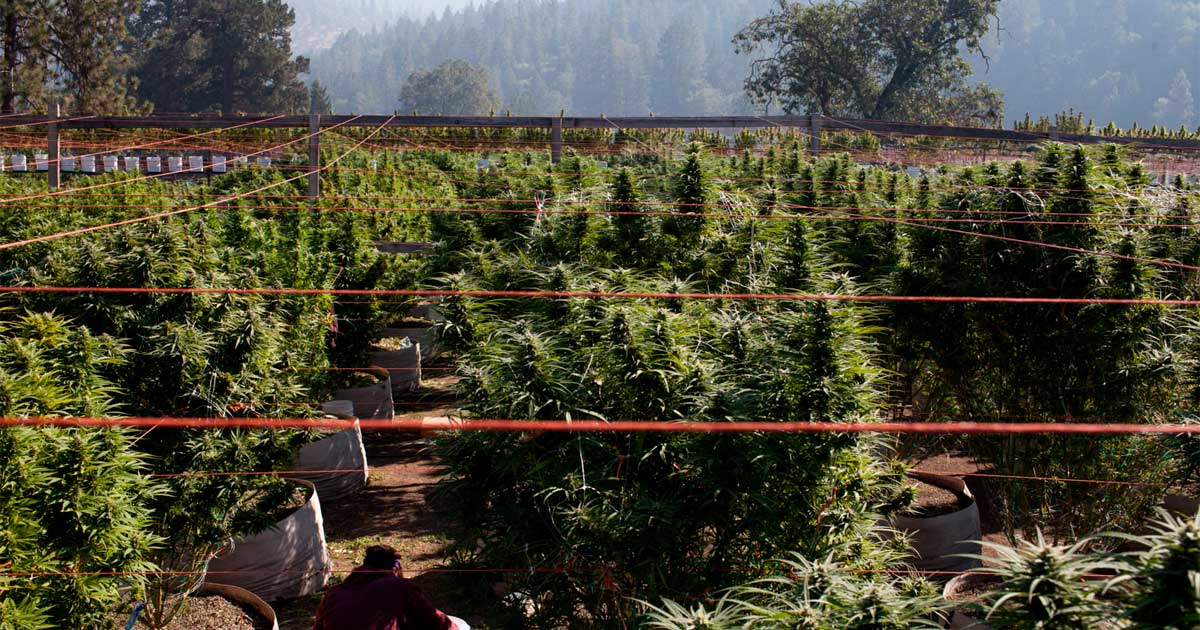
A new federally funded study revealed that chemical composition of the soil plays a decisive role in shaping the levels of THC, of CBD and terpenes Cannabis plants.
Conducted by Penn State College of Medicine and financed by the United States Department of Agriculture (USDA), This groundbreaking study adds a new dimension to what determines the final quality of cannabis beyond genetics and climate.
When soil defines the plant
Published in the Journal of Medicinally Active Plants, this study shows that soil health, which combines biological, chemical and physical properties, can considerably modify the cannabinoid profile hemp plants.
«The results of this study provide outdoor growers with information on the effects that soil health can have on the cannabinoid and terpene content of hemp,» write the authors.
According to the data, a poor soil quality seems to lead to higher THC levels, while the richer soils tend to stimulate the production of CBG, the precursor compound from which other cannabinoids such as CBD and THC are derived.
This discovery suggests that farmers could adjust the’cannabinoid balance of their crops not only through plant genetics, but also through the use of soil management practices.
A first look at the chemical influence of soil on cannabinoids
The experiment compared two hemp cultivars, Tangerine and CBD Stem Cell, each grown in neighbouring fields under two different conditions: one with cover crops (CC) and the other with conventionally tilled fields (CF). Cover cropping and no-till techniques are known to enrich soil life, while ploughing disrupts microbial networks but can alter soil aeration and nutrient dynamics.
The researchers observed that chemical and biological differences in soil resulted in measurable variations in concentrations of cannabinoids and terpenes.
For example, plants Tangerine cultivated in conventionally tilled soil produced CBD levels about 1.5 times higher than those grown in soil with cover crops.
On the other hand, the CBD Stem Cell a product twice as much CBD when grown in the field with cover crops. In addition CBG concentrations were close to four times higher under cover crop conditions, while the content of THC was until six times higher in plants grown on ploughed land.
Decoding soil health and plant chemistry
«The terms «soil health» and «soil quality» are often used interchangeably; however, soil health focuses not only on the inorganic properties of the soil, but also on its biological properties and ability to support life,» explains the study.
A healthy soil functions like an ecosystem, alive with microbes, fungi, minerals and organic matter, which communicates with plant roots and promotes the synthesis of secondary metabolites such as cannabinoids and terpenes. These compounds act as natural defense mechanisms for the plant and contribute to the complex sensory and pharmacological properties of cannabis.
The researchers found that plants grown in the cover crop systems seemed to produce more consistent terpene profiles, perhaps attenuating genetic differences between cultivars. This confirms a growing body of evidence establishing a link between the’interaction between plant genetics and soil ecology nutrient absorption and metabolite synthesis.
Optimizing cannabis through agronomy
The implications of these discoveries go far beyond mere academic curiosity. For farmers, in particular open-air and regenerative farmers, this research suggests that soil management could become a new lever for controlling or optimizing the’cannabinoid expression.
If confirmed by larger-scale studies, this could influence the way in which active hemp growers design their cultivation protocols. Growers could, for example, give preference to cover crop systems to stimulate CBG production or specific soil treatments to moderate the THC levels, in line with regulatory or commercial objectives.
The scientists also found that levels of’cannabidiolic acid (CBDA) were more than six times higher in plants from conventionally tilled fields. This adds to the complexity of the interpretation, showing that no one method is superior to another, but that soil management can offer a effects toolbox depending on the desired result.
The biochemical chain reaction below the surface
The article points out that cannabinoid and terpene biosynthesis share common biochemical pathways. Variations in soil composition could affect enzymatic activity, influencing how CBG is converted to CBD, THC or CBC.
The authors point out that further research is needed to determine the «levels of enzymes responsible for the conversion of CBG into CBD, THC and CBC »because it could explain why CBG tends to to accumulate in plants from cover crop fields.
This biochemical interaction reinforces the idea that the cannabis terroir, like that of wine or coffee, could become a central factor in defining quality, potency and quality. even therapeutic properties of the different varieties.














Medical Cannabis in Germany: THC Prices Vary by a Factor of 12

France already has 3,000 cannabis retail outlets. None of them are legal.

Morocco's exports of legal cannabis have expanded to 15 countries

Aurora Cannabis Doubles Its Production Capacity in Germany

Tilray is accelerating its operations in Europe thanks to a license in Portugal

Boston will host the 10th annual State of the Cannabis Industry Conference on October 26

A DEA report confirms that there are no fatal cannabis overdoses

A British patient is challenging the NHS's refusal to reimburse medical cannabis

October 2026 CBD Highlights: 10 Strains and Hash to Discover from 5 French Producers

CBD in France: Traceability, Retail Stores, THC and Driving… What the New Bill Proposes
-
 Business2 weeks ago
The legal cannabis market in New York exceeds 4 billion $ in revenue
-

 Cannabis in France3 weeks ago
Which countries legalized medical cannabis before France?
-
Business3 weeks ago
South Korea is preparing to begin local production of medical cannabis to meet rising demand
-
Cannabis in Thailand3 weeks ago
From the boom in dispensaries to a purely medical approach: Thailand is revising its cannabis policy
-
Cannabis and driving3 weeks ago
Medical Cannabis and Driving: New South Wales Ends Automatic Penalties for THC
-
Cannabis in Argentina4 weeks ago
Argentina Opens Its Market to Hemp Flowers Containing 1% of THC
-
Autism3 weeks ago
Autism and Cannabis: Results from the First Placebo-Controlled Trial of NTI164
-
Cannabis in France2 weeks ago
France’s Drug Policy Chief Defends Cannabis Prohibition... and Runs Into the Facts

















You must be logged in to post a comment Login