
What if the vegetative phase of cannabis had become unnecessary?


For decades, one rule seemed set in stone in cannabis culture: before you can produce flowers, you have to grow the plant. The vegetative phase, those weeks under long-day lighting, during which the plant develops leaves, branches, and roots, were considered the foundation of any serious cultivation. Without it, there would be no yield. No strong plants. No harvest.
But that certainty may be beginning to waver.
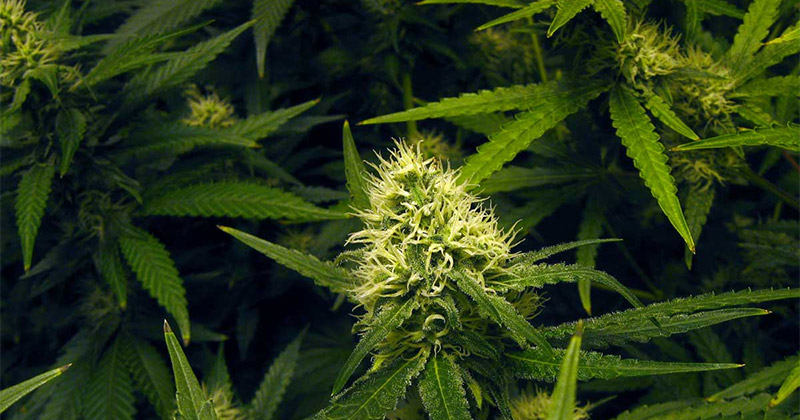
In a recent article published on High Times, the famous farmer and author Jorge Cervantes presents a different method: cultivation without a vegetative phase, or No-Veg. A simple, almost heretical idea: putting the plants into bloom right from day one.
A rule that's forty years old
To understand why this idea seems radical, we need to remember where modern cannabis culture comes from.
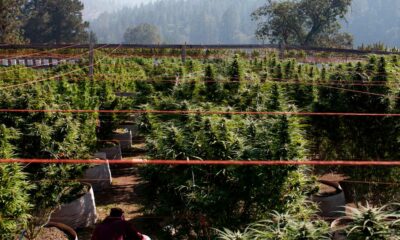
During decades of prohibition, growers learned to maximize their yields with whatever resources they had on hand: sodium lamps, makeshift greenhouses, and clones shared among friends. In this outdated model—now obsolete in states where cannabis is legal—the logic was intuitive: a large plant produces more flowers than a small one.
We pruned it, we trained it, and we built a complex plant structure before inducing flowering. This approach has shaped modern indoor cultivation as a whole, particularly in the horticultural laboratories of the Netherlands, which has long been the world capital of grow-room cultivation.
The Numbers Revolution
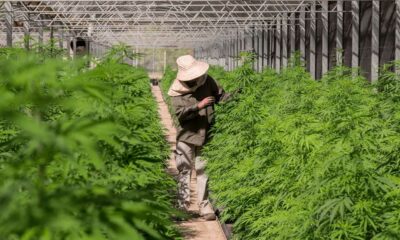
What the method offers today No-Veg It seems almost provocative: planting a clone or a seed and immediately switching to a flowering light cycle (12 hours of light / 12 hours of darkness), without any prior growth phase.
The tests conducted by the Dutch company Innexo, with technology partners such as Fluence and Grodan, show counterintuitive results. Each harvest is smaller, but since the cycles are shorter, it is possible to harvest one after another six harvests a year instead of four.
Result: Annual production increases.
And the benefits don't stop there:
- about 30 % less electricity
- near 40 fewer % work hours
- a much higher proportion of top-quality flowers
In other words, we’re producing more with less. In an industry where margins are shrinking and energy costs are skyrocketing, it’s a hard argument to ignore.
The Paradox of Large Plants
Why might such a simple technique be more effective? Because traditional cultivation produces a lot of useless biomass. A large plant grows dozens of leaves that will eventually be cut off. It develops secondary branches that don’t get enough light and produce low-quality flowers. It requires pruning, trellising, and defoliation.
In other words: we pay the plant to produce foliage… and then we pay someone to remove it.
In a strictly agronomic model, where every watt, every minute of work, and every square meter counts, this waste becomes difficult to justify.
The key: “stretch”
The Method No-Veg is based on a phenomenon well known to farmers: the stretch.
When cannabis enters the flowering stage, the plant undergoes a phase of rapid growth. Growth hormones accelerate the formation of stems and branches to expose the future flowers to light. In a traditional grow setup, this phase is controlled to prevent the plants from growing too large.
In the method No-Veg, on the contrary, it becomes the engine of growth. The plant develops its structure at the same time it begins to flower. Fewer leaves, fewer unnecessary branches, but a more vertical and productive structure.
A more technical culture
However, this approach does not mean that growing becomes any easier. Without a vegetative phase, there is no time to correct mistakes. A nutritional deficiency, a watering problem, or a poor root system at the start will have repercussions all the way through to harvest.
Precision then becomes essential. Climate control, irrigation, nutrient conductivity, light intensity: everything must be calibrated. Growers talk about crop steering, an approach in which the plant is “managed” as a biological system.
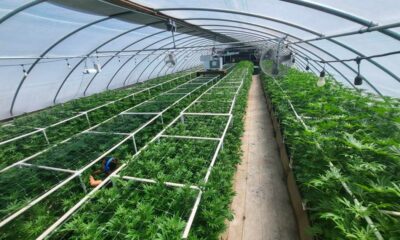
The Technique No-Veg works particularly well in high-density commercial crops, sometimes 8 to 10 plants per square meter. However, this approach becomes less relevant in jurisdictions where the number of plants is limited. In such situations, growers often prefer to grow a few large plants to maximize the yield from each one.
From DIY to Engineering
Ultimately, the issue goes beyond cultivation techniques. Cannabis is changing in nature. For half a century, it has been grown by enthusiasts, rebels, and experimenters. The methods were empirical, passed down orally, and refined generation after generation.
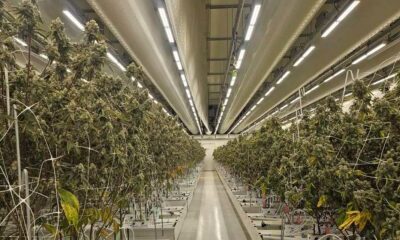
Today, the industry is becoming more industrialized. Greenhouses are turning into laboratories. Growing media are standardized. LED lights are replacing older technologies. Agronomic data guides decision-making. We are gradually shifting from craftsmanship to science.
Will the vegetative phase really disappear? Probably not entirely. Certain strains, certain setups, or certain regulatory constraints will continue to favor traditional methods. But the mere fact that this question is being asked shows just how rapidly cannabis cultivation is evolving.
For forty years, growers have regarded the vegetative phase as sacred. Today, some are beginning to wonder if it wasn’t simply… a habit. And in an industry undergoing rapid change, habits are often the first things to disappear.















Autism and Cannabis: Results from the First Placebo-Controlled Trial of NTI164

Which countries legalized medical cannabis before France?

From the boom in dispensaries to a purely medical approach: Thailand is revising its cannabis policy

South Korea is preparing to begin local production of medical cannabis to meet rising demand

In the United States, cannabis use among high school students has reached an all-time low

Medical cannabis use surges by 64 % in Denmark

Canopy Growth Enters the U.K. Market with Four Canadian Strains

CBD: Full-Spectrum Extracts Under Threat in Greece

Medical Cannabis and Back Pain: Opioid Use Has Dropped by 90 % in 10 Years

Cannabis: Wisconsin Could Finally Legalize It in 2027
-
 Cannabis and driving2 weeks ago
Cannabis and CBD: French Drivers Can Now Lose Their License Even Without a Positive Test Result
-
Cannabis in France3 weeks ago
Cannabis Legalization: The LFI Bill Has a Major Problem—THC
-

 Cannabis in France18 hours ago
Which countries legalized medical cannabis before France?
-
Cannabis in the Netherlands2 weeks ago
One year after the launch of the Dutch cannabis experiment, the first trends are emerging
-
Cannabis in France2 weeks ago
French medical cannabis remains stalled at the Ministry of Health
-
Cannabis in Argentina1 week ago
Argentina Opens Its Market to Hemp Flowers Containing 1% of THC
-
Business2 weeks ago
The United Kingdom Is Moving Closer to a Regulated CBD Market
-
Cannabis in France1 week ago
Rima Hassan: When «Drugs» Become a Political Weapon













You must be logged in to post a comment Login