
Why triploid seeds could change the game in France

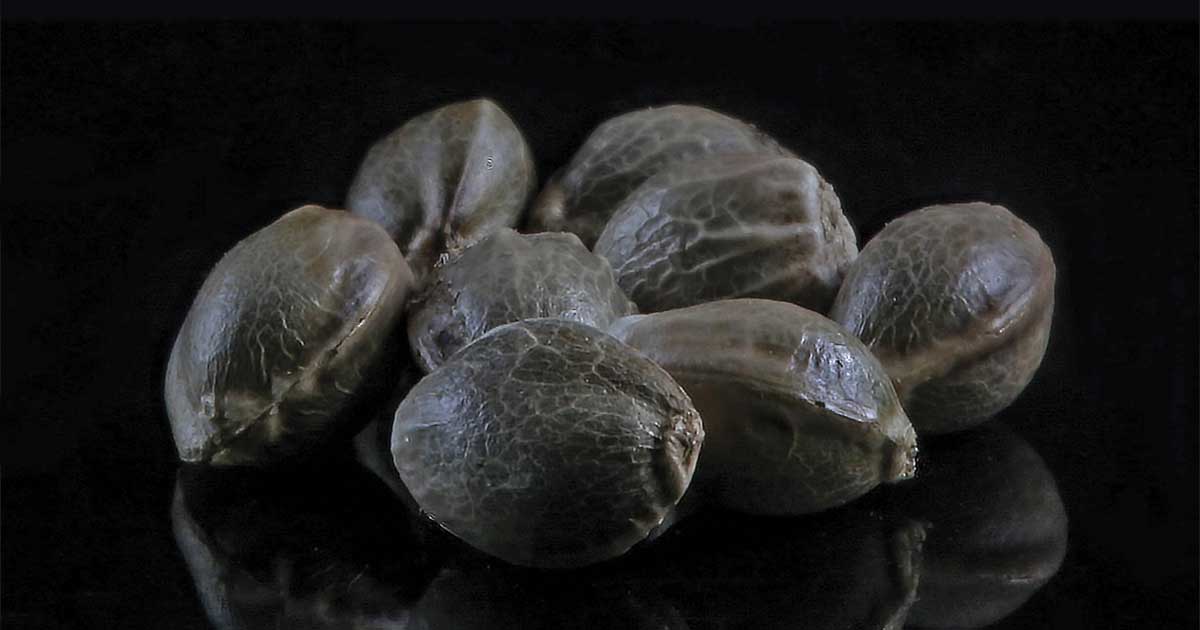
For decades, cannabis cultivation in Europe has evolved through progressive innovations: feminized seeds, stabilized CBD varieties, autoflowering, terpene-focused breeding and, more recently, the emergence of minor cannabinoids such as CBG, the CBDV or the THCV. But one of the major advances in modern plant breeding, already common in traditional agriculture, has remained largely absent from the European cannabis market: the triploid varieties, often described as «seedless cannabis».
That's about to change. With the launch of GTR Seeds EU, genuine triploid cannabis seeds are now available via a fully compliant European supply chain. And in a country like France, where the hemp and CBD industry has to operate under strict regulatory pressure, this innovation could quickly become much more than just a novelty. It could become a strategic tool for professional and semi-professional growers looking for stability, predictability and reduced legal risks.
What is the genetics of triploid cannabis?
Most cannabis plants are diploid, This means they have two sets of chromosomes (2n): one from the mother and one from the father. Triploid cannabis plants, on the other hand, have three sets of chromosomes (3n).
It may seem a technical detail, but in plant breeding, chromosome number is a major factor in how a plant reproduces and develops. Triploid plants are extremely common in agriculture, as they often exhibit increased vigor and higher yields, yet are largely incapable of producing viable seeds.
In fact, many common fruits are triploid: the bananas, the seedless watermelons, Some grapes, citrus fruit varieties and even hop cultivars. The same concept now applies to cannabis.
According to information provided by the breeders behind GTR Seeds, their work began several years ago, and in 2020 they claim to have been the first to market triploid cannabis seeds, a fact backed up by published research referenced in the National Library of Medicine, long before «triploid cannabis» became an industry buzzword.
Why is triploid cannabis often described as «seedless»?
The main advantage of triploids is that they are extremely difficult to pollinate successfully. As triploid plants have an odd number of chromosomes, normal reproduction becomes ineffective. Pollination may occur, but rarely produces viable offspring.
For cannabis growers, this is important because seed crops pose a serious economic threat. If pollen enters a crop, whether from nearby hemp fields, «wild cannabis» growing in ditches, accidental male plants or hermaphrodites, the flowering plant devotes its energy to producing seeds rather than developing resin-rich flowers. Yield and quality drop dramatically.
Triploids offer growers biological protection. Even under pollination pressure, they tend to produce only a minimal quantity of seeds compared with traditional genetics. The Cornell University trials mentioned by breeders reportedly tested triploid plants intercropped with fibrous crops under conditions of extreme pollen exposure. Although a small number of seeds were formed, cannabinoid levels remained high and the percentage of seeds remained low.
In short: triploid genetics don't make pollination impossible, but they do make it much less damaging.
A major advantage for France: crop stability and THC compliance
The French cannabis market is unique. While France is one of Europe's largest hemp producers, its legal framework remains strict and sometimes unstable. For CBD growers and processors, the main challenge is not only to produce compliant varieties, but also to ensure that final THC levels remain within legal limits throughout the growing cycle.
This is where triploid genetics can prove highly relevant.
When cannabis plants are stressed by pollination, heat, drought, nutritional imbalance or less-than-stable genetics, cannabinoid expression can fluctuate. For growers operating in a low-THC environment, this variability is dangerous. Even if a cultivar is «supposed» to remain compliant, unpredictable results can lead to significant legal and financial risks.
By reducing the chances of successful pollination, triploid plants can offer growers :
- more consistent cannabinoid levels
- reduced risk of crops containing seeds
- better control over final THC content
- greater predictability of field harvesting
In the French context, where outdoor cultivation is widespread and cross-pollination risks are high, this is no mean advantage. It could represent a new standard for semi-professional CBD growers who have had to contend with unstable genetics and unwanted pollination from industrial hemp fields.
Higher yields: «bigger plants, bigger flowers».»
Triploid genetics is more than just seedlessness. It is also associated with increased vigor and biomass production, a phenomenon observed in many polyploid crops.
According to trials conducted by breeders, triploid cannabis varieties have produced 30 % to 100 % more flowers than their diploid equivalents. Autoflowering triploid lines are said to have shown the most spectacular results, with average yields approaching 400 grams per plant, compared with typical performances for diploid autoflowering varieties of between 100 and 150 grams.
While these figures vary according to conditions and phenotypic selection, the trend is clear: triploid cannabis is being presented as a performance-driven innovation, not just a «safety measure».
For commercial cultivation, particularly in greenhouses and outdoors, this could mean higher profitability per square metre, while reducing the risk of crop loss due to pollination.
Resin, aroma and flower quality: the «high-end» angle»
Triploid cannabis is also marketed as a quality enhancement. Breeders describe the flowers as frostier, with resin extending deeper into the sugar leaves, and a more intense aromatic profile.
This is in line with research carried out on other crops: studies on triploid hops have shown a significant increase in aroma compounds. Cannabis aroma is complex and cannot be reduced to terpenes alone, but many growers report that triploid plants offer more pronounced aromatic profiles and stronger sensory expression.
If confirmed consistently, this could position triploid cultivars as a serious option for the high-end CBD flower market in France, where consumers are increasingly demanding terpene-rich, visually appealing buds comparable to THC cannabis standards.
Why do triploid cannabis seeds cost more?
One of the reasons why triploid genetics have not yet invaded the market is simple: they are difficult and expensive to produce.
The selection process involves converting selected mother plants into tetraploids (4n) using treatments such as colchicine. Survival rates are low, tests are constant and breeders have to use advanced tools such as the flow cytometry to confirm chromosome number and prevent reversion to diploid plants.
Once stable tetraploid mothers exist, they are crossed with diploid lines to create triploid seeds. But seed production is inefficient: breeders report that yields can only reach 5 % to 30 % of what would be produced in a standard diploid cross.
In other words, triploid seeds aren't expensive because of marketing hype: they're more expensive because the production process is slower, riskier and far less productive.
A new stage for cannabis breeding in Europe
The arrival of GTR Seeds EU suggests that Europe is entering a new phase in cannabis genetics. Until now, advanced breeding innovations have mainly been imported from North America. By introducing genuine triploid lines to Europe via an EU-compliant distribution model, this launch could accelerate their adoption by serious growers.
For France, the timing is particularly significant. The country's CBD economy continues to grow, but remains hampered by regulatory uncertainty and the constant need to prove compliance. In this context, growers aren't just looking for high yields or exotic terpene profiles: they're seeking a risk reduction.
Triploid cannabis could offer exactly that: a genetic solution to one of the biggest structural problems of outdoor cultivation: pollination instability.
The future: polyploidy, the next cannabis revolution?
Triploid cannabis is not the end of the story. It could mark the beginning of a broader evolution towards polyploid selection, including the future commercial development of tetraploid cultivars and advanced selection specific to chemotypes (CBDV, THCV, CBG).
As cannabis continues to professionalize, European growers, particularly in regulated markets like France, will increasingly see genetics as a compliance tool, not just a marketing ploy.
And in this new reality, «seedless cannabis» could be more than just a gimmick. It could become one of the most important advances in breeding that Europe has seen in years.














Cannabis Oil and Endometriosis: A Promising Study for Pain Relief

CBD is said to promote athletic recovery, without improving performance

294 cannabis clubs in Chile: a booming movement with uneven distribution

Chronic Sciatica: New York Approves First Clinical Trial of a THC-Based Medication

United States: The DEA is accelerating the integration of medical cannabis at the federal level

Florida is nearing one million patients using medical cannabis

Uruguay Revives Its Plan to Allow Tourists to Legally Access Cannabis

In Brazil, researchers are developing an innovative CBD eye drop

Autism: Medical Cannabis Is Linked to Reduced Anxiety

The $28 billion U.S. hemp market remains under threat
-
 Business6 days ago
The legal cannabis market in New York exceeds 4 billion $ in revenue
-

 Cannabis in France2 weeks ago
Which countries legalized medical cannabis before France?
-
Business2 weeks ago
South Korea is preparing to begin local production of medical cannabis to meet rising demand
-
Cannabis in the Netherlands4 weeks ago
One year after the launch of the Dutch cannabis experiment, the first trends are emerging
-
Cannabis in Thailand2 weeks ago
From the boom in dispensaries to a purely medical approach: Thailand is revising its cannabis policy
-
Cannabis in France4 weeks ago
French medical cannabis remains stalled at the Ministry of Health
-
Cannabis in Argentina3 weeks ago
Argentina Opens Its Market to Hemp Flowers Containing 1% of THC
-
Cannabis and driving2 weeks ago
Medical Cannabis and Driving: New South Wales Ends Automatic Penalties for THC

















You must be logged in to post a comment Login