New York celebrates the opening of its 500th legal cannabis store

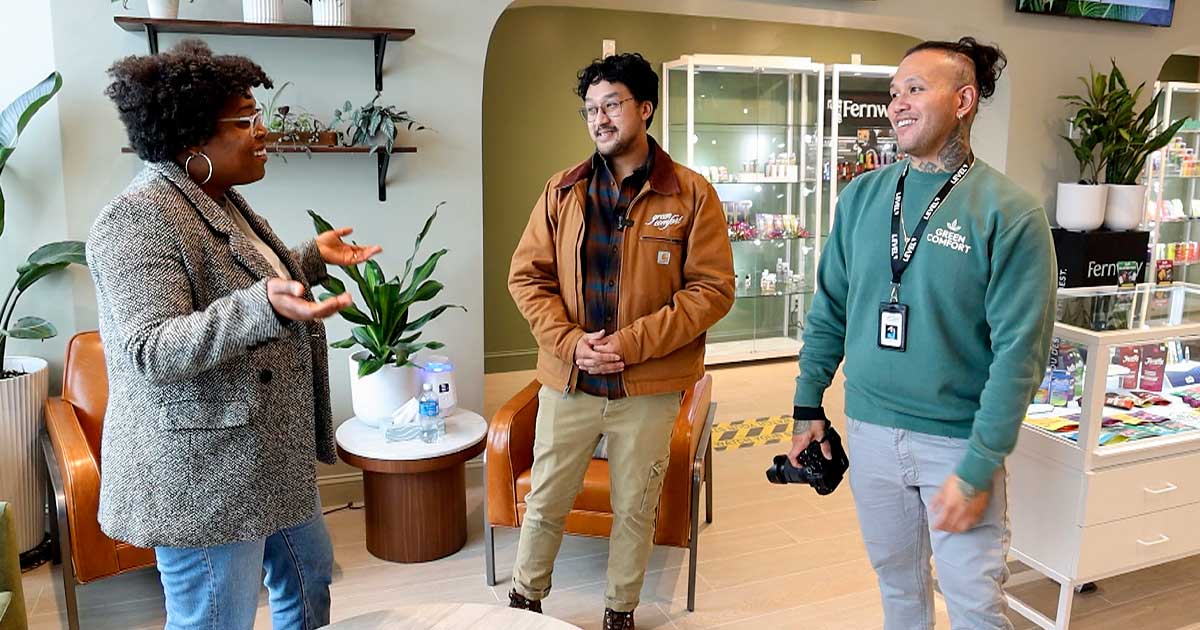
New York has officially crossed the threshold of 500 licensed cannabis dispensaries for adult use, a symbolic moment for a market that has spent nearly three years grappling with delays, lawsuits, and regulatory adjustments.
The government celebrated the opening of Green Comfort, in Rochester, marking what the’Office of Cannabis Management (CMO) described as a turning point for an industry that is rapidly maturing.
According to the acting executive director of the OCM, Felicia A. B. Reid, this milestone signals a market that is «maturing rapidly,» as she noted during the store’s grand opening.
The latest figures confirm this trend: New York has recorded $1.4 billion in legal sales in 2025 alone, total revenue from adult consumption now exceeding $2.3 billion since the market launched in late 2022.
Health clinics are now located in 51 counties and 161 municipalities, and regulators say that this expansion supports approximately 25,000 jobs throughout the state. According to the Cannabis Control Board (CCB), 56% of all active stores are owned by social equity licensees, one fundamental principle of the state’s regulatory framework.
«Fairness has been the foundation of this market from the very beginning,» said Simone Washington, Director of Equity at OCM.
A rapidly growing market, with a target of 2,000 stores
Although 500 stores is a significant number, Ms. Reid believes that New York’s cannabis market could eventually quadruple in size. Internal and external analyses suggest that the state could eventually have as many as 2,000 dispensaries, a figure she cited during an interview with WXXI News.
This projection reflects both consumer demand and the number of conditional and provisional licenses already issued. The OCM reports 1,949 licenses issued across all categories (production, processing, distribution, etc.).
For Ms. Reid, this growth is also proof that entrepreneurs are seizing opportunities: expanding their businesses, building ties with the community, and navigating local politics. «Much of this work falls to them,» she said. «We’re only a small part of it.»
The agency acknowledges, however, that It was a rough start. Litigation, zoning issues, and administrative shortcomings hampered the rollout in its initial phase. Ms. Reid described these obstacles as «predictable» for a brand-new regulatory body tasked with administering a brand-new law. Strengthening internal controls, increasing collaboration with communities and licensees, and establishing an operational structure were among her top priorities after taking the helm.
Equity Beyond Licensing
New York’s Marijuana Regulation and Taxation Act (MRTA) has placed equity at the heart of legalization, setting the state apart from earlier markets where social equity efforts fell short. But Ms. Reid insists that the next chapter must focus on the long term and not just on market entry.
She points out that socially responsible businesses often lack access to capital and infrastructure, making ongoing support essential. Regulators have already allocated $5 million for community reinvestment, $5 million for grants to conditional business license holders, and $2.6 million for technical assistance.
«What I want to know is where this company will be in a year? In two years? In five years? In ten years?» explains Ms. Reid. For her, true equity isn’t measured solely by licensing decisions, but also by the longevity and resilience of these operators.
The government recently granted up to $30,000 each to 52 clinic operators involved in legal proceedings in connection with the CAURD subsidy program, intended to help cover expenses such as rent, inventory management, and security systems.
Sales trends, innovation, and changing consumer habits
The legal market in New York continues to show an upward trend. Monthly sales reached a record high of $215 million in August, and the CMO expects upward revisions for the fall months as producers finalize their reports. Regulators even raised their annual forecasts at the beginning of the year to 1.5 billion dollars, a goal the market is on track to achieve.
On the consumer side, Ms. Reid notes a growing demand for pre-rolled, particularly ready-to-drink formats, but also notes a shift away from purchases driven by strength. As the market matures, she expects interest to shift toward terpene profiles, the minor cannabinoids and products tailored to specific consumer experiences.
«The range of products… is unimaginable,» she said during an interview with WXXI, reflecting on how far legal retail has come since prohibition. In her view, innovation will continue to define the state’s processors and brands.
Combating unfair competition and refining regulations
The government continues to crack down on illegal stores that flourished during the slow implementation regulations. Enforcement initiatives such as New York City’s Operation Padlock have had a measurable impact. According to the OCM, licensed stores that were open before the crackdown saw their sales increase by 105% within a few months, demonstrating that enforcement combined with consumer education changes purchasing behavior.
To better guide consumers, the OCM has launched a interactive map of authorized retailers, supported by statewide public health messages highlighting the safety benefits of regulated products.
At the same time, regulators are refining the rules governing the «Cannabis Showcase» program» from New York, who authorizes licensed sales at pop-up events market-based, and are considering expansions that could eventually allow the sale of cannabis in movie theaters.
A complex federal landscape
Recent developments at the federal level are also reshaping the regulatory environment. Ms. Reid described the federal decision to ban THC-based products hemp derivatives, previously authorized by the 2018 farm bill, as «an opportunity» to recalibrate consumer safety and business integration. It also highlights concerns regarding testing, packaging, and dosage accuracy for these products and noted New York’s intention to revise its hemp regulations accordingly.
But she expressed frustration over Congress’s removal of a provision that would have allowed Veterans Affairs doctors to recommend cannabis in states where it is legal. According to her, this omission is «very difficult» for veterans who rely on cannabis as part of their healthcare.
The overall federal situation remains unpredictable, but Ms. Reid stresses that the state must prepare for several possible scenarios while advocating for banking and financial reforms safe in order to reduce the disproportionate operational costs borne by legitimate operators.
What can we expect from New York in 2026?
Despite the setbacks, Ms. Reid believes that the state’s trajectory is closely linked to economic development and social justice, particularly for communities that have suffered from past criminalization. Her motivation for leading the OCM stems from this mission: to ensure that legalization opens up economic prospects for people who have long been excluded from formal opportunities.
«Even if we’ve only issued a license to one person who has been negatively affected by the war on drugs, that alone changes the course of things,» she said.
As New York surpasses the 500-store mark, steps up enforcement, supports operators, and revises regulations, the next chapter of the’the cannabis industry in New York will be defined by its ability to maintain a balance between growth and social objectives. For now, the momentum shows no signs of slowing down.






















«Vincy Gold»: Humboldt Seed Company on the Hunt for Saint Vincent Sativas

Cronos Completes the Acquisition of CanAdelaar for 57.5 million euros

Cannabis with a "bloody" twist: Discover Sensi True Blood and Sensi Sangria, the two new strains from Sensi Seeds

Hemp: The Council of the EU Takes a Stand on New Production and Marketing Rules

Missouri's legal cannabis market accounts for 93 % of consumer spending

THC Gummies: How to Read a Certificate of Analysis Before Buying

British patients now have access to THCV-rich cannabis flowers

Spain: Medical Cannabis Is Coming to About 50 Hospitals

JIHE 2026: Japan’s Largest Trade Show Dedicated to Hemp and CBD Returns to Tokyo with More Than 100 Industry Players

New Caledonia: The Courts Clear the Way for the Return of CBD
-
 Business3 weeks ago
The legal cannabis market in New York exceeds 4 billion $ in revenue
-

 Cannabis in France4 weeks ago
Which countries legalized medical cannabis before France?
-
Cannabis in France1 week ago
France already has 3,000 cannabis retail outlets. None of them are legal.
-
Business4 weeks ago
South Korea is preparing to begin local production of medical cannabis to meet rising demand
-
Cannabis in the U.S.1 week ago
A DEA report confirms that there are no fatal cannabis overdoses
-
Cannabis in Thailand4 weeks ago
From the boom in dispensaries to a purely medical approach: Thailand is revising its cannabis policy
-
Cannabis and driving4 weeks ago
Medical Cannabis and Driving: New South Wales Ends Automatic Penalties for THC
-
Cannabis in France3 weeks ago
France’s Drug Policy Chief Defends Cannabis Prohibition... and Runs Into the Facts















You must be logged in to post a comment Login