Zohran Mamdani elected mayor of New York: what consequences for the cannabis market?

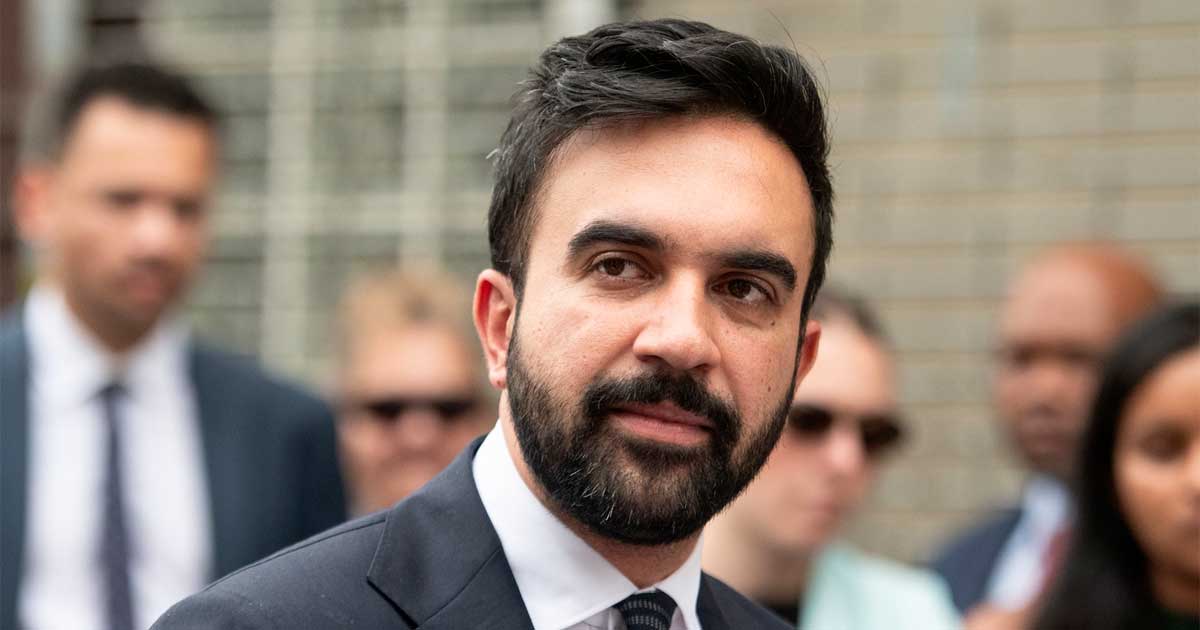
Zohran Mamdani’s rise from Kampala to New York City Hall illustrates the emergence of a new political generation that rejects the status quo.
Since his election to the State Assembly in 2020, where he represented Astoria and Long Island City, Mamdani has established himself as one of the most outspoken voices of the progressive movement. His work has consistently highlighted the concerns of working-class people and marginalized communities, whether regarding access to housing, equity in transportation, or criminal justice reform.
During the campaign, he also acknowledged his personal relationship with cannabis, stating that he had purchased it from a licensed store. His vote in favor of legalizing adult use was not opportunistic, but rather the logical extension of a political vision in which cannabis is a tool for social justice, economic development, and empowerment.
A Clear Vision for Cannabis in New York
Although his detailed plan has yet to be released, Mamdani’s broad policy direction is already clear. He intends to get the MRTA back on track with its original philosophy—centered on equity and access—after several years marked by administrative delays and regulatory uncertainties.
His immediate priority should be to accelerate the opening of the legal market by streamlining the licensing process and allowing more entrepreneurs from the social justice sector to enter the sector. In his view, a credible market cannot exist as long as access remains hampered by endless delays and opaque bureaucracy.
This commitment to equity is not merely abstract rhetoric. It would take the form of increased support for operators already facing difficulties, meaningful assistance for small businesses, and greater transparency in licensing procedures. The goal is to prevent the New York market from being monopolized by a few powerful players and to ensure that legalization benefits communities that have historically been targeted by criminalization.
On the the sensitive issue of unlicensed stores, Mamdani seems intent on breaking with the strictly punitive approach advocated by other political leaders. The 2024 court rulings highlighted the limitations of hasty closures, which were deemed contrary to due process.
The new mayor could therefore opt for a more proportionate approach, based on targeted actions against large-scale commercial networks, while preventing abuses and protecting legitimate operators who are struggling to survive in a saturated market.
The challenges that lie ahead
Mamdani is taking on this role at a time when the legal cannabis market is still far from finding its footing. The Sales certainly exceed $1 billion, but this apparent success masks the reality of overwhelming competition from thousands of unauthorized retail outlets that continue to dominate large segments of the market.
Recent legal battles have highlighted the legal fragility of the enforcement strategies adopted to date, forcing the city to thoroughly reevaluate its approach to combating the illicit economy.
To bring about lasting change in the market, collaboration between the city and the’Office of Cannabis Management will need to be significantly strengthened. Many issues still need to be clarified: zoning, public consumption, expediting licensing, and the coordination of inspections.
If Mamdani succeeds in establishing a smooth working relationship with the state, New York could finally emerge from the regulatory confusion that has hindered its development since legalization.
What His Election Means for the Industry
For legitimate businesses, Mamdani’s arrival offers hope for a more accessible, consistent, and stable market. For unlicensed operators, it likely signals a more methodical form of pressure—less dramatic but harder to circumvent—designed to restore a level playing field.
Investors, for their part, see this new direction as an opportunity for a market that is finally predictable, free from the constant uncertainty that has thus far discouraged capital inflows.
As for consumers, they could benefit from expanded access to safe, regulated products that are guided by principles of social justice rather than mere commercial interests.























Medical Cannabis in Germany: THC Prices Vary by a Factor of 12

France already has 3,000 cannabis retail outlets. None of them are legal.

Morocco's exports of legal cannabis have expanded to 15 countries

Aurora Cannabis Doubles Its Production Capacity in Germany

Tilray is accelerating its operations in Europe thanks to a license in Portugal

Boston will host the 10th annual State of the Cannabis Industry Conference on October 26

A DEA report confirms that there are no fatal cannabis overdoses

A British patient is challenging the NHS's refusal to reimburse medical cannabis

October 2026 CBD Highlights: 10 Strains and Hash to Discover from 5 French Producers

CBD in France: Traceability, Retail Stores, THC and Driving… What the New Bill Proposes
-
 Business2 weeks ago
The legal cannabis market in New York exceeds 4 billion $ in revenue
-

 Cannabis in France3 weeks ago
Which countries legalized medical cannabis before France?
-
Business3 weeks ago
South Korea is preparing to begin local production of medical cannabis to meet rising demand
-
Cannabis in Thailand3 weeks ago
From the boom in dispensaries to a purely medical approach: Thailand is revising its cannabis policy
-
Cannabis and driving3 weeks ago
Medical Cannabis and Driving: New South Wales Ends Automatic Penalties for THC
-
Cannabis in Argentina4 weeks ago
Argentina Opens Its Market to Hemp Flowers Containing 1% of THC
-
Autism3 weeks ago
Autism and Cannabis: Results from the First Placebo-Controlled Trial of NTI164
-
Cannabis in France2 weeks ago
France’s Drug Policy Chief Defends Cannabis Prohibition... and Runs Into the Facts















You must be logged in to post a comment Login