France Insoumise opposes fixed fine and proposes legalizing cannabis instead

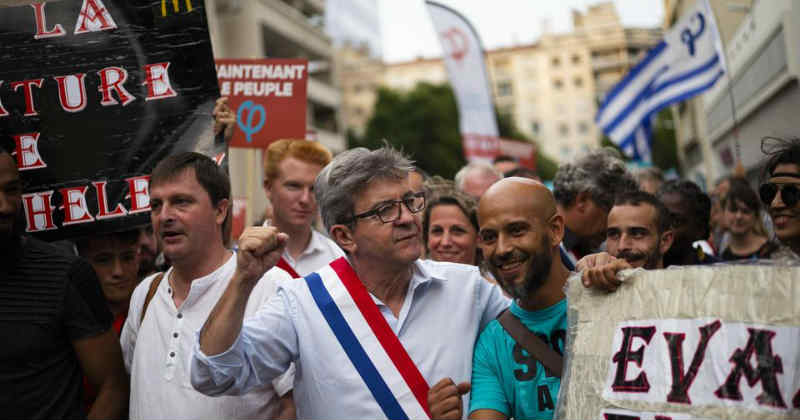
The judicial reform, which includes, among other things, the introduction of a flat-rate fine for the offense of drug use, was approved by the Senate and then by the National Assembly’s Law Commission. The committee made few changes to the original text but did vote to lower the fine to €200 instead of €300. The bill will now go before the National Assembly in plenary session. Since the reform is subject to the fast-track procedure, it will be read only once by both chambers, and this is the last chance for lawmakers to amend the bill. Lawmakers from La France Insoumise have proposed an amendment that redefines Article 37 of the reform—the provision that establishes the flat-rate fine.
This amendment echoes the publication, earlier this week, of a white paper published by French organizations which called on members of Congress to reject this article. It reiterates a proposed law introduced by eleven members of the Ecology–The Greens Group on January 11, 2017. It aims for «the controlled legalization of cannabis use and the establishment, on an experimental basis, of a monopoly on the production and distribution of cannabis and cannabis products.» The members of parliament, including Jean-Luc Mélenchon and François Ruffin, believe that «cannabis is a narcotic that deserves special treatment (…) due to its lower health risks and the widespread nature of its use.» They view the current measure as hypocritical and believe it will bring about no change.
Details of the Proposal
The Greens' proposal for legalization was drafted with the assistance of Francis Caballero, a well-known cannabis advocate, who supports a fairly strict framework for legalization:
- An all-powerful French cannabis authority that would single-handedly oversee the cultivation and distribution of cannabis (no private companies)
- a ban on growing one's own food
- establishment of cannabis bars
When we contacted LFI regarding these proposals, they did not respond to our questions, particularly regarding whether this model represented a new vision for legalization. JLM was, in fact, opening the door to the private sector by allowing production and sales to be regulated by the state but under a system of licenses issued by the government.
Cannabis Production
The text proposes creating a monopoly on the production and distribution of cannabis and cannabis-containing products. This monopoly would be operated by a government agency, the «Française du cannabis.» For more details, refer to the Greens’ original proposal. It explains that the Française du cannabis would designate the regions and plots of land where cultivation would be permitted and would supply seeds to growers, who would then be required to return their entire harvest to the organization. Cultivation is permitted only by producers approved by the monopoly, who act as civil servants and have a cultivation contract with the organization.
Cannabis must be grown outdoors or in a greenhouse, as cultivation under artificial light is prohibited (except for the production of medical cannabis in a laboratory). In general, production must be eco-friendly and environmentally responsible and must not involve the use of pesticides or chemical fertilizers. Any activity related to cannabis that is carried out outside the monopoly’s control is considered illegal and is punishable by three years’ imprisonment and a fine of 45,000 euros. Home cultivation remains prohibited and is punishable by a third-class fine and the immediate destruction of the plants. Exemptions may be granted for scientific research.
Cannabis Use
The use of cannabis would be prohibited in public spaces, though there would be the option to create areas specifically designated for its consumption and purchase. Permanent exemptions may therefore be granted to specialized establishments where customers can purchase cannabis for on-site consumption or to take away. These establishments may only sell cannabis or cannabis-containing products; they may not sell tobacco or alcohol. Furthermore, customers will not be allowed to smoke tobacco on the premises; they are therefore legally required to smoke their joints without tobacco. Temporary exemptions may be granted for public events or gatherings, provided certain conditions are met and with the approval of the mayor of the municipality.
With regard to underage use and driving under the influence, the criminal penalties remain severe. Directly inciting a minor to use, possess, transport, offer, or transfer cannabis is punishable by two years’ imprisonment and a fine of 150,000 euros. If the offense is committed in or around school facilities, the penalty is three years’ imprisonment and a fine of 75,000 euros. Driving under the influence (characterized by a concentration of THC in blood (equal to or greater than 8 nanograms per liter) is punishable by two years’ imprisonment and a fine of 4,500 euros. The penalties are increased if the person is also intoxicated. In addition, the offender’s driver’s license will be suspended or revoked for at least three years, they may be required to perform community service, and they must attend educational courses on road safety and the dangers of drug use at their own expense.
Cannabis distribution
The distribution system would operate through licensing agreements. Operators will be required to maintain a set of specifications to ensure compliance with their legal obligations. The sales limit is set at 100 grams per customer, unless the customer provides identification and the reason for the purchase. Retailers may advertise, but only inside their establishments. Such advertising must not be visible from the outside and must comply with the requirements of the Ministry of Health. Outside of these retail outlets, the promotion of cannabis remains strictly prohibited and is subject to a severe penalty of a 100,000-euro fine.
The monopoly would supply all retail outlets and set the prices for cannabis and cannabis products. It also imposes a value-added tax (VAT) at an increased rate of 25% on the sale of recreational cannabis and an excise tax of 25% on flowers and 50% on resin. This consumption tax is added directly to the retail price, which would result in high prices. With so many taxes on purchases, it is unlikely that prices will be competitive compared to those on the black market. These taxes do not apply to medical cannabis dispensed at pharmacies.
Public Health Mission
The monopoly would commit to absolute transparency regarding the composition of products, their origin, their THC content, and the risks associated with their use. The plan also calls for sending health warning messages to consumers and establishing round-the-clock, free assistance via a toll-free number. The goal of the legalization proposed by the lawmakers is pragmatic and health-oriented; it aims to establish an «ethic of moderation» by prioritizing prevention. In every establishment, the contact information for rehabilitation centers will be prominently displayed.
La France Insoumise emphasizes the public health aspect, but the original text mentions economic considerations such as the creation of approximately 20,000 to 30,000 jobs in agriculture, industry, commerce, and services, as well as 2 to 3 billion euros in revenue and savings for the government.
Will cannabis be legalized in France?
The LFI amendment proposes establishing these institutions on a pilot basis, in accordance with Article 37-1 of the Constitution, which authorizes the Ministry of Justice to conduct pilot programs in participating departments and regions (with a maximum of two regions and six departments), the implementation of certain legal provisions. Certain French departments and the Nouvelle-Aquitaine region have already asserted their right to experiment with the legalization or cultivation of cannabis within their territory. These experiments would result in a report submitted to Parliament by the Government, which would make it possible to assess the consequences and effects of the controlled legalization of cannabis.
This highly ambitious amendment has little, if any, chance of being accepted. In fact, it has already been proposed and rejected once. It must be said that the amendment is completely at odds with the section it proposes to replace. In any case, it seems more sensible to introduce a bill to legalize [the issue] rather than an amendment as part of a comprehensive reform.
The Greens’ bill, for its part, aimed to gauge public opinion on the matter through a shared-initiative referendum. To do so, it would have had to be supported by one-fifth of the members of Parliament (185 deputies and/or senators) before gathering the signatures of 10% of registered voters (nearly 5 million).









«Vincy Gold»: Humboldt Seed Company on the Hunt for Saint Vincent Sativas

Cronos Completes the Acquisition of CanAdelaar for 57.5 million euros

Cannabis with a "bloody" twist: Discover Sensi True Blood and Sensi Sangria, the two new strains from Sensi Seeds

Hemp: The Council of the EU Takes a Stand on New Production and Marketing Rules

Missouri's legal cannabis market accounts for 93 % of consumer spending

THC Gummies: How to Read a Certificate of Analysis Before Buying

British patients now have access to THCV-rich cannabis flowers

Spain: Medical Cannabis Is Coming to About 50 Hospitals

JIHE 2026: Japan’s Largest Trade Show Dedicated to Hemp and CBD Returns to Tokyo with More Than 100 Industry Players

New Caledonia: The Courts Clear the Way for the Return of CBD
-
 Business3 weeks ago
The legal cannabis market in New York exceeds 4 billion $ in revenue
-

 Cannabis in France4 weeks ago
Which countries legalized medical cannabis before France?
-
Cannabis in France1 week ago
France already has 3,000 cannabis retail outlets. None of them are legal.
-
Business4 weeks ago
South Korea is preparing to begin local production of medical cannabis to meet rising demand
-
Cannabis in the U.S.1 week ago
A DEA report confirms that there are no fatal cannabis overdoses
-
Cannabis in Thailand4 weeks ago
From the boom in dispensaries to a purely medical approach: Thailand is revising its cannabis policy
-
Cannabis and driving4 weeks ago
Medical Cannabis and Driving: New South Wales Ends Automatic Penalties for THC
-
Cannabis in France3 weeks ago
France’s Drug Policy Chief Defends Cannabis Prohibition... and Runs Into the Facts
















You must be logged in to post a comment Login