Dealers and consumers, the social divide of the drug trade


A survey by the OFDT (Observatoire Français des Drogues et des Toxicomanies) published in February last year on «Drug use by adolescents in Paris and Seine-Saint-Denis» shows that young drug users are not necessarily those we believe or those we want to believe.
At the same time, an article in Le Monde highlights the fact that the lucrative business surrounding illicit substances, including cannabis, is based on the fact that a large part of the clientele is financially well-off.
Who are drug users?
The sub-regional survey on substance use by 17-year-olds revealed that young people living in the western part of the Ile-de-France region, which includes the wealthiest areas around Paris, were the main users of psychoactive substances. Contrary to popular belief, they consume more than those living in Seine-Saint-Denis, the poorest area in Ile-de-France (and metropolitan France).
The département had a poverty rate of 29% in 2015 according to INSEE, with a proportion of young people under 30 of 43%. The results of the survey dismantle the collective cliché that conflates housing estate «delinquents» with substance users, particularly cannabis users.
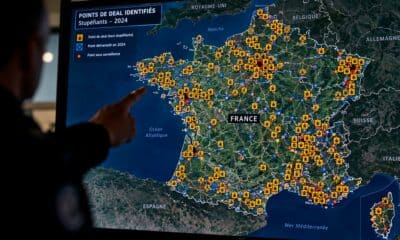
On the other hand, it's true that disadvantaged suburbs are hot spots for drug trafficking, and Seine Saint Denis in particular because of its geographical position and high unemployment rate (19% of 15-64 year-olds in 2015 according to Insee).
L’article in Le Monde entitled «les bourges font tourner le business» explains: «The Hauts-de-Seine département has historically been one of the areas most affected by drug use and trafficking. Its geographical position makes it fertile ground for drug dealing: it borders the wealthiest districts of the capital and is home to some of the most affluent towns in Ile-de-France, including Neuilly-sur-Seine, Boulogne-Billancourt, Levallois-Perret and Issy-les-Moulineaux».
In other words, the divide between dealers from poor backgrounds and consumers from affluent backgrounds rekindles the territorial and social divides in the Ile de France region. Underprivileged suburbs surrounding more affluent areas become sales outlets and platforms for drug trafficking, and the youth of these neighborhoods become suppliers for wealthier consumers. At the same time, it is these poorer suburbs that are targeted by police activity, and their young people who are stigmatized as delinquents.
Who are the targets of the fixed fine?
You'd think that by targeting consumers, the government's proposed fixed-rate fine would have a positive impact on the environment. recently adopted by Parliament would restore the balance but, in reality, a certain social hypocrisy underlies this project. according to Senator Esther Benassa. The fine is unfair to different types of consumer: it will hurt poor users in disadvantaged neighborhoods, who are particularly targeted by police activity. For affluent customers, who have little contact with the police, the fine will simply be «part of the weed budget» and will not act as a deterrent. What's more, it's noteworthy that the elected representatives lowered the fine from 300€ to 200€, citing solvency considerations.
Recently, le Parisien relayed a case brought before the Versailles Magistrates' Court: four young men are suspected of running a drug sales call-center that delivers drugs to homes all over the Ile de France for purchases of €100 or more. At the same time, the above-mentioned article in Le Monde relates the words of a couple in their forties living in the 16th arrondissement of Paris, who explain that they have hashish, weed and cocaine delivered to their homes. Presumably, the fixed-rate fine will only target a certain type of consumer: those who have no other means than to buy their drugs on the street.











«Vincy Gold»: Humboldt Seed Company on the Hunt for Saint Vincent Sativas

Cronos Completes the Acquisition of CanAdelaar for 57.5 million euros

Cannabis with a "bloody" twist: Discover Sensi True Blood and Sensi Sangria, the two new strains from Sensi Seeds

Hemp: The Council of the EU Takes a Stand on New Production and Marketing Rules

Missouri's legal cannabis market accounts for 93 % of consumer spending

THC Gummies: How to Read a Certificate of Analysis Before Buying

British patients now have access to THCV-rich cannabis flowers

Spain: Medical Cannabis Is Coming to About 50 Hospitals

JIHE 2026: Japan’s Largest Trade Show Dedicated to Hemp and CBD Returns to Tokyo with More Than 100 Industry Players

New Caledonia: The Courts Clear the Way for the Return of CBD
-
 Business3 weeks ago
The legal cannabis market in New York exceeds 4 billion $ in revenue
-

 Cannabis in France4 weeks ago
Which countries legalized medical cannabis before France?
-
Cannabis in France1 week ago
France already has 3,000 cannabis retail outlets. None of them are legal.
-
Business4 weeks ago
South Korea is preparing to begin local production of medical cannabis to meet rising demand
-
Cannabis in the U.S.1 week ago
A DEA report confirms that there are no fatal cannabis overdoses
-
Cannabis in Thailand4 weeks ago
From the boom in dispensaries to a purely medical approach: Thailand is revising its cannabis policy
-
Cannabis and driving4 weeks ago
Medical Cannabis and Driving: New South Wales Ends Automatic Penalties for THC
-
Cannabis in France3 weeks ago
France’s Drug Policy Chief Defends Cannabis Prohibition... and Runs Into the Facts















You must be logged in to post a comment Login