A company based in Alsace has launched a urine self-test for cannabis. Is it really useful?

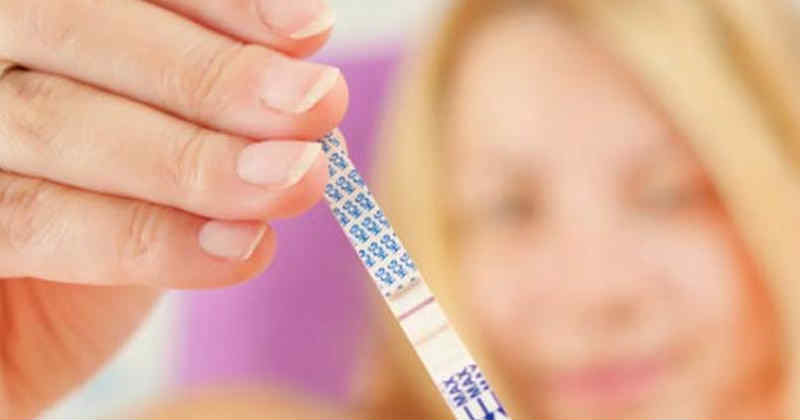
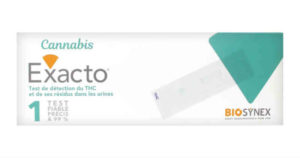
In Strasbourg, Biosynex has developed a self-test to «detect the presence of THC in urine». It is sold individually in pharmacies, and the procedure is similar to that for pregnancy tests. The company's idea is to make testing accessible to as many people as possible, and to make it a common practice for more responsible consumption. From our point of view, this test leaves us wondering.
What, or rather who, is the purpose of this kind of test?
Marika Raynaud, Manager at Biosynex, explains that «in just five minutes, this self-test can detect the chemical derivatives of cannabis in urine for one to three days in the case of «isolated» use, eight to ten days for regular use, and up to 30 days for heavy use. All this with a reliability of 99 %». «Multiple benefits» says the company, which is doubtful.
For example, the company emphasizes the benefits of self-testing before driving, in the same way as breathalyser tests. However, testing for cannabis in urine does not reveal the direct presence of THC in the body, contrary to what is stated on the test packaging. As THC is the element responsible for the psychoactive effect, it is its detection that is relevant to risk assessment. However, in urine, we find the THC metabolite assimilated by the liver, THC COOH. The latter is present in the body much longer than the THC itself, sometimes months after the last use, depending on the frequency and intensity of use, as well as individual factors such as body fat levels.
As a result, the urine test targets cannabis consumption, not its influence.
It is therefore unnecessary to carry out this type of test to determine :
- if you're under the influence of cannabis, you know whether you've smoked or not.
- whether a driver is fit to drive, since driving with THC in the body is illegal.
- in the event of a positive roadside test. These are carried out using saliva tests (urine testing is considered a medical practice and requires the presence of a doctor). Saliva tests are designed to detect the presence of THC in saliva. This indicates consumption over the last 24 hours or so and is not always effective.
In its promotion, the company points out that consumption involves risks, but does not specify that the test does not measure risk, but rather the legal consequences of taking the risk associated with the consumption of an illicit substance. Although, even in the case of road accidents, the notion of right-of-way is determined by the concentration of THC in blood.
In fact, this test will only be used by people who need to take a urine test for professional, academic or legal reasons. A limited population for a test that seeks to be «democratized». Biosynex also suggests another use: as a means for parents to check whether their children are consuming cannabis. Or how to re-establish family dialogue (or not).










Medical Cannabis in Germany: THC Prices Vary by a Factor of 12

France already has 3,000 cannabis retail outlets. None of them are legal.

Morocco's exports of legal cannabis have expanded to 15 countries

Aurora Cannabis Doubles Its Production Capacity in Germany

Tilray is accelerating its operations in Europe thanks to a license in Portugal

Boston will host the 10th annual State of the Cannabis Industry Conference on October 26

A DEA report confirms that there are no fatal cannabis overdoses

A British patient is challenging the NHS's refusal to reimburse medical cannabis

October 2026 CBD Highlights: 10 Strains and Hash to Discover from 5 French Producers

CBD in France: Traceability, Retail Stores, THC and Driving… What the New Bill Proposes
-
 Business2 weeks ago
The legal cannabis market in New York exceeds 4 billion $ in revenue
-

 Cannabis in France3 weeks ago
Which countries legalized medical cannabis before France?
-
Business3 weeks ago
South Korea is preparing to begin local production of medical cannabis to meet rising demand
-
Cannabis in Thailand3 weeks ago
From the boom in dispensaries to a purely medical approach: Thailand is revising its cannabis policy
-
Cannabis and driving3 weeks ago
Medical Cannabis and Driving: New South Wales Ends Automatic Penalties for THC
-
Cannabis in Argentina4 weeks ago
Argentina Opens Its Market to Hemp Flowers Containing 1% of THC
-
Autism3 weeks ago
Autism and Cannabis: Results from the First Placebo-Controlled Trial of NTI164
-
Cannabis in France2 weeks ago
France’s Drug Policy Chief Defends Cannabis Prohibition... and Runs Into the Facts

















You must be logged in to post a comment Login