A medical cannabis experiment in France before the end of 2019?

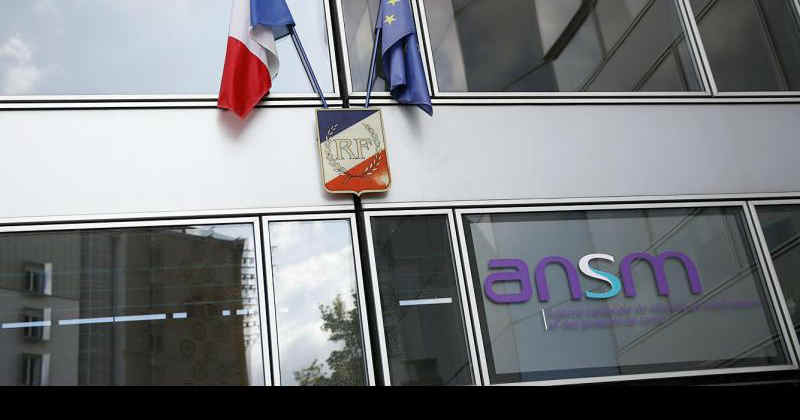
The Expert Committee on the feasibility and appropriateness of introducing medical cannabis in France had made its opinion public following its meeting on December 13. The ANSM was then asked to study the recommendations and accept or reject them. It endorsed the Committee's recommendations and is now planning to convene a meeting to discuss how to make medical cannabis available in France.
Small step by small step
The Agence Nationale de la Santé et des Médicaments, a body affiliated to the French Ministry of Health, thus recognizes the relevance of authorizing the therapeutic use of cannabis. France had already, in a way, recognized this relevance by authorizing certain cannabinoid medicines to apply for marketing authorizations in 2013. However, the focus here is on the plant itself, a first for France, which also has strengthened the repressive legislative arsenal for recreational use.
But don't be too quick to rejoice: for the moment, nothing has been done. The ANSM merely agrees that the therapeutic use of cannabis is appropriate in certain clinical cases. However, it is preparing the ground for the eventual regulation of this use. The ANSM has already agreed that the availability of cannabis will initially be the subject of experimentation, although it does not yet know what this will entail. «The idea would be for the expert committee to define the general conditions before the summer, ideally to launch the experiment by the end of 2019,» ANSM Director General Dominique Martin told AFP.
The Committee's experts will meet on January 30 and throughout the first half of 2019 to discuss how to make medical cannabis available. The CSST has a purely consultative role, and will issue an opinion on the type of prescribers, the distribution and dispensing circuit, administration methods and pharmaceutical forms, dosages and concentrations of active ingredient. The ANSM has already expressed its support for the use of medical cannabis in the following therapeutic situations mentioned by the CSST:
- pain refractory to accessible therapies (drug or non-drug)
- certain forms of severe, drug-resistant epilepsy
- as part of supportive care in oncology
- in palliative situations
- painful spasticity in multiple sclerosis
The experiment assumes that only certain local authorities will be required to implement this framework before it becomes effective across the whole country. The results of the experiment will enable us to adjust certain aspects of patient care and follow-up before nationalization. The right to experiment is enshrined in the constitutional law of march 28, 2003 on the decentralized organization of the Republic. Article 37-1 refers to the right of local authorities to experiment within the framework of the law, but cannabis legislation does not currently allow this. Article 72, on the other hand, allows local authorities to depart from general norms by derogating from legislative provisions. It is likely that the law will only be amended in the event of a successful experiment, and that this second solution will therefore be put forward. Some areas of France have already expressed their willingness to take part in such experiments involving medical and/or recreational cannabis.
The questions we're still asking
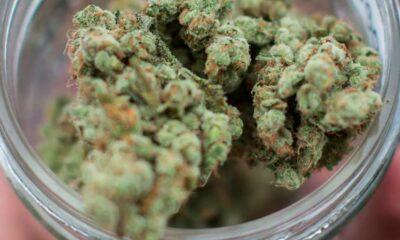
In an interview with L'Express, Nicolas Authier, President of the CSST, explains that many questions remain to be answered. Among them is the method of administration of so-called medical cannabis. The Committee does not recommend smoking cannabis, as it involves significant cardiovascular and pulmonary risks. It indicates that vaporization will be preferred, as well as capsules, topicals, oils and infusions. However, he acknowledges that, in practice, nothing prevents patients from smoking their cannabis after buying it in flower form. Another question is which varieties of cannabis to prescribe, depending in particular on their cannabinoid content.
As for self-cultivation, the professor points out that it will probably not be authorized «for reasons of product quality control, and also because it won't be possible to apply it to everyone». He mentions the hemp sector as a possible producer of medical cannabis: «There is a real hemp industry in France, which is recognized on an industrial level - textiles, insulation, cosmetics... This industry is ready to diversify. Representatives of the agricultural world have already taken a stand, via their members of parliament in particular, with a view to producing therapeutic cannabis with calibrated levels of active ingredients».
Asked about social security reimbursement, he points out that this is not a matter for the committee, and has not yet been discussed by the relevant bodies, namely the Haute Autorité de Santé and the Assurance-Maladie. And for good reason, the question has not yet arisen, since with all these factors added up (consultation of the CSST, experimentation, adjustment, legislative work) it is unlikely that medical cannabis will be legal before 2020 or even later.












«Vincy Gold»: Humboldt Seed Company on the Hunt for Saint Vincent Sativas

Cronos Completes the Acquisition of CanAdelaar for 57.5 million euros

Cannabis with a "bloody" twist: Discover Sensi True Blood and Sensi Sangria, the two new strains from Sensi Seeds

Hemp: The Council of the EU Takes a Stand on New Production and Marketing Rules

Missouri's legal cannabis market accounts for 93 % of consumer spending

THC Gummies: How to Read a Certificate of Analysis Before Buying

British patients now have access to THCV-rich cannabis flowers

Spain: Medical Cannabis Is Coming to About 50 Hospitals

JIHE 2026: Japan’s Largest Trade Show Dedicated to Hemp and CBD Returns to Tokyo with More Than 100 Industry Players

New Caledonia: The Courts Clear the Way for the Return of CBD
-
 Business3 weeks ago
The legal cannabis market in New York exceeds 4 billion $ in revenue
-

 Cannabis in France4 weeks ago
Which countries legalized medical cannabis before France?
-
Cannabis in France1 week ago
France already has 3,000 cannabis retail outlets. None of them are legal.
-
Business4 weeks ago
South Korea is preparing to begin local production of medical cannabis to meet rising demand
-
Cannabis in the U.S.1 week ago
A DEA report confirms that there are no fatal cannabis overdoses
-
Cannabis in Thailand4 weeks ago
From the boom in dispensaries to a purely medical approach: Thailand is revising its cannabis policy
-
Cannabis and driving4 weeks ago
Medical Cannabis and Driving: New South Wales Ends Automatic Penalties for THC
-
Cannabis in France3 weeks ago
France’s Drug Policy Chief Defends Cannabis Prohibition... and Runs Into the Facts
















You must be logged in to post a comment Login