
One year after the launch of the Dutch cannabis experiment, the first trends are emerging

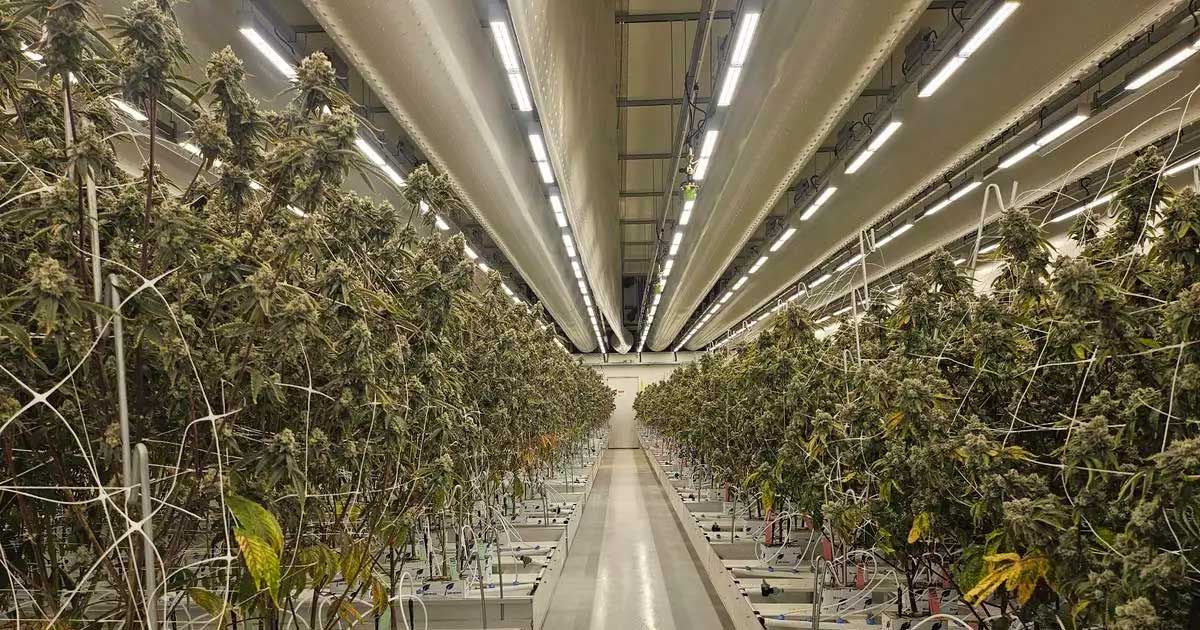
The first significant results from the’Experiment: Closed Coffee Shop Chain In the Netherlands, the’National Pilot Program on the Regulated Cannabis Supply Chain, are beginning to show what happens when coffeeshops transition from a model that is tolerated but legally fragmented to a regulated system, from cultivation to sale.
The picture is mixed. In the ten municipalities participating in the experiment, the coffeeshops offer a wider variety of products; cannabis prices have fallen more sharply than in the comparison municipalities; and customers consider cannabis to offer better value for money. Cooperation among growers, retailers, municipalities, and regulatory authorities has also intensified.
However, the new regulations have not led to a sudden transformation of the Dutch cannabis market. Cannabis use has remained generally stable; no clear effects have yet emerged in terms of public health, safety, or quality of life; and the illicit cannabis market continues to operate alongside the coffeeshops.
These conclusions are based on the first follow-up evaluation conducted by the’Trimbos Institute, Breuer & Intraval and RAND Europe, at the request of the WODC on behalf of the Dutch Ministries of Justice and Security and of Health, Welfare, and Sports.
The researchers note that these results are still preliminary: given the relatively short duration of the experiment, it is not yet possible to draw definitive conclusions.
A Dutch initiative aimed at closing a legal loophole
This experiment addresses one of the central contradictions of the Dutch coffeeshop system: the retail sale of cannabis under strict conditions has long been tolerated, while commercial cultivation and the supply of coffee shops remained prohibited.
As part of this experiment, coffee shops in ten participating municipalities are selling cannabis produced by licensed growers. Their trends are compared to those of ten municipalities where the existing policy of tolerance remains in place.
This study is of an unusual scope. The first follow-up included 85 interviews, surveys conducted among 865 coffee shop customers and 441 people living or working near coffee shops, foot traffic counts at 143 establishments, as well as an analysis of maps of 134 coffee shops. The researchers also drew on an ongoing survey of purchases on the illicit market and police data on drug-related incidents and offenses.
This made it possible to evaluate the experience not only in terms of sales or consumer behavior, but also in terms of its potential effects on the public health, crime, public nuisances, prices, and the illicit supply chain.
Greater variety on coffeeshop menus
Since the baseline measurement, the menus of the coffeeshops The types of substances used by participants in the study have diversified, with a greater variety of cannabis, hashish, and joints now available. This increase appears to be more pronounced than in the municipalities used for comparison.
Diversification goes beyond traditional products. The edibles, the vape pen and concentrates have appeared in an increasing number of participating coffeeshops.
In this regard, the stakeholders interviewed by the researchers expressed concerns about products with levels of THC particularly high. They also noted that the information on the products does not necessarily ensure that consumers understand the product's potency or the appropriate dosage.
So far, however, researchers have found no clear evidence of an increase in health-related incidents. Some stakeholders are nevertheless calling for clearer national regulations on issues such as maximum potency and the information included on packaging.
Marijuana is getting cheaper, while hashish is following the opposite trend
Prices are another indicator showing that the regulated supply chain is changing the market, although not uniformly.
The average prices for marijuana declined more sharply in the municipalities participating in the pilot program than in the comparison municipalities between the initial assessment and the first follow-up. This trend was particularly evident in the nederwiet, locally grown cannabis.
The hashish, on the other hand, followed the opposite trend. Its average price rose more sharply in the participating municipalities, while prices for pre-rolled joints increased slightly in both groups.
Hashish has been one of the recurring challenges of the experiment. During the initial phase, coffeeshop owners reported that the regulated supply did not always offer enough variety, particularly when it came to hash.
According to the interviews, supply has improved as licensed growers have increased their production, which has alleviated some of these initial concerns. As a result, locally produced hash is more expensive than hash imported illegally.
Stable consumption
At this stage, the expansion of the regulated supply has not led to an increase in consumption. Researchers have not observed any significant change in the number of visitors to coffee shops nor in the frequency of their visits. Consumption patterns were also generally comparable between the participating municipalities and the control municipalities.
However, a notable change in purchasing behavior has been observed. Customers at «legal» coffeeshops purchased more cannabis per transaction than during the reference period and rated its value for money in a more positive way. Similar changes were not clearly observed for hashish.
Furthermore, buying more grams with each visit did not correspond to an increase in the frequency of consumption.
There was also a more pronounced increase in the proportion of visitors reporting that they had used cannabis exclusively or primarily during the previous 30 days. This could indicate a certain shift away from hashish, although the available data do not establish the reason for this.
The researchers found no significant changes in the participants' self-reported health status or in the proportion of respondents whose score on the Cannabis Abuse Screening Test (CAST) indicated a high risk of problematic use.
The illicit cannabis market has not disappeared
The illegal cannabis market continues to operate in participating municipalities. Consumers who buy outside of coffeeshops still primarily cite lower prices, perceived better value for money, and the ability to purchase larger quantities.
Delivery services and retailers contacted by phone or through messaging apps remain the primary channels of supply. Consumers also continue to rate illegally purchased products relatively highly in terms of characteristics such as value for money, effects, smell, and taste.
The average amount of hashish purchased per illicit transaction increased in the municipalities participating in the pilot program, while it decreased in the comparison areas. The researchers suggest that this may be linked to shortages of legal hashish during the early stages of the experiment, but explicitly state that the available data do not allow for establishing such a causal link.
In other words, establishing a limited supply chain for coffeeshops does not automatically eliminate competing unregulated distribution. Price, availability, and product selection continue to influence consumer purchasing decisions.
Greater transparency
Municipalities, legal growers, coffeeshop operators, and regulatory authorities have reported more frequent contact and a better understanding of the origin of products and the conditions under which they are produced. Production, transportation, and sales are also increasingly governed by standardized procedures.
The tracking and traceability system, designed to track regulated cannabis from cultivation through retail sale, is at the heart of this system. Its implementation was not without its challenges. Participants reported technical issues, administrative burdens, and difficulties integrating it with existing point-of-sale and management systems. Many of these problems appear to have been teething issues that have since been resolved.
There are also some remaining uncertainties regarding the rules on packaging, product information, food products, and advertising, as well as the division of responsibilities among the various regulatory authorities.
No significant changes in neighborhood safety or quality of life
So far, the experiment has provided little evidence of a significant effect on conditions around the coffee shops. People living or working nearby rated their local quality of life with an average score of 7.6 to 7.8 out of 10, which is generally comparable to national figures. Perceptions of safety in the neighborhood were also rated positively, with a score of about 7 out of 10.
Some respondents reported problems with vagrancy, traffic, or noise, with these issues being mentioned slightly more frequently in the municipalities participating in the pilot program. However, the study does not provide sufficient evidence to directly attribute this difference to the regulated supply pilot.
The initial results provide a snapshot, not a verdict
The emerging Dutch model therefore offers neither clear evidence of success nor proof of failure.
The first follow-up report highlights several concrete changes: greater diversity in cannabis-based products, lower prices for marijuana, a more favorable perception of value for money, and a more transparent relationship between licensed producers, coffeeshops, and government authorities.
At the same time, securing a supply of hashish has proven more difficult; products with high THC content raise public health concerns, and the illicit market remains an alternative source for consumers.
For many of the major policy issues raised by this experiment (consumption, health, crime, safety, and quality of life in neighborhoods), researchers have so far found no evidence no noticeable difference between the pilot municipalities and the control municipalities.
This lack of an immediate effect is significant in itself, but it does not yet constitute a definitive answer. This is the first assessment in a series of follow-ups as part of a multi-year evaluation. The real test will be to determine whether the initial changes will endure once the regulated supply chain has moved beyond its start-up phase and whether a fully operational legal production system will ultimately alter the relationship between Dutch coffeeshops, consumers, and the illicit market.



















One year after the launch of the Dutch cannabis experiment, the first trends are emerging

High Ground: The Crash of a Plane Full of Marijuana That Made History in Yosemite

The United Kingdom Is Moving Closer to a Regulated CBD Market

Mexico's Supreme Court Authorizes Cannabis-Infused Edibles for Personal Use

French medical cannabis remains stalled at the Ministry of Health

Things are heating up between Sherbinski and Doja

Cookies Ordered to Pay $61.5 Million in a Dispute with Its Investors

Frenchfarm is launching its B1G1 clearance sale + free gift

Czech Republic: CBD shops selling synthetic cannabinoids are in the police's crosshairs

Cannabis and CBD: French Drivers Can Now Lose Their License Even Without a Positive Test Result
-
 Cannabis and driving6 days ago
Cannabis and CBD: French Drivers Can Now Lose Their License Even Without a Positive Test Result
-
Cannabis in France1 week ago
Cannabis Legalization: The LFI Bill Has a Major Problem—THC
-
Cannabis in Europe2 weeks ago
Andorra Paves the Way for Medical Cannabis Cultivation
-
Cannabis in France2 weeks ago
Drought: Could Hemp Become the New Hope for French Farmers?
-
Cannabis in France2 days ago
French medical cannabis remains stalled at the Ministry of Health
-

 Business15 hours ago
The United Kingdom Is Moving Closer to a Regulated CBD Market
-
Cannabinoids2 weeks ago
What if CBD enhanced the effects of THC? A comprehensive analysis challenges a common misconception
-
Cannabis in the U.S.2 weeks ago
United States: Congress Rejects Ban on THC Derived from Hemp














You must be logged in to post a comment Login