
What are cannabis edibles and how do you use them?
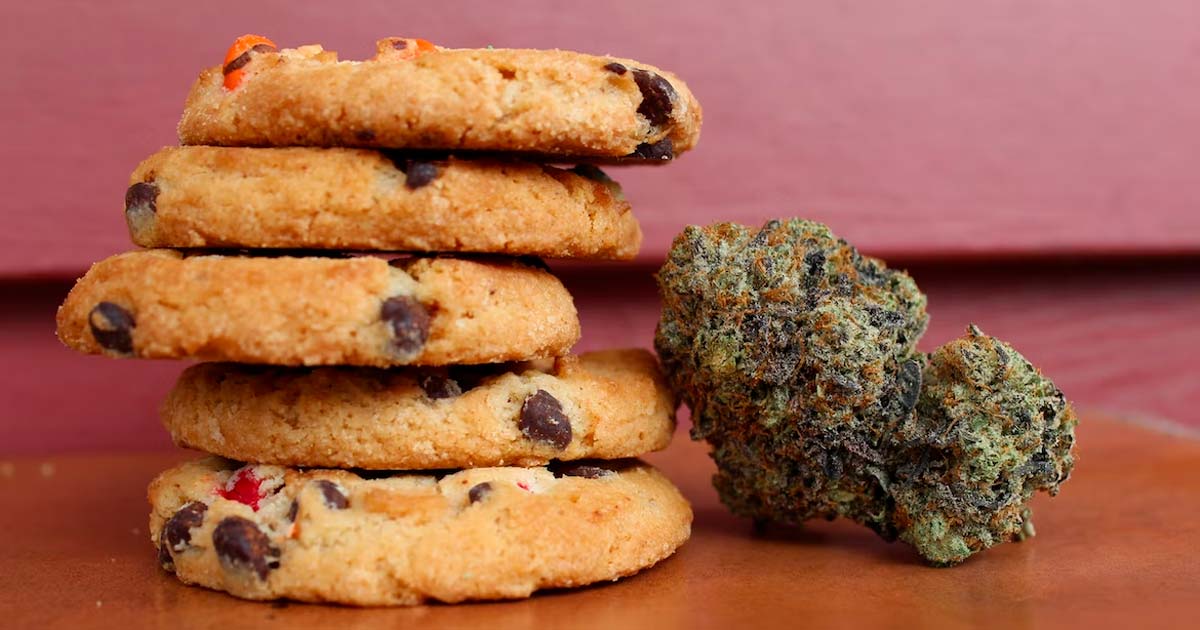
The edibles are a term used to describe all foods and beverages infused with cannabis. Although they have recently gained in popularity edibles are not really new.
Cannabis has long been a part of the human diet, from the time of the traditional drinks in India to Amsterdam's famous space cakes. Today, thanks to advances in infusion methods, you can find a wide choice of cannabis-infused products, candies, seasoning sachets, cooking oils, chocolates, breath strips, sodas and countless other products.
> See all’cannabis food news

History of edibles
The history of edibles to THC is fascinating. Historians have traced the history of the edibles modern times to 1500 BC in India, where people prepared a drink known as bhang by combining ground flowers and leaves, ghee (clarified butter) and spices.
Over time, cannabis gained popularity in Europe, prompting 15th-century Italian scholar Bartolomeo Platina to publish the very first cookbook, «On Honorable Pleasure and Health (1474),» which contained a cannabis recipe:
«To make cannabis yourself more commonly used as flax for yarn, use a mallet to crush the clods collected after a good harvest. Add cannabis to spikenard oil in an iron pot, mash over low heat and liquefy for a healthy cannabis nectar drink. Treat edibles with care and divide them for stomach and head. Finally, remember that anything in excess can be harmful or criminal.»
Edibles continued to be a part of cuisine the world over, but it took the legendary Alice B. Toklas, an expatriate living in Paris with her partner, Gertrude Stein, to prove that edibles didn't need to be cooked to be enjoyed. Her friends, including Ernest Hemingway, Henri Matisse and Pablo Picasso, were undoubtedly delighted by her creations. Toklas« recipe became famous in the 1954 book »The Alice B. Toklas Cookbook« as »Haschich Fudge", although it contains neither chocolate nor hashish:
«Take 1 teaspoon black pepper, 1 whole nutmeg, 4 medium cinnamon sticks, 1 teaspoon coriander. All this should be pulverized in a mortar. About a handful of pitted dates, dried figs, shelled almonds and peanuts: chop and mix. A bunch of cannabis sativa can be pulverized. Along with the spices, sprinkle it over the fruit and nut mixture, then knead. About a cup of sugar dissolved in a large slab of butter. Rolled into a cake and cut into walnut-sized pieces or balls, it should be eaten with care. Two pieces are more than enough.»
The Toklas legend was further amplified with the arrival of «I Love You, Alice B. Toklas», a 1968 film starring Peter Sellers, whose character devours hash brownies and marries a hippie instead of his bride. The depiction of hash brownies on the silver screen has immortalized them in cannabis cultures around the world.
The advantage of consuming edibles cannabis-infused is the ability to experience the effects of cannabis without having to smoke flower or vaporize concentrates. Consumption is easy and intuitive - we all know how to eat and drink.
What's not easy or intuitive with the edibles, is the fact that it can take anywhere from 30 minutes to two hours for the effects to kick in. As the cannabis contained in edibles has to pass through your digestive system before entering your bloodstream, the effects can take hours to manifest themselves, gradually building in strength until they peak. The euphoria can then last from a few hours to an entire day, depending on the quantity consumed.
If you'd like to try edibles for the first time and want to know how to find the right product for your needs, here's the guide you need.
How to try edibles for the first time?
Try the edibles for the first time can be intimidating, but you need to take things slowly, as we'll explain in a four-step process. Here are the key points to remember for an optimal first-time experience. edibles :
- Try some edibles containing both THC and CBD
- Start with 2 mg THC or less
- Look for products that are easy to dose
- Wait at least two hours before consuming more, preferably 24 hours.
Step one: choose your cannabinoid
The cannabinoids are chemical compounds present in both cannabis and the human body.
You can find cannabinoids in cannabis and in your own body. Although we have different names to distinguish the two: endocannabinoids and phytocannabinoids. Endocannabinoids are the cannabinoids we produce in our own bodies. Phytocannabinoids are produced by the cannabis plant.
Often referred to as cannabinoids for short, we can thank the phytocannabinoids for the mental and physical effects we experience when we consume cannabis. While more research is needed, they have the potential to affect a range of processes in our bodies, from pain and inflammation to anxiety and sleep. We have a full list of cannabinoids for you to read later, but for simplicity's sake and to reflect what's most widely available on the market today, we'll focus here on the THC and CBD.
For a psychotropic effect, THC is most often used. As the most abundant cannabinoid in the cannabis plant and the one known to produce the classic weed high, THC tends to attract a lot of attention. Depending on who you ask, this famous cannabinoid can produce feelings of euphoria, Others may experience confusion, short-term memory loss, changes in time perception. Others may experience confusion, short-term memory loss, changes in time perception, increased heart rate, decreased coordination and anxiety. Starting with the lowest possible dose and combining it with other cannabinoids (which we'll talk about in a minute) is the safest way to experience and avoid some of these potentially unpleasant side effects.
For a barely perceptible sense of calm, choose CBD. Contrary to popular belief, CBD does have psychoactive effects, but not in the same way as THC. That said, taking a lot of CBD and hoping it will trigger the euphoric feelings associated with THC is like hoping to start your car with your house key. So, while CBD isn't intoxicating, it's also been shown to be more effective at fighting anxiety. If you'd rather risk feeling nothing at all than feeling too much, start with some edibles with CBD only.
For a balanced high, choose a combination of THC and CBD. When THC and CBD work together, users tend to experience a smoother, more nuanced high than a THC-only high. In the presence of CBD, they're also far less likely to suffer from THC-induced paranoia. Newcomers to the world of cannabis are well advised to try a combination of cannabinoids if their aim is to experience a perceptible yet soothing high.
Step 2: Learn about milligrams
To assess the effect of edibles and find the ideal dose, the milligram (mg) is your best friend. The THC or CBD content of all ingestible cannabis products - whether drink or gum - is measured in milligrams. Go into any legal, licensed dispensary and you'll see that milligrams figure prominently on the label of every ingestible product. Milligrams are essential in determining the minimum dose you need to get the effects you want, and the maximum amount of cannabinoids you can tolerate before experiencing side effects.
Long story short: start with 2 mg THC. THC affects each person differently, so 2 mg can be considered a microdose, a low dose or a perfect dose depending on the person. If you consume more than 2 mg for your first time, you risk feeling more intoxicated than you'd like and for longer than you'd like. With 2 milligrams, your worst-case scenario is to feel nothing at all, which is preferable to feeling too much.
If you're looking to try edibles with CBD only, 10 mg of CBD is an excellent starting point.
The same advice applies to those who want to try both: start with 2 mg of THC and 2 mg or more of CBD. You can achieve this combination by buying two separate products containing THC or CBD and taking them at the same time. You can also choose from a variety of products containing both.
Step 3: Choose your product
Are you determined to buy cannabis-infused candy? Or are you simply looking to avoid inhalation while feeling the effects as quickly as possible? These days, you can find a range of potencies for virtually any type of product on the legal market.
For a classic edible experience, try weed chocolates or candies. These products are easy and fun to consume, and the effects are felt between 30 minutes and two hours after consumption. Most legal markets offer plenty of low-dose chocolates and gummies these days, so have fun exploring the many options available to you.
For a relatively fast-acting edible experience, try a cannabis drink. You'll have fewer options, as most weed drinks are still designed for high-tolerance cannabis users, but low-dose options on the legal market have improved dramatically in recent years. Effects tend to come on more quickly with weed drinks - usually within 30 minutes of consumption and certainly within an hour.
Whichever route you choose, look for products that are easy to dose. Precision is essential when starting out. So, while it may be tempting to nibble the corner of your friend's 100 mg chocolate bar or measure out a teaspoon of the high-potency drink on sale at your dispensary, avoid disaster by starting with products specifically designed for low-dose cannabis users.
Step 4: Be patient
As already mentioned, ingested cannabinoids are absorbed by the digestive system, which means you'll have to wait much longer to feel the high than with a joint or bong. It takes between 30 minutes and two hours to feel the effects of your edible product, and once they kick in, you can expect to make them last several hours longer.
After taking your first dose, wait at least two hours before taking another dose. Or better still, wait 24 hours before trying a larger dose. This way, you can better assess the effect of 2 mg versus 4 mg, 5 mg and so on. If, for example, 2 mg THC does nothing for you after two hours, wait a full day and increase the dose by 1 to 2 mg, for a total of 3 to 4 mg THC. Repeat the process until you find the range that suits you best.
Pro tip: read the label. Then read it again. A package of weed candy usually lists the number of milligrams of cannabinoids per serving and the total number of milligrams in the entire package. You can always eat or drink more, but you can't un-weed it, so make sure you know the potency per serving before you consume.
A word about making cannabis edibles at home
You can easily make your own cannabis butter at home by infusing butter or oil with dried cannabis flower. But the real question is whether you should do it.
While it is relatively easy to cook with cannabis and make edibles to cannabis from scratch, it can be very difficult to determine the precise dosage of the edibles homemade. Calculating potency per serving involves a bit of complicated mathematics and a lot of confidence in the homogeneous distribution of cannabinoids.













CBD is said to promote athletic recovery, without improving performance

294 cannabis clubs in Chile: a booming movement with uneven distribution

Chronic Sciatica: New York Approves First Clinical Trial of a THC-Based Medication

United States: The DEA is accelerating the integration of medical cannabis at the federal level

Florida is nearing one million patients using medical cannabis

Uruguay Revives Its Plan to Allow Tourists to Legally Access Cannabis

In Brazil, researchers are developing an innovative CBD eye drop

Autism: Medical Cannabis Is Linked to Reduced Anxiety

The $28 billion U.S. hemp market remains under threat

