Dabber can produce cancer-causing toxins

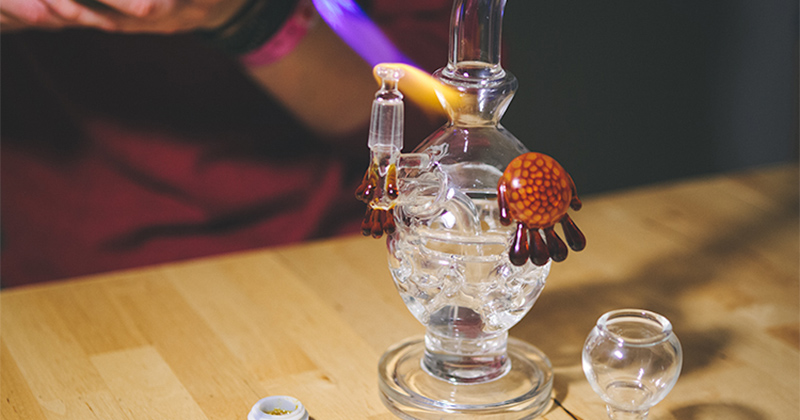
Researchers at the University of Portland found benzene and other potentially carcinogenic chemicals in the terpene vapor produced by replicating the conditions of dabbing.
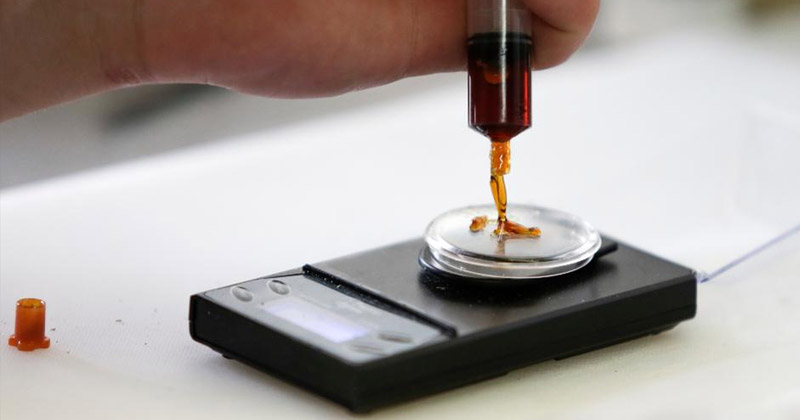
This study raises some concerns about the safety of the dabbing, a practice that has become popular among cannabis users. This practice involves placing a cannabis extract on a hot surface and inhaling the vapor. Until now, concerns have focused primarily on the high concentrations of cannabinoids In these extracts, up to 99% of THC.
The risks associated with extraction also relate to the production process itself, which—if not carried out in accordance with appropriate safety regulations—can lead to explosions due to the use of flammable gases.
«Given the growing legalization of cannabis across the United States, it is imperative to study the toxicology of its use to guide future policies,» explains Rob Strongin, a professor at the University of Portland and the study’s lead author. «The results of this research clearly indicate that dabbing, even though it is considered a form of vaporization, can in fact release significant amounts of toxins.».
Strongin and his team therefore studied the chemical profile of the terpenes, the molecules that give cannabis and other plants their aromas, by vaporizing them in a manner similar to that of a dabber.
Terpenes are increasingly being used in e-cigarette liquids, as we have Recently seen at Vapexpo. Previous research by the same team had already found toxic chemical residues in the vapor from e-cigarettes when they were set to high temperatures.
Various experiments have shown high levels of benzene, a carcinogenic chemical, and methacrolein (MC), a known irritant that is also found in cigarette smoke.
The research team has identified two key areas of concern:
- the breakdown of terpenes when heated to high temperatures, which produces methacrolein and benzene
- The difficulty in controlling the temperature of the nail puts users at risk by exposing them to the «outgassing» of harmful substances. The presence of methacrolein increases with temperature. At 322°C, there is no MC
The research team must now focus on studying the degradation of «whole» cannabis extracts used in dabbing and in cannabis oil-based vaporizers.
The PDF of the full study can be found here.








«Vincy Gold»: Humboldt Seed Company on the Hunt for Saint Vincent Sativas

Cronos Completes the Acquisition of CanAdelaar for 57.5 million euros

Cannabis with a "bloody" twist: Discover Sensi True Blood and Sensi Sangria, the two new strains from Sensi Seeds

Hemp: The Council of the EU Takes a Stand on New Production and Marketing Rules

Missouri's legal cannabis market accounts for 93 % of consumer spending

THC Gummies: How to Read a Certificate of Analysis Before Buying

British patients now have access to THCV-rich cannabis flowers

Spain: Medical Cannabis Is Coming to About 50 Hospitals

JIHE 2026: Japan’s Largest Trade Show Dedicated to Hemp and CBD Returns to Tokyo with More Than 100 Industry Players

New Caledonia: The Courts Clear the Way for the Return of CBD
-
 Business3 weeks ago
The legal cannabis market in New York exceeds 4 billion $ in revenue
-

 Cannabis in France4 weeks ago
Which countries legalized medical cannabis before France?
-
Cannabis in France1 week ago
France already has 3,000 cannabis retail outlets. None of them are legal.
-
Business4 weeks ago
South Korea is preparing to begin local production of medical cannabis to meet rising demand
-
Cannabis in the U.S.1 week ago
A DEA report confirms that there are no fatal cannabis overdoses
-
Cannabis in Thailand4 weeks ago
From the boom in dispensaries to a purely medical approach: Thailand is revising its cannabis policy
-
Cannabis and driving4 weeks ago
Medical Cannabis and Driving: New South Wales Ends Automatic Penalties for THC
-
Cannabis in France3 weeks ago
France’s Drug Policy Chief Defends Cannabis Prohibition... and Runs Into the Facts
















You must be logged in to post a comment Login