Cannabis in Austria
In brief In detail Cannabis NewsRecreational cannabis is strictly prohibited in Austria, and medical cannabis is limited to a few authorized medications, with no access to flower. CBD and hemp containing less than 0.3 % of THC are legal, but the sale of CBD flower is regulated by the Tobacco Monopoly Act. Find all the latest news and laws regarding cannabis in Austria here.
Legal Status of Cannabis in Austria
-
Recreational cannabis:
Illegal
Cannabis is illegal in Austria, but the cultivation of hemp is permitted as long as the plants do not begin to flower. Possession of less than 10 grams of cannabis has not been subject to criminal prosecution since 1971.
-
Medical cannabis:
For Medical Use Only
Medical cannabis is permitted in Austria in the form of Sativex and Dronabinol, but not in the form of dried flowers.
-
CBD:
Restricted
CBD is banned in food and cosmetic products in Austria, and a tobacco tax applies to CBD flowers. There are also legal gray areas regarding the legality of sales.
-
Possession:
Decriminalized
Possession of less than 10 grams of cannabis has not been subject to criminal prosecution since 1971.
-
Personal interests:
Restricted
Cannabis cultivation is permitted in Austria, provided that the plants are not allowed to flower.
Last checked: October 7, 2026
Which countries in Europe have legalized cannabis?Do you have a question about cannabis in Austria?
✨ Newsweed AI is based on our articles and verified data.
History of Cannabis in Austria
As in the rest of Central Europe, hemp has been cultivated in Austria for centuries for its fibers and seeds, which are used in textiles, rope-making, and food. The criminalization of cannabis was part of the 20th-century international movement to control narcotics: Austria enacted a narcotics law as early as 1951, then revised it in 1997 with the Act on Addictive Substances (Narcotics Act, SMG), still in effect under the name of Narcotics Act or the «Addictive Drugs Act.» This law maintains the ban on cannabis while introducing the principle of «treatment rather than punishment» for users, which allows prosecutors to drop charges for small quantities intended for personal use, subject to certain conditions.
Since then, the country has maintained a more restrictive stance than its neighbors. Germany and the Czech Republic have implemented reforms allowing for the use and cultivation of cannabis, while Austria has not adopted any legalization measures. The debate now centers on legal cannabis with low THC content: CBD flowers, food products, and cosmetics.
Cannabis Legislation in Austria
Recreational cannabis: prohibited
The production, importation, and sale of recreational cannabis are strictly prohibited under the Addictive Substances Act. Violations are punishable by administrative fines of up to 36,300 euros and, in the event of nonpayment, by imprisonment for up to six weeks. Anyone who illegally purchases, possesses, produces, transports, imports, exports, or transfers cannabis, or cultivates the plant to obtain narcotics, faces up to one year in prison or a fine of up to 360 daily fines. Large-scale trafficking is punished more severely.
Medical cannabis: authorized medications, no flowers
Only the Austrian Agency for Health and Food Safety (AGES), or its subsidiaries in which it holds at least a 75 % stake, may cultivate cannabis for the manufacture of medications or for research purposes. The production, manufacture, processing, purchase, and possession of medical cannabis require specific authorization from the Ministry of Health, and its distribution is restricted to authorized recipients and pharmacies.
Patients do not have access to cannabis in its raw form: the plant is classified as a narcotic and, in principle, cannot be prescribed. There are two exceptions: cannabis extract preparations authorized as pharmaceutical products, and delta-9-THC with a purity of more than 95 %, used for compounded preparations made in pharmacies upon prescription.
CBD and Hemp Flowers
CBD in its pure form is not classified as a narcotic in Austria, and products containing the flowers or fruits of certain varieties of hemp are not considered addictive substances if their THC content does not exceed 0,3 % before, during, and after production. Their marketing, however, is subject to other legal frameworks.
With regard to food, the Ministry of Health considers food products containing CBD extracts to be novel foods (novel food) as defined by European Regulation 2015/2283. To date, no CBD extract has been authorized by the European Commission, and the EFSA has identified gaps in the data regarding CBD’s safety. As for cosmetics, the ministry classifies cannabis extracts as narcotics, which prohibits their placement on the market, even though the Commission has included naturally occurring CBD in the CosIng database—which is not legally binding on member states.
Sales of CBD flowers have been highly volatile since 2025. A judicial interpretation has classified these flowers under tobacco law: they are subject to the tobacco tax and, in principle, to the Tobacco Monopoly Act, which restricts their sale to licensed tobacco retailers. Specialty shops suffered heavy losses before a partial amendment to the Tobacco Monopoly Act established a transitional period allowing licensed shops to continue selling until the end of 2028.
Industrial hemp
Products derived from hemp varieties containing less than 0.3 % of THC may be produced and distributed without authorization under the Addictive Substances Act. Their marketing remains subject to the rules applicable to food and cosmetics, as described above.
News and Outlook
Austria remains one of the most restrictive countries in Europe, with no legalization proposals currently under discussion. Key issues to watch include the future of CBD flowers after the 2028 transition period, legal challenges to the extension of the tobacco monopoly, the potential European authorization of CBD as a novel food, and calls from industry stakeholders for a specific cannabis law. Follow our Cannabis News in Austria See below for updates to the law.
Related searches
Cannabis in MaltaCannabis in DenmarkCannabis in LuxembourgCannabis in PortugalCannabis in the UKCannabis in the NetherlandsCannabis in AlbaniaCannabis in GermanyCannabis in BelgiumCannabis in CroatiaCannabis in SpainCannabis in FinlandCannabis in FranceCannabis in GeorgiaCannabis in GreeceCannabis in IrelandCannabis in IcelandCannabis in ItalyCannabis in LithuaniaCannabis in North MacedoniaCannabis in NorwayCannabis in PolandCannabis in the Czech RepublicCannabis in SwitzerlandCannabis in UkraineLatest news on Cannabis in Austria
-
 Cannabis in Canada2 months ago
Quick Hit July 2026: What We Missed in Recent Weeks
As regular Newsweed users will have noticed, we've been on hiatus for the past few weeks. But since there's no news to wait for us, here's a recap...
-
 Cannabis in Austria5 months ago
Austrian court deals first blow to proposed tobacco monopoly on hemp flowers
A ruling by Austria's Federal Finance Court (BFG) has dealt the first blow to authorities attempting to bring flowers from...
-

 Cannabis in Austria11 months ago
Austrian hemp industry also mobilizes against proposed tobacco monopoly on CBD flowers
After months of legal uncertainty, the Austrian government has approved an amendment that will place smokable hemp flowers under the country's tobacco monopoly...
-
Cannabis in Austria1 year ago
Austrian CBD industry in crisis due to tobacco's monopoly on hemp flowers
Austrian CBD retailers are fighting for their survival following a decision handed down by the administrative court at the end of 2024. This decision...
-
 Cannabis in Austria2 years ago
Austria imposes tobacco tax on CBD flowers«
The Verwaltungsgerichtshof (VwGH), Austria's administrative court, recently ruled that dried hemp flowers containing up to 0.3% THC should be subject to the...
-

 Cannabis in Austria4 years ago
Austria bans HHC production and trade
As in France, hexahydrocannabinol - better known as HHC - is enjoying growing popularity in Austria among people seeking a «legal high» ....
-

 Cannabis in Austria4 years ago
Austria: cannabis ban before the Constitutional Court
In Austria, possession of even the smallest quantity of cannabis is a punishable offence. However, the prohibition of cannabis is being called into question, and...
-

 Cannabis in Austria5 years ago
A majority of Austrians in favor of legalizing cannabis
Will Germany's decision to legalize cannabis increase pressure on its neighbors to do the same? A recent poll in Austria shows...
-
 Cannabis in Austria8 years ago
Austrian associations address Europe at novel food meeting and call for CBD market regulation
The European Commission's working group and representatives of the European Food and Safety Authority met yesterday in Brussels to discuss the issue of...
-
 Beauty8 years ago
Austria bans CBD in food and cosmetic products
As elsewhere in Europe, the Austrian CBD industry has developed on a legal limbo. Its trade is neither officially authorized nor regulated, but neither...
-
 Cannabis in Austria9 years ago
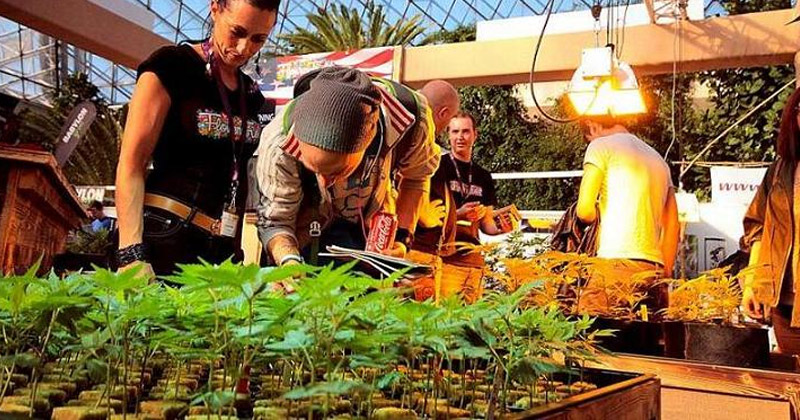
Austria: government seeks to ban cannabis clones and seeds
Yesterday, we told you about an Austrian soccer club sponsored by a cannabis cuttings company. The Austrian government has a different view...
-
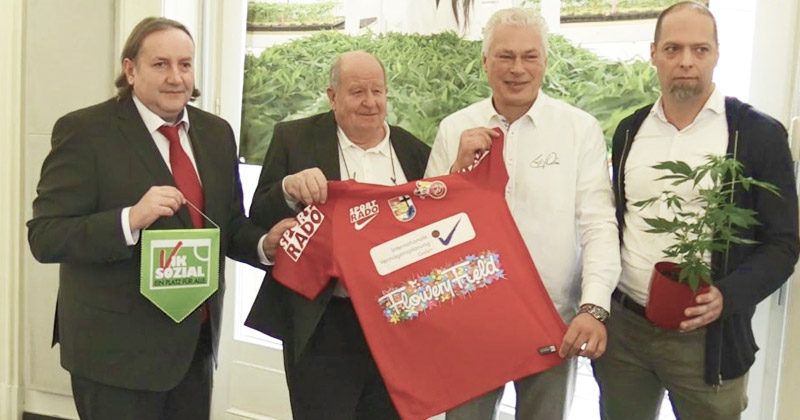 Cannabis in Austria9 years ago
Austria: a soccer club sponsored by a Cannabis cuttings producer
Wiener Viktoria, Austria's fourth division soccer club, welcomed a new sponsor in November: Flowery Field, a company specializing in the cultivation and sale...
-
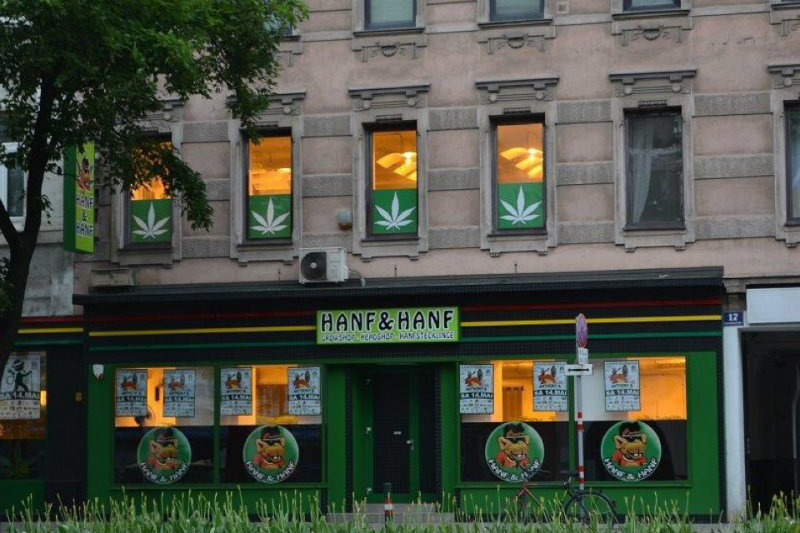 Cannabis news10 years ago
Cannabis in Austria: the situation in 2017
Like Germany, Austria is tolerant in terms of consumption and focuses on providing support for smokers. As early as 1971, Austria authorized the possession of cannabis...
-
 Cannabis in Austria11 years ago
Opening of the Hemp Embassy in Vienna
Austria has neither decriminalized nor legalized cannabis. Yet a month ago, the Bushplanet company opened the Hemp Embassy in Vienna. As indicated on its website:...





France already has 3,000 cannabis retail outlets. None of them are legal.

Morocco's exports of legal cannabis have expanded to 15 countries

Aurora Cannabis Doubles Its Production Capacity in Germany

Tilray is accelerating its operations in Europe thanks to a license in Portugal

Boston will host the 10th annual State of the Cannabis Industry Conference on October 26

A DEA report confirms that there are no fatal cannabis overdoses

A British patient is challenging the NHS's refusal to reimburse medical cannabis

October 2026 CBD Highlights: 10 Strains and Hash to Discover from 5 French Producers

CBD in France: Traceability, Retail Stores, THC and Driving… What the New Bill Proposes
