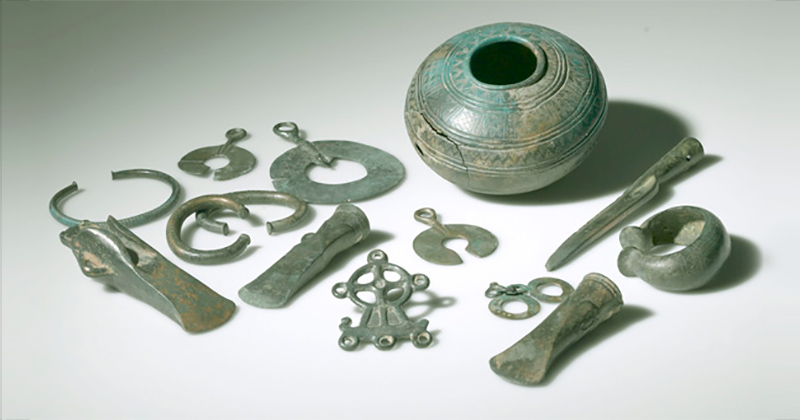
Who were the first cannabis smokers?
A group of researchers, led by Dr. Tengwen Long of the Institute of German Archaeology, has set out to unravel the mystery of the first cannabis smokers.
The Cannabis plant is one of the oldest plants in use on Earth. Yet the origins of its domestication by ancient civilizations are partly unknown. The Chinese were already cultivating hemp and cannabis around 10,000 BC for its fiber, for cooking and as a medicine. It was also part of the pharmacopoeia, but no document mentions the use of cannabis for recreational purposes. The Indians, on the other hand, were considered the forerunners of the psychoactive use of the herb. They consumed cannabis in bong form or in dairy drinks such as lassi.
By analyzing archaeological cannabis data (pollens, fibers, fruits and pottery), the researchers determined that the psychoactive use of cannabis would in fact date back over 7,000 years and originally from Eastern Europe. One of the 4 prehistoric tribes, the Yamnas, were the first to inhale the psychoactive fumes to escape.
International dealers« behind recreational use
The Yamnas, nomads from the steppes of the Caucasus and the northern Black Sea, were the first civilization to training horses and smoke cannabis. These Indo-Europeans could be at the origin of the first cultural melting pots, able to move quickly and travel great distances. The archaeologists' study also suggests that the Yamnas used cannabis as an international currency of exchange, on the forerunner of the famous Silk Road.
Archaeologists speculate that during their trading expeditions, the Yamnas shared the dried herbs that grew naturally in their territories. These budding traders exported these customs as far as China via India and the Fertile Crescent.
Archaeologists believe, however, that further research is required. In addition to this cannabic heritage, the Yamnas could be the common ancestors of all European ethnic groups.















JIHE 2026: Japan’s Largest Trade Show Dedicated to Hemp and CBD Returns to Tokyo with More Than 100 Industry Players

New Caledonia: The Courts Clear the Way for the Return of CBD

The Brazilian medical cannabis market continues to grow

Morocco: Three Cannabis-Based Medications Approved for the Treatment of Epilepsy

Canopy Growth Receives New EU-GMP Certification to Strengthen Its Presence in Europe

Three years after legalizing medical cannabis, Albania continues to establish regulations for it

The first plant-based medical THC spray arrives in the United Kingdom

Medical Cannabis in Germany: THC Prices Vary by a Factor of 12

France already has 3,000 cannabis retail outlets. None of them are legal.

