
Cannabis extraction: methods and processes
Cannabis extraction refers to the process by which the cannabinoids and terpenes present in the plant are recovered from the plant material to produce a concentrate. A wide variety of machines, solvents and techniques are available to extract these compounds, from mechanical methods accessible to all, to high-pressure industrial processes.
Man has been extracting plants for thousands of years. In the world of cannabis, the first mechanical extractions (hashish, charas) date back several centuries to India and the Middle East. Chemical extraction, on the other hand, was introduced at the end of the 19th century by North American pharmaceutical companies: in 1896, Parke, Davis and Co - now owned by Pfizer - marketed a product known as "Cannabidiol". extract cannabis fluid listed in its medical catalog until 1937.
Two main extraction families
All extraction methods can be divided into two families depending on the principle used to separate the trichomes from the plant material:
- Mechanical separation The trichomes are physically detached from the plant using pressure, cold or filtration, without the use of chemicals.
- Chemical solvent extraction uses a non-polar solvent (butane, propane, ethanol, CO2) to dissolve the trichomes and separate them from the plant material.
Mechanical separation
Mechanical methods use centrifugal action, gravity, filtration or pressure to separate the trichome glands from the plant. They are generally less costly to implement and require no chemical solvents, making them highly valued for the purity of the final product.
Screening: Kief and Dry Sift
The ground plant material is passed over fine-mesh sieves. The exposed trichomes detach and fall off as a powder known as kief. A series of sieves of decreasing mesh size is used to obtain a dry sift of higher purity, reaching 70 to 90 % of trichomes.
Ice water extraction: Bubble Hash
Plant material, ice and water are combined and stirred until the trichomes, weakened by the cold, detach and fall to the bottom. The solution is then filtered through a series of bubble bags to produce bubble hash, graded according to the fineness and purity of the trichomes collected.
Pressing: Rosin
The hot-pressing method, known as Rosin Tech, simultaneously applies heat and pressure to flower, kief or bubble hash to extract the cannabinoids and terpenes. A hydraulic press with heated platens can exert up to 40,000 pounds of force. Visit rosin This product is a high-purity, solvent-free concentrate.
Chemical solvent extraction
Solvent extractions are the most effective methods for removing trichomes of the plant and are the preferred method of the commercial cannabis industry. As trichome glands are non-polar compounds, they require a non-polar solvent for effective extraction.
Solvents are used in liquid form to «wash» the plant of its active compounds. The solvent must then be completely removed from the solution before the concentrate can be safely consumed. Extractors prefer solvents with very low boiling points to preserve the full spectrum of compounds without degrading them during purging.
Butane Hash Oil (BHO)
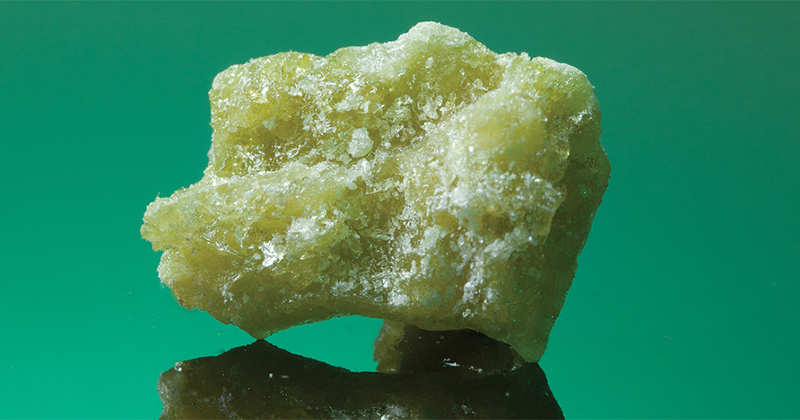
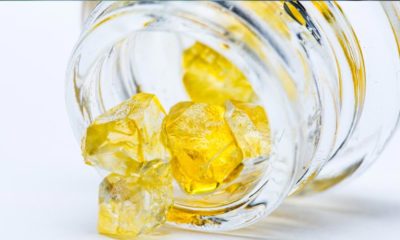
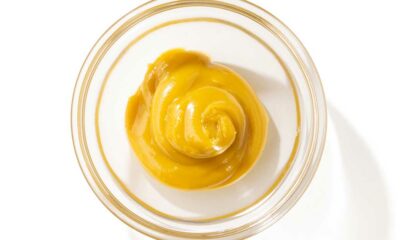
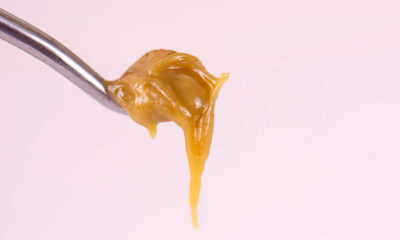
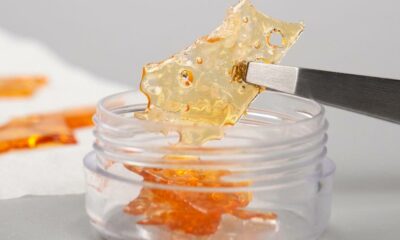
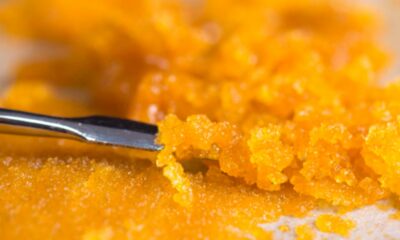
Butane is the most widely used gaseous solvent in cannabis extraction. Passed through the plant material, it extracts the cannabinoids and terpenes. The raw concentrate is then vacuum-purged to remove butane residues. Depending on the parameters applied after extraction, the BHO takes on different textures: shatter, wax, budder or crumble.
Propane Hash Oil (PHO)
The PHO works on the same principle as BHO, with propane as solvent. Its lower boiling point preserves more terpenes during extraction.
Ethanol Hash Oil (EHO)
L’EHO uses ethanol as a solvent. Alcohol extracts cannabinoids efficiently, but can also capture chlorophyll if the plant is left to soak for too long, hence the interest in cold extractions (QWET). Ethanol is the base for most cannabis tinctures.
Supercritical fluid extraction (CO2)
Supercritical fluid extraction (SFE) uses CO2 that has been brought beyond its critical point, at the boundary between the liquid and gaseous states, where its solubility increases considerably. In this state, the CO2 moves through plant matter like a gas, but dissolves trichomes like a liquid.
Unlike butane extractions, which operate at low pressures (15 to 150 PSI) and low temperatures (-40 to -60°C), supercritical CO2 requires high pressures (1,000 to 9,000 PSI) and variable temperatures (1 to 101°C). This is the cleanest industrial method, with no toxic solvent residues, but also the most expensive in terms of equipment.
CO2 is a selective solvent: by varying pressure and temperature, extractors can specifically target certain compounds - terpenes first, then cannabinoids progressively - unlike butane, which extracts all compounds in a single pass.
Input materials
The quality of the final concentrate depends largely on the starting material:
- Dried nug run Cannabis buds concentrate the highest density of trichomes compared with the rest of the plant. Nug run extractions produce concentrates with more intense aromas, flavours and effects.
- Trim Trim: made from sugar leaves cut off when cleaning the buds. Less rich in trichomes than nugs, trim produces concentrates with fewer terpenes and cannabinoids.
- Fresh frozen plants The terpene profile is fully preserved by immediately freezing the freshly cut plant in liquid nitrogen or in the freezer. This is the starting material for live resin, the most aromatic concentrate available on the market.
Further information
This page presents the basic principles of extraction. For a complete overview of all available concentrates (BHO, rosin, distillate, bubble hash, THCA diamonds, terp sauce) see our complete guide to cannabis extracts and concentrates.












CBD is said to promote athletic recovery, without improving performance

294 cannabis clubs in Chile: a booming movement with uneven distribution

Chronic Sciatica: New York Approves First Clinical Trial of a THC-Based Medication

United States: The DEA is accelerating the integration of medical cannabis at the federal level

Florida is nearing one million patients using medical cannabis

Uruguay Revives Its Plan to Allow Tourists to Legally Access Cannabis

In Brazil, researchers are developing an innovative CBD eye drop

Autism: Medical Cannabis Is Linked to Reduced Anxiety

The $28 billion U.S. hemp market remains under threat

