


Budder, Badder, Batter: a complete guide to these cannabis concentrates
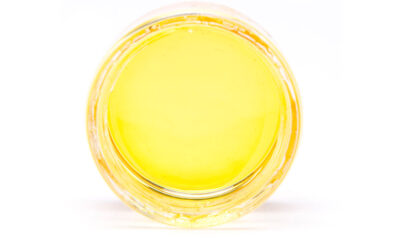
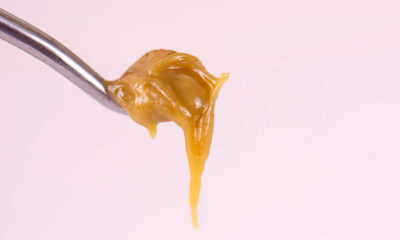
The budder (also spelled badder or batter) is a cannabis concentrate with a creamy, supple texture, similar to buttercream or cake icing. All three terms refer to the same family of concentrates with slight nuances of consistency, and are among the extracts most appreciated by concentrate consumers for their ease of handling and rich aroma.
What's the difference between budder, badder and batter?
In practice, not much: the three terms are often used interchangeably by different producers and regions. They describe concentrates derived from virtually identical extraction processes, whose final texture varies slightly according to post-extraction parameters.
The budder tends towards a smooth, compact consistency akin to cold butter. The badder may be slightly softer, with a texture sometimes closer to thick sauce. The batter is generally the most fluid of the three, resembling cake batter. These differences often have more to do with the genetics of the cannabis used and the precise settings of the process than with any fundamental technical distinction.
What distinguishes them from other concentrates is mainly texture - not the basic extraction method, which remains similar to that of BHO or the PHO.
Comparative table of concentrates
| Concentrate | Texture | Solvent | THC potency | Ease of use |
|---|---|---|---|---|
| Budder / Badder | Creamy, buttery | BHO / PHO | 60–90% | Very easy |
| Wax | Waxing, semi-dry | BHO / PHO | 60–85% | Easy |
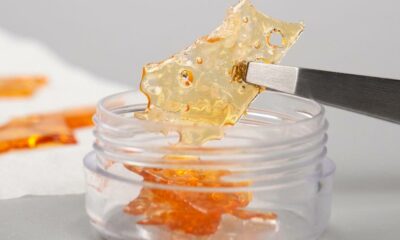
| Shatter | Stiff, brittle | BHO | 70–90% | Less easy (fragile) |
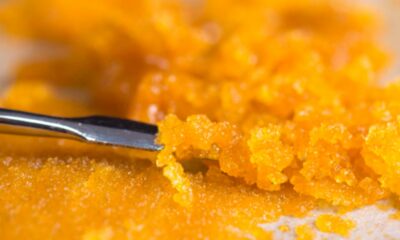
| Crumble | Crumbly, granular | BHO / PHO | 60–80% | Easy |
| Live resin | Variable (sauce to solid) | Cryogenic BHO | 65–90% | Variable |
| Rosin | Variable (budder possible) | No | 60–80% | Easy |
Potency and cannabinoid content
Budder is a high-potency concentrate. Depending on the quality of the starting material and the extraction process, its content of THC is generally between 60 and 90%, with profiles in terpenes often better preserved than in shatter because the low-temperature whipping process degrades volatile aromatic compounds less.
Color is an indicator of quality: a bright golden-blond budder made from quality material will be richer in terpenes and more aromatic than a greenish-brown budder, the sign of a less-selected raw material or less-controlled extraction.
How is budder made?
Prior notice The manufacture of budder and other solvent-based concentrates is reserved exclusively for experienced, licensed professionals. The liquefied petroleum gases (butane, propane) used in these processes are highly flammable and may cause explosions. Do not attempt to reproduce this process without proper training and equipment.
Budder is mainly produced by extraction with BHO (butane hash oil) or PHO (propane hash oil) in a closed-loop system (closed-loop extraction). The solvent is passed under pressure through the plant material - trim, dried flowers or live resin freshly harvested to extract cannabinoids and terpenes.
The difference with shatter or wax lies entirely in the post-extraction phase :
- The crude extract is spread on a hot plate at around 38°C.
- It is mechanically whipped, This incorporates air into the mass and breaks up the extract's crystalline structure - creating its characteristic creamy texture.
- The assembly is then placed in a vacuum oven for 24 to 72 hours to purge solvent residues and stabilize the final texture.
The duration and intensity of whipping determine the final texture: a short whipping produces a creamy budder; a longer, more vigorous whipping produces a drier, crumbly wax. Exact temperatures and purging times vary according to genetics and the terpenes present.
It is also possible to produce solvent-free budder by whipping rosin, the budder rosin, but this method is less widespread and gives variable results depending on the quality of the rosin.
How to eat budder?
Budder's creamy texture makes it one of the easiest concentrates to handle with a dabber. A flat tip or spatula is ideal - it allows you to take a precise dose and hold it on the tool without it dripping.
In dabbing This is the most common method of consumption. Budder is applied to a nail or a banger heated to a temperature of 300 to 400°C for a low temp dab that preserves terpenes. A carb cap is recommended to optimize vaporization. Budder's creamy texture makes it particularly suitable for low-temperature dabs.
Spray or dab pen Compatible concentrated vaporizers accept budder easily. The temperature range 170-210°C is recommended to preserve aromas.
Sprinkled on flower Small quantities of budder can be crumbled over a bowl or incorporated into a joint to increase potency without significantly altering the smoking experience.
How to store budder?
Without proper storage, budder quickly darkens, hardens and loses its aromas. Budder's enemies are humidity, oxygen, light and heat - all of which accelerate the degradation of terpenes and THC.
Keep your budder in a hermetically sealed glass or silicone container, Store in a cool, dark place (ideally 10-15°C). Under these conditions, it will keep for several weeks to a few months without any significant loss of quality. For longer-term storage, the refrigerator is acceptable, provided you use a perfectly airtight container to prevent moisture absorption.
A brief history of budder
The budder appeared in the mid-1990s, created by a Canadian extractor that would become known as the BudderKing. In 2003, he introduced his extract to the founder of Vancouver's Da Kine Smoke and Beverage Shop, Don Briere, who began distributing it under the name of Butter Hoots. After a police raid in 2004 closed the store, demand for the product exploded - other extractors began replicating the technique by whipping up their own batches.
BudderKing tried to patent the name, but the Canadian Trademark Office refused his application for the word «butter». At the suggestion of a family member, the name budder was adopted. The product and the name spread from dispensary to dispensary, becoming a benchmark in the world of concentrates.










CBD is said to promote athletic recovery, without improving performance

294 cannabis clubs in Chile: a booming movement with uneven distribution

Chronic Sciatica: New York Approves First Clinical Trial of a THC-Based Medication

United States: The DEA is accelerating the integration of medical cannabis at the federal level

Florida is nearing one million patients using medical cannabis

Uruguay Revives Its Plan to Allow Tourists to Legally Access Cannabis

In Brazil, researchers are developing an innovative CBD eye drop

Autism: Medical Cannabis Is Linked to Reduced Anxiety

The $28 billion U.S. hemp market remains under threat

