
What is cannabitriol (CBT)?
Cannabitriol (CBT) is one of the 130 (and more) cannabinoids present in the cannabis plant. CBT has a chemical structure similar to that of tetrahydrocannabinol (THC).
CBT was discovered in 1966 following a study of various cannabinoids in the cannabis plant. Since CBT is found in minute quantities, far less than THC and CBD, few studies have been carried out on this compound.
In 2014, a Jamaican researcher was able to isolate the compound while working to identify and name other compounds. Some potential health benefits have recently been discovered, but studies are still ongoing and further analysis is required.
Like all other cannabinoids, CBT is obtained from the cannabis plant during its chemical formation. CBT can also undergo decarboxylation, which eliminates an acid group and activates cannabinoids.
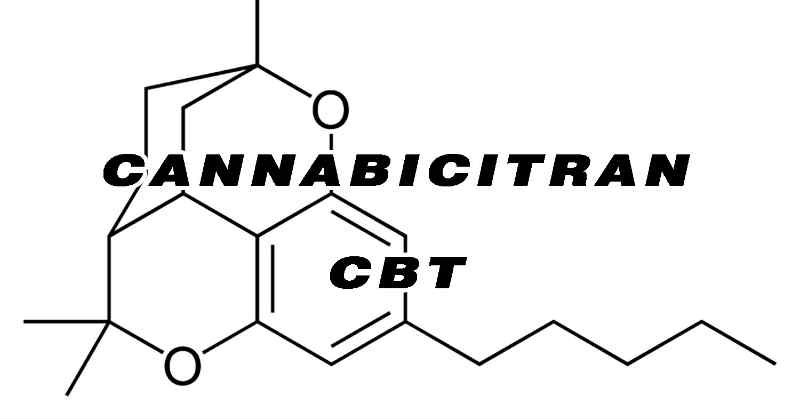
Be careful not to confuse it with another little-known cannabinoid with the same initials: the cannabicitran, abbreviated to CBT-C.
How does CBT work?
Researchers still don't know how CBT works. Although it has a similar structure to THC, and is naturally synthesized from THCa, the acid version of THC, CBT is thought to prevent some of the psychoactive effects of THC.
Most cannabinoids contain two main groups, an alcohol group and a phenol group. These groups influence the overall benefits and the way each cannabinoid interacts with the body.
Although the structure of CBT is very similar to that of THC, Both CBT groups are alcohols, unlike THC. This means there's a difference in what we can expect from this compound in terms of benefits and effects. Many other cannabinoids contain a phenol group, but CBT does not.
Many users report a very slightly psychoactive effect, with an increase in the vividness of colors and sounds.
Possible therapeutic benefits
CBT is still under study, but the few published studies show promising health benefits.
Glaucoma
A study conducted by Mahmoud Elsohly showed that CBT reduced intraocular pressure (IOP) in rabbits. Although no human studies have been carried out on CBT and glaucoma, this first study looks promising and we look forward to further research.
Reducing the psychoactive effects of THC
A study published in 2007 showed that CBT could be one of the main cannabinoids responsible for reducing the psychoactive effects of THC. This presents great therapeutic potential for people who may be interested in the health benefits of THC, but are not interested in its psychoactive effects.
Surrounding effect
Previous studies have shown that the health benefits of cannabinoids such as CBD are amplified in the presence of other cannabinoids such as THC. Although there are not yet many studies on CBD, it is assumed that it is involved in the’entourage effect cannabinoids due to its chemical structure.
9 forms of CBT
Since its discovery in 1966, scientists have analyzed and confirmed the presence of at least nine different types of CBT, each with a slight difference in molecular structure and basic compound, the best known being cannabicitran.
Cannabicitran
Cannabicitran, also known as CBT-C, is one of several subsets of this compound biosynthesized in cannabis from the olevetol series. This compound, found at maximum concentrations in the distillates (1 to 5 %) of Cannabis sativa (type III), is thought to be synthesized from the precursor molecule CBDa, which explains its low psychoactivity.
Prior to its identification in Lebanese hashish, a similar compound, «cannabis cytrilidene», had been synthesized by chemist Leslie Crombie in 1971. The compound was named for its resemblance to a natural product of the cannabis plant - discovered in the following years. Since the isolation of this phytocannabinoid, many theories about its function and benefits have emerged and been disputed. Nevertheless, a study led by Mahmoud Elsohly found that CBT reduced eye pressure in rabbits, making it a potential treatment for glaucoma and other related conditions.
Among the many phytocannabinoids, cannabicitran, classified as a di-ether compound, has a chemical relationship analogous to CBD, as CBD is to THC, and can be said to contribute to the plant's entourage effect. Thanks to this relationship, it is gaining popularity as a therapeutic element in the hemp industry and is now formulated in tinctures, oils, extracts and concentrated forms.
Due to the restrictions imposed by cannabis legislation, few studies have been carried out on the benefits and adverse effects of cannabicitran. However, in 2007, research aimed at identifying the addictive effects of THC - by looking for attenuators to THC's psychoactive components - showed that CBT-C acted as an antibody to the chemical transformation caused by THC and will therefore serve as an effective attenuator to THC's psychoactive effects.
The cannabinoid CBT-C can also be used as a marker during chromatographic testing of cannabinoids, as it is retained longest on the column during analysis; it therefore indicates the end of sample analysis. The first on-line reference to CBT-C dates back to 1970, when a chemist using normal-phase flash chromatography isolated CBG from a CBD-rich hemp distillate. Noticing the effect of this technique, he thought of reversing the process using reverse-phase flash chromatography, which enabled him to collect other compounds, including Cannabicitran.
In 2011, CBT-C was finally confirmed as a cannabinoid in a journal publication on the examination of male Cannabis sativa L. using a modern chromatographic method - gas chromatography with flame ionization detector and gas chromatography-mass spectrometry. In contrast to the compound's affiliated class, it has also been isolated from the Chinese medicinal plant Rhododendron Anthopogonoides, widely used in the treatment of bronchitis and other respiratory ailments.
Data on the characteristics and benefits of this compound are still very inadequate, but with the expansion of knowledge and greater openness to the discovery of hidden treasures, the focus can now shift to understanding other minor cannabinoids.








CBD is said to promote athletic recovery, without improving performance

294 cannabis clubs in Chile: a booming movement with uneven distribution

Chronic Sciatica: New York Approves First Clinical Trial of a THC-Based Medication

United States: The DEA is accelerating the integration of medical cannabis at the federal level

Florida is nearing one million patients using medical cannabis

Uruguay Revives Its Plan to Allow Tourists to Legally Access Cannabis

In Brazil, researchers are developing an innovative CBD eye drop

Autism: Medical Cannabis Is Linked to Reduced Anxiety

The $28 billion U.S. hemp market remains under threat

