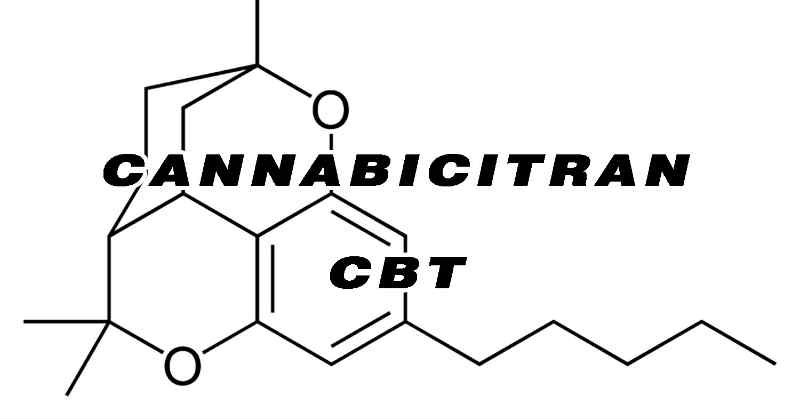
CBT-C (cannabicitran): a cannabinoid about which little is known
We currently know of around a hundred cannabinoids present in the plant but many remain unknown. In addition to the stars THC and CBD, we often hear about CBG (cannabigerol) or THCV but more rarely CBT-C or cannabicitran - not to be confused with another little-known cannabinoid with the same initials: the cannabitriol. What do we know about this mysterious cannabinoid?
The mysterious cannabicitran
The first mention of cannabicitran dates back to 1974 in a study published by Science Direct. If we're talking about cannabicitran today, it's because it's now being marketed by a number of companies, including the test lab Confidence Analytics which proposes to test for the presence of CBT-C and by the brand Cloud Chromatography which sells extracts containing CBT-C with the slightly misleading label «full spectrum». We prefer to speak of «broad spectrum» when THC is missing.
Among users, opinions are mixed, with many feeling no difference between CBD isolates and CBD / CBT-C oils. If there is an advantage to the latter, it will be complicated to determine whether it's due to the’entourage effect or to the specific action of CBT-C, about which little is known at present. No animal, human or laboratory studies have been carried out.
However, the molecular structure of CBT-C is known: it is a tetracyclic, di-ether molecule with no alcoholic groups. The molecule can be isolated by gas chromatography and, according to Pat Reynolds of Confidence Analytics, Its characteristics indicate that it is most commonly found in distillates. It may therefore be the result of a chemical reaction caused by this extraction technique.
In an article on the subject, the Heylocannabis states that flowers with a high CBD and low THC content are more likely to contain CBT-C after distillation than flowers with a high THC and low CBD concentration. The article goes on to state that CBT-C can be found in two varieties featured on the site: the Dutch 47 and the Remedy. They both contain 0.1% of CBT-C. These varieties are being tested by Confidence Analytics.





Medical Cannabis in Germany: THC Prices Vary by a Factor of 12

France already has 3,000 cannabis retail outlets. None of them are legal.

Morocco's exports of legal cannabis have expanded to 15 countries

Aurora Cannabis Doubles Its Production Capacity in Germany

Tilray is accelerating its operations in Europe thanks to a license in Portugal

Boston will host the 10th annual State of the Cannabis Industry Conference on October 26

A DEA report confirms that there are no fatal cannabis overdoses

A British patient is challenging the NHS's refusal to reimburse medical cannabis

October 2026 CBD Highlights: 10 Strains and Hash to Discover from 5 French Producers

